Does the Town’s company count estimate commercial roof demand?
No. The Town’s reported company total describes businesses, not buildings or roofs. We inspect the individual property to determine scope.
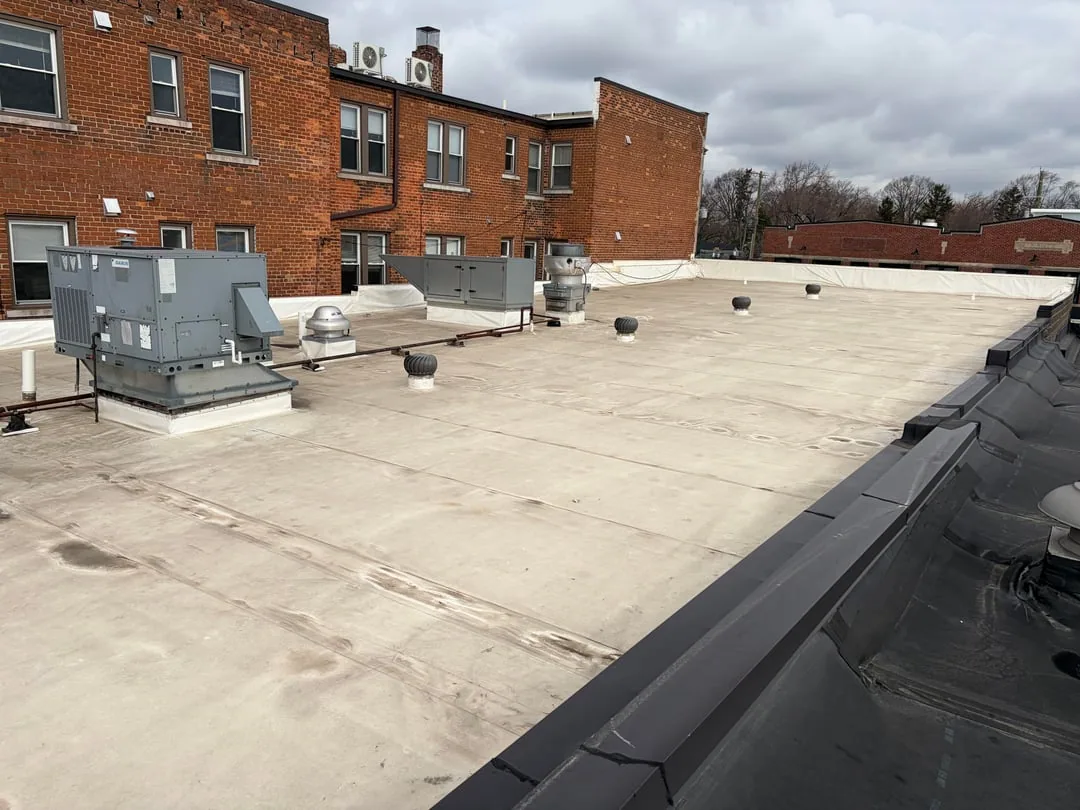
Commercial roof service in Berthoud should start with the owner’s operating needs, the building records and a clear inspection boundary. We check the reported leak or planned work, identify the roof system and trace drainage, seams and wall transitions that could affect water entry. Berthoud reports more than 300 companies and supports its business and retail base. We confirm each site’s use, roof system and access with its owner.
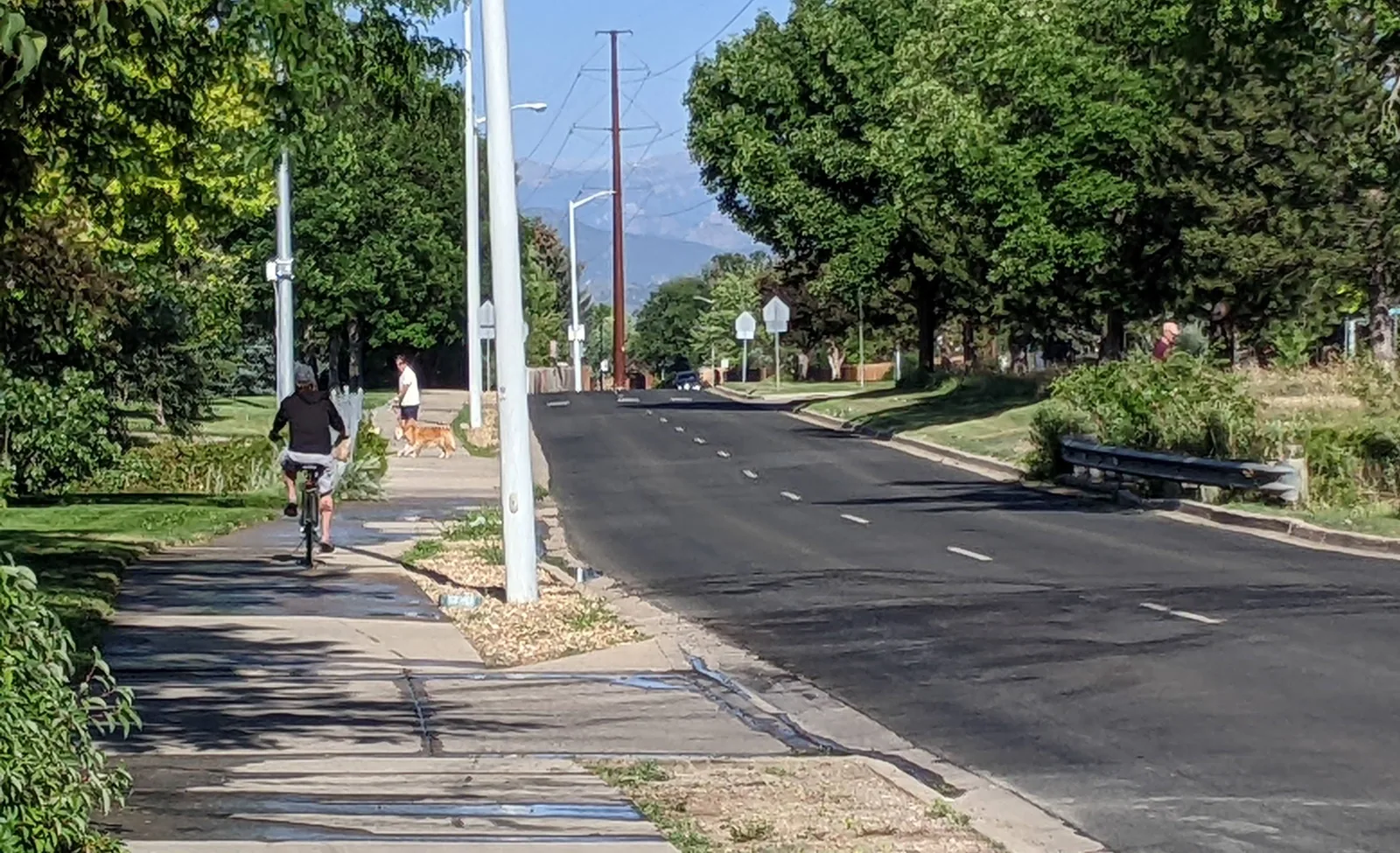
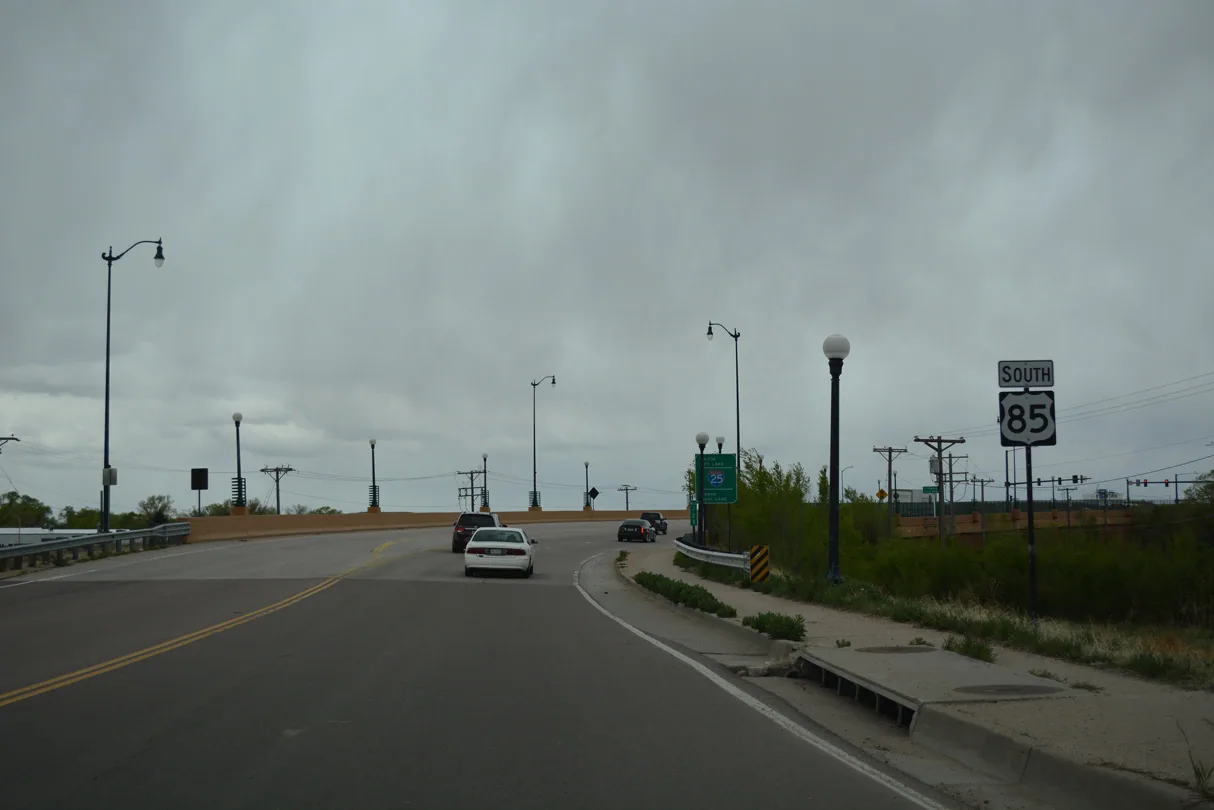
Berthoud lies between Longmont and Loveland along the I-25 and U.S. 287 corridors. The Town reports more than 300 companies operating locally and lists business, retail and industry support among its economic goals. The town’s business community can have different delivery, occupancy and maintenance schedules, which the site contact confirms before mobilization. We inspect each property before recommending repair.
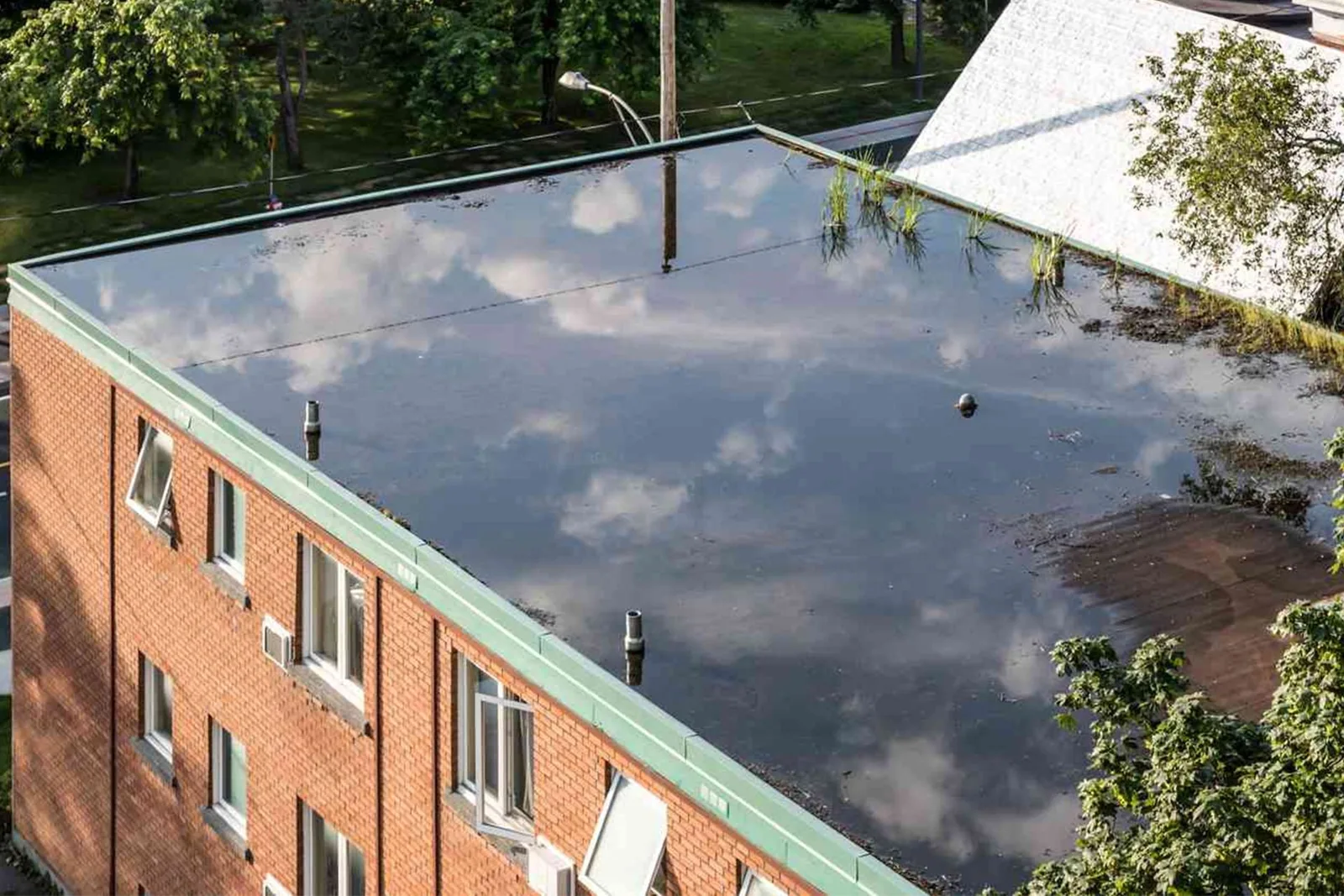
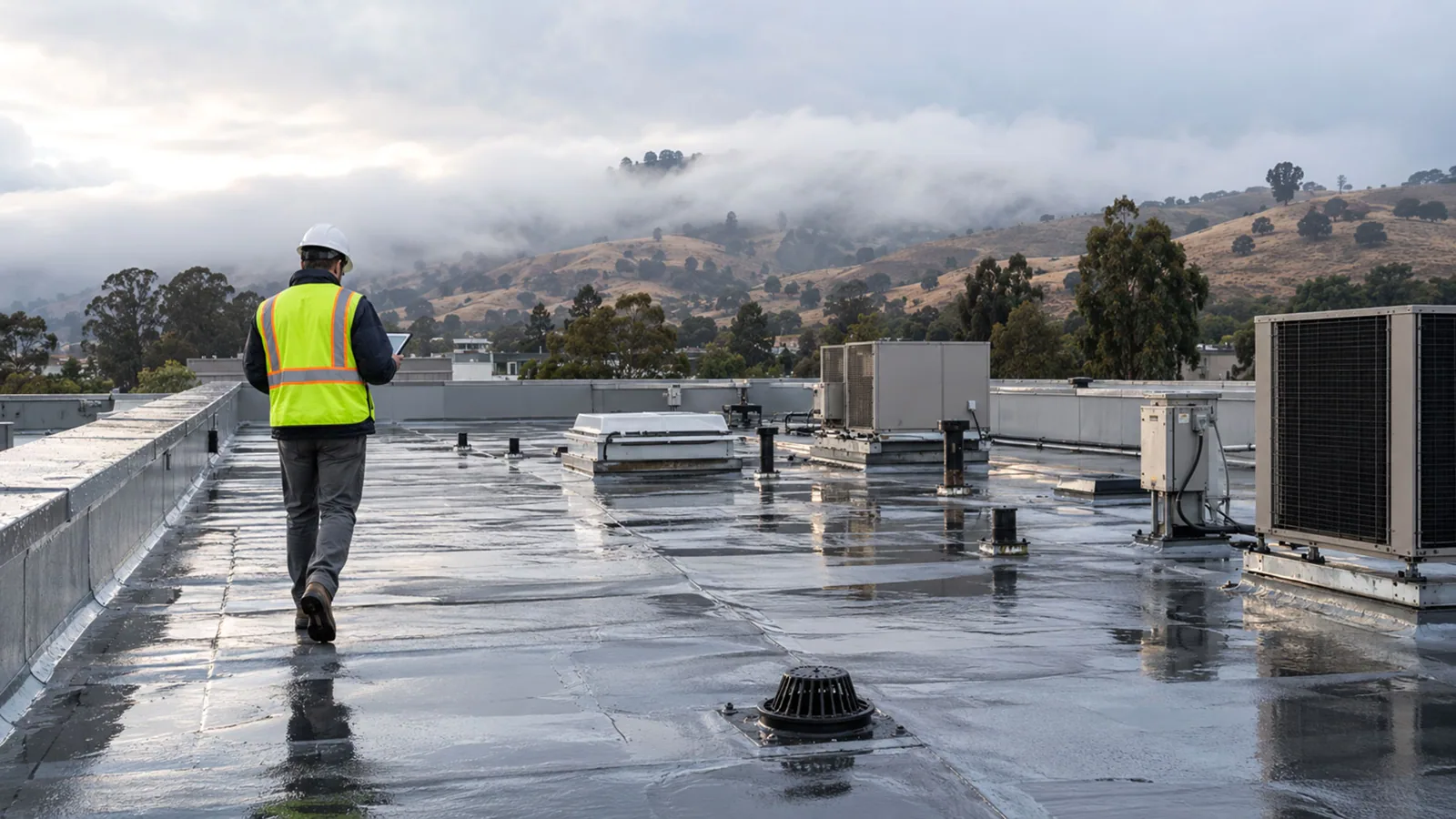
We ask when water appeared, what room or equipment was affected and whether any recent work changed the roof. The inspection follows likely paths above the report, checking drains, low points, seams, penetrations and roof edges. Water may move along a deck or insulation joint before it appears inside, so the location of the stain is a clue rather than a confirmed source.
Roof records and field observations serve different purposes. Plans show intended layout, while a site walk verifies the surface, visible system, transitions and prior patching. A commercial roof inspection can record the findings, and a condition report can preserve photos, repair boundaries and open testing questions. If a test opening might change the scope, we identify the location and restoration before asking for approval.
Business operations can shape access. The site contact confirms roof entry, equipment shutdowns, delivery windows, occupant routes and any escort or safety rules. If roof staging could affect a loading area, we choose a location with the property team. These arrangements let an inspection proceed without treating every Berthoud property as if it had the same operating plan.
If an owner is comparing multiple bids, we can state the observed defect, included repair length, product assumptions and final inspection method. A scope that leaves quantities or exclusions unclear can be difficult to compare with another proposal. We also identify if the estimate assumes a dry substrate or an unobstructed roof route. When those conditions cannot be confirmed in advance, the proposal explains how the crew will handle a change before proceeding.
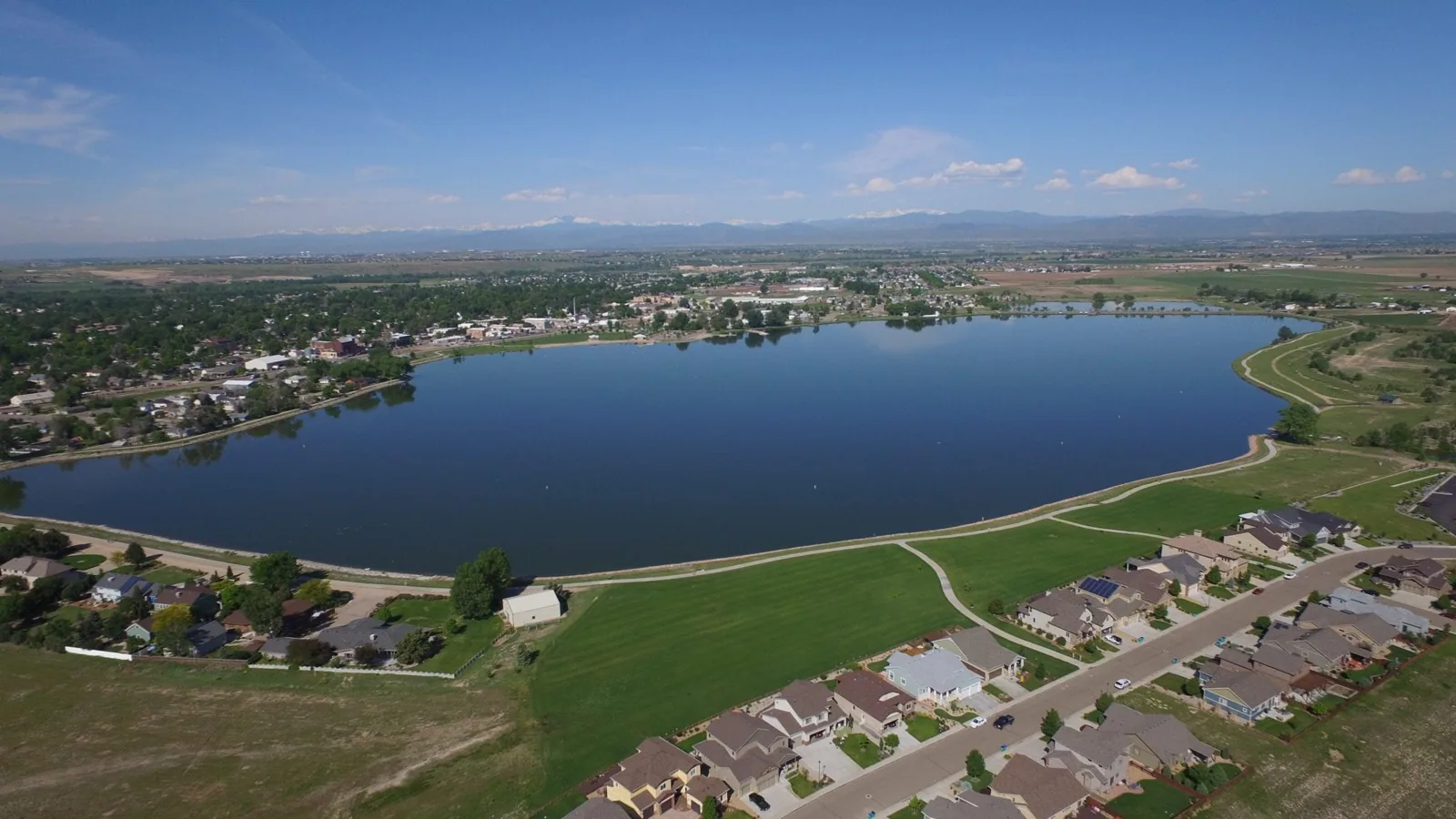
Greeley Airport climate observations include snow, wind, precipitation and temperature. The records also include hot days above 90 degrees and readings above 100. These are market-city observations, not a measured forecast for an individual Berthoud roof. They are useful context when planning a safe visit; the crew checks actual roof conditions before applying a material or opening an assembly.
Heat can affect surface preparation and adhesive application, while snow or ice may conceal a drain or make access unsafe. We define the area that can be opened, establish a daily closure point and select a work window that follows the roof system’s requirements. If conditions change after mobilization, we document temporary protection and identify what must happen at the return visit.
Berthoud roof checks after a reported hail event can include membrane, flashing and edge inspection; Weld County tornado entries may also prompt a visit. We examine the actual assembly before writing a repair scope. We photograph observed impacts, open seams or displaced edge material and note any area that could not be reached. The roof evidence supports the repair recommendation, not the event report alone.
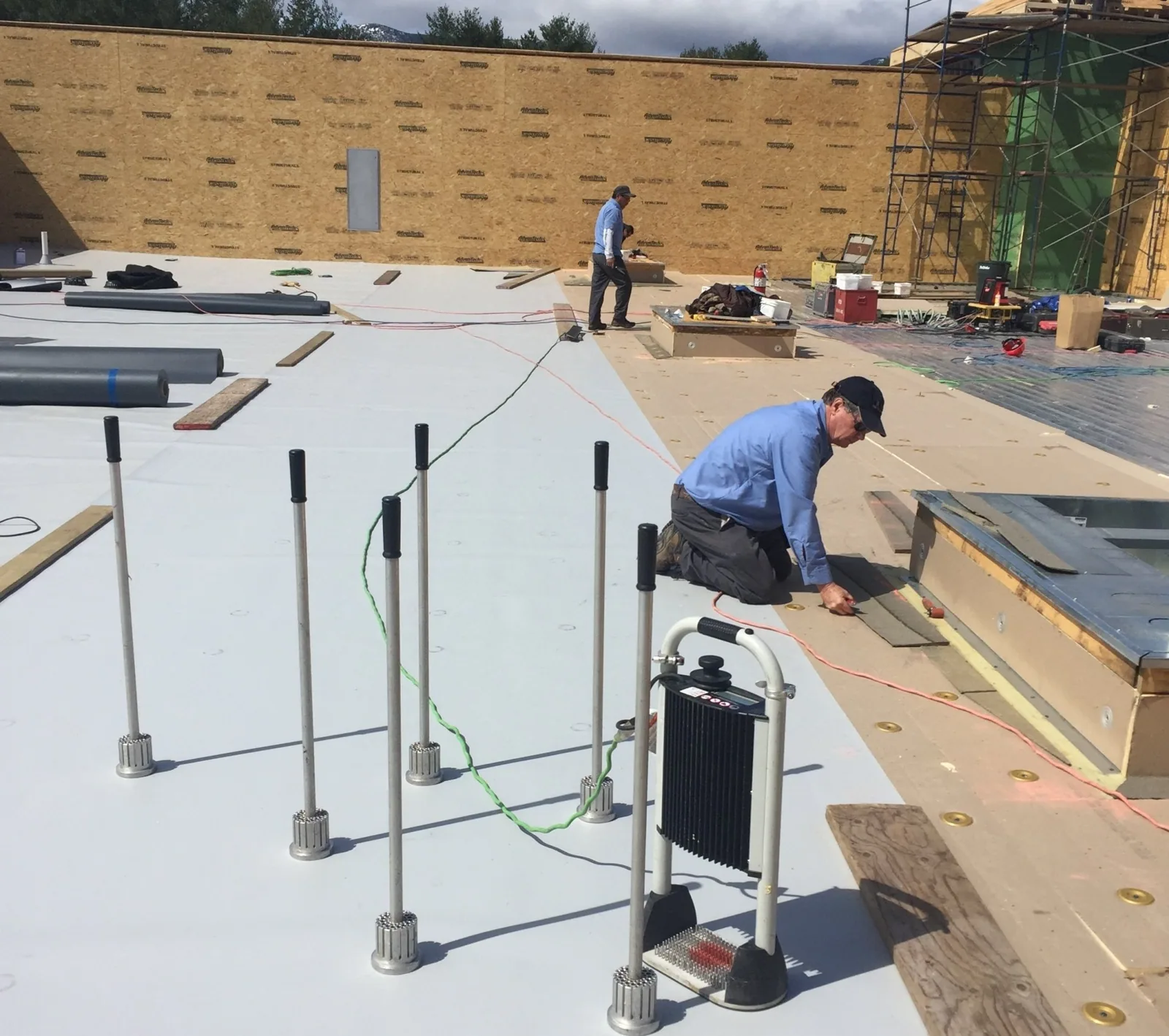
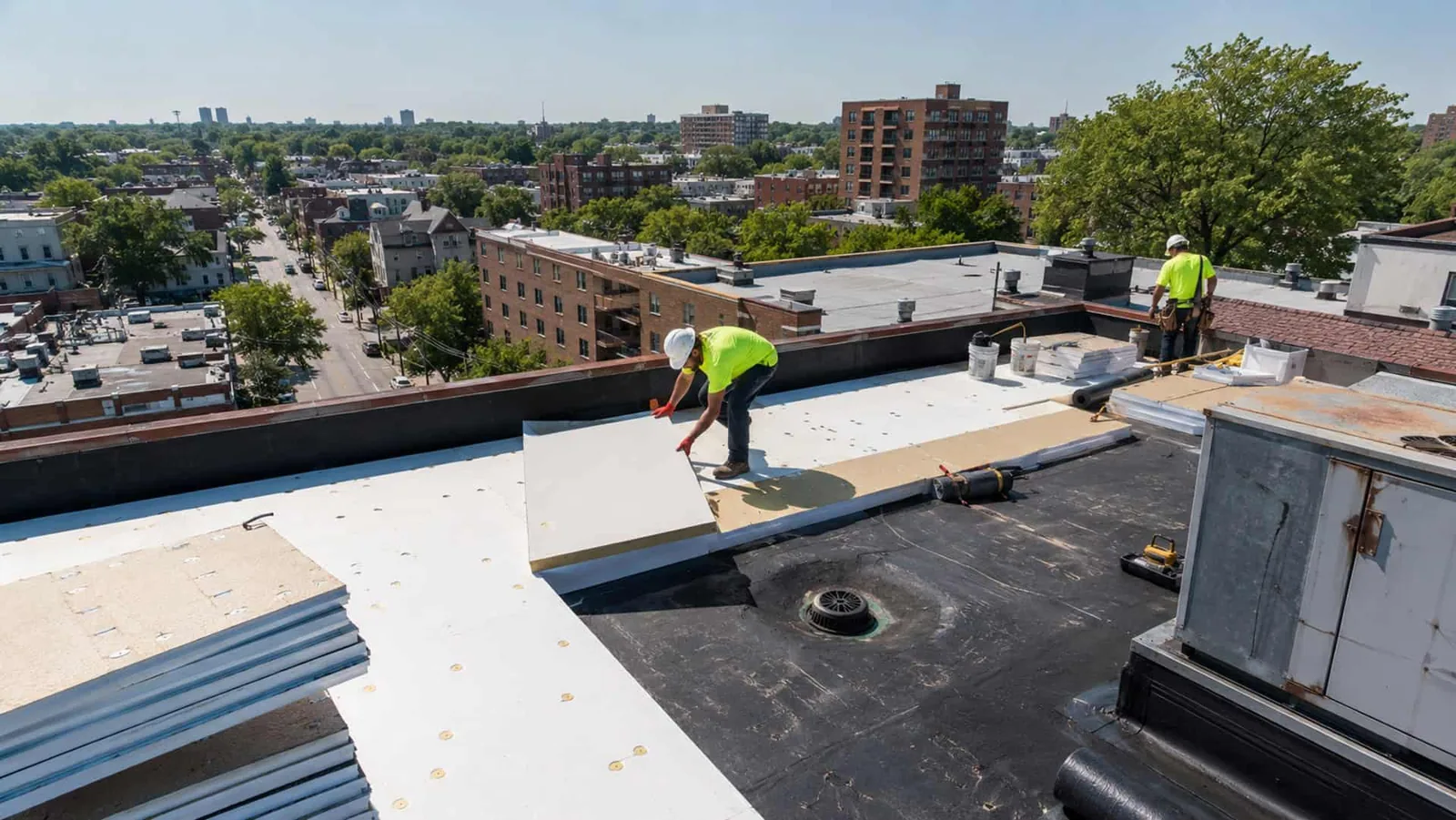
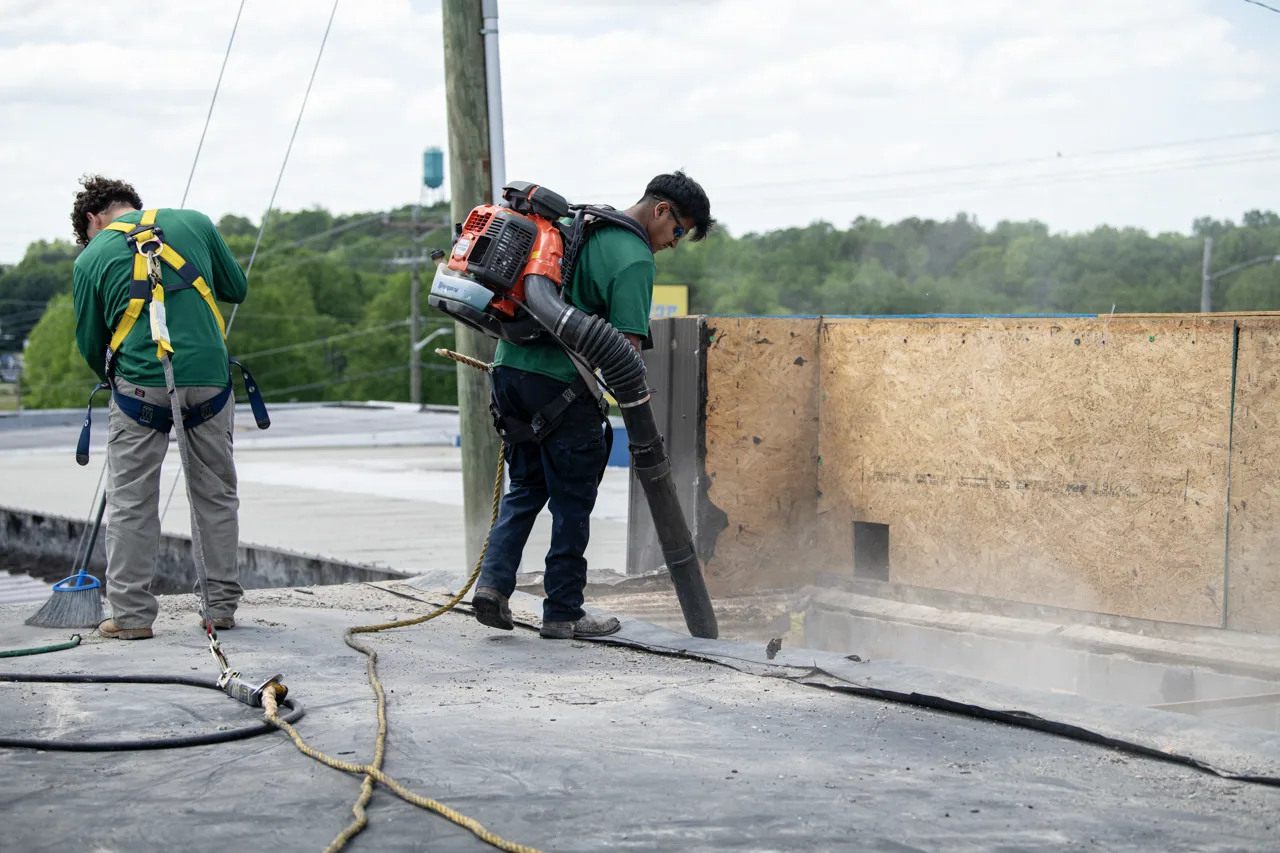
After identifying the roof system, we define surface preparation, compatible material, repair dimensions and tie-in details. A puncture, open seam, drain obstruction and flashing failure each need a different correction. We protect drains and equipment, remove only approved material and inspect the completed repair. If concealed damage or wet insulation appears, the crew documents it and requests direction before extending the work.
An active leak can call for emergency roof protection. A targeted repair scope can address confirmed conditions. A maintenance visit can later review drainage and edge details. The proposal states what is included, what needs further testing and which other trades or interior work are excluded.
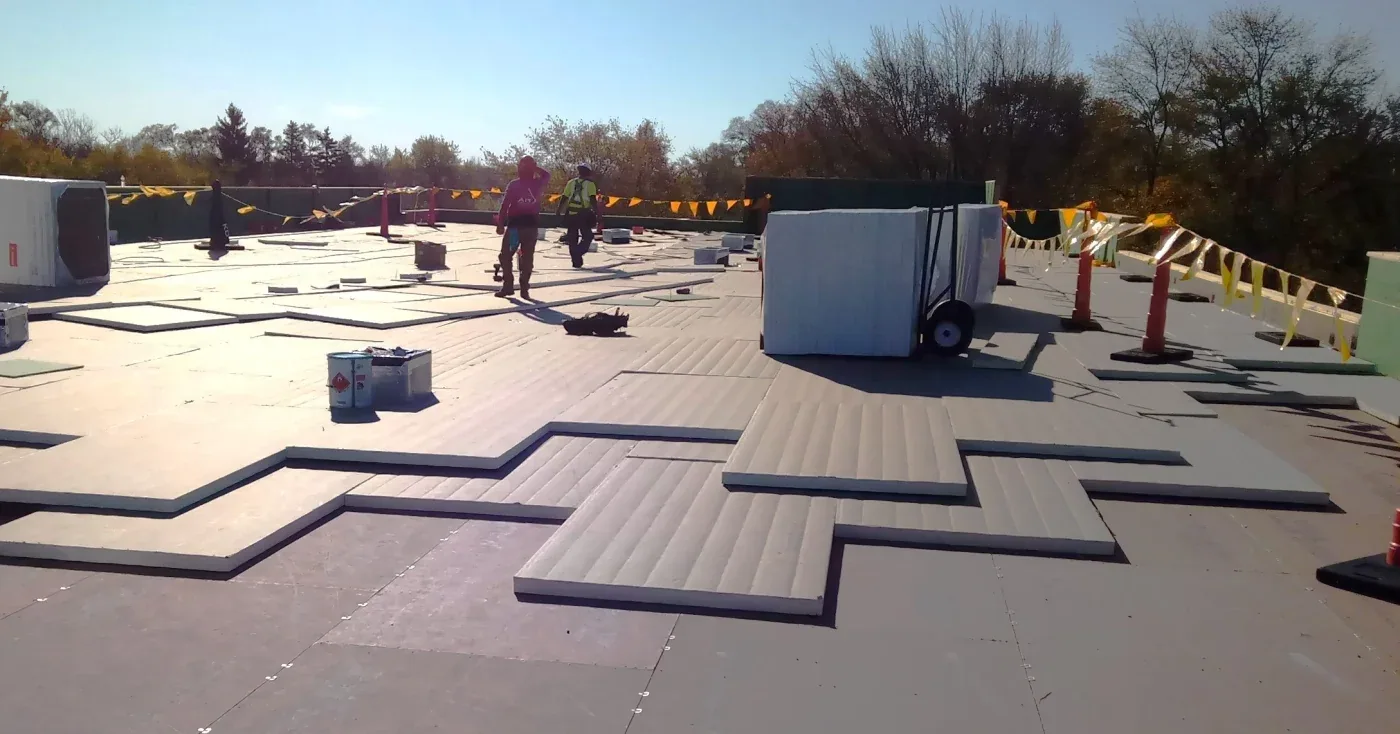
Work plans can account for a building’s business hours, roof access and deliveries. The owner can also identify any active project or inspection deadline. If the work must be phased, we list the daily dry-in boundary, material staging, protection for occupants and the next step if a hidden condition changes the scope.
No. The Town’s reported company total describes businesses, not buildings or roofs. We inspect the individual property to determine scope.
Yes. The facility contact confirms hours, staging and roof access. We can then set material delivery and work sequencing around those constraints.
A proposal can group visits, but each system needs its own inspection findings and repair details. We list quantities by roof area.
No. They provide regional context. Our crew inspects the property and documents actual roof conditions before proposing work.
Provide the roof plan, leak timing, prior repair notes, warranty documents, access rules and any active project dates.
A local repair can be appropriate when the surrounding membrane, attachment and insulation remain in serviceable condition. Recurring leaks, multiple system failures or moisture beneath a broad roof area may require testing or a larger capital project. We describe the evidence, distinguish confirmed defects from concerns and identify what additional information could change the recommendation.
Cost and timing depend on system, roof height, repair area, access, material lead time, equipment protection and dry-in needs. We state assumptions, quantities and exclusions so the owner can review alternatives. A capital plan can organize larger decisions; roof asset records can retain inspection history by property.
For businesses that also operate along the Longmont Highway 66 corridor or near Johnstown Highway 60, inspections can be coordinated in a portfolio schedule. Each Berthoud roof still receives its own system identification, photos and repair authorization. For an estimate, we measure the affected roof area and confirm system, access, staging and repair details on site.
Closeout identifies the roof system, inspected area, work completed, materials, photographs, tests and open items. We mark sections that could not be accessed and state the condition that would require a return visit. If drawings conflict with the field, the report notes the difference. This helps the owner decide whether a new plan, test or repair is needed before work continues. We can add an agreed follow-up date to the closeout record as requested.
Before mobilization, provide roof plans, repair history, warranty records, leak timing, access rules and operating hours. Identify who can approve temporary protection, test openings or added quantities. If the property needs to keep deliveries or an interior room available, tell us before setting the crew route and staging location.
Berthoud’s location between Longmont and Loveland gives context for regional scheduling; the property’s own access and roof condition control the work. We return a repair boundary and sequence that the owner can coordinate with operations, along with a dated record for future maintenance.
Where a building has several additions, we mark each roof section and keep the system description with its inspection photos. That prevents a repair plan for one wing from carrying over to another.