Your Commercial Roofing Team in Greeley
A roof problem is easier to manage when the first visit ends with a known area, a clear repair limit and a next step. Commercial Roofing Greeley works with building owners, property managers, facility teams and contractors across Greeley and nearby communities. We inspect low-slope and metal roof assemblies, make repairs, plan replacement or recover work, maintain drainage and edges, and document conditions that call for further testing.
Our work begins with the building in front of us. A ceiling stain, loose edge, standing water or recurring leak is a report to investigate, not a diagnosis. We ask where it appeared, when it changed, what work happened nearby and how the site operates. Then we compare that account with the roof plan, visible assembly, drainage path, seams, penetrations and previous repairs. The findings guide whether the next step is a targeted repair, temporary protection, maintenance, moisture testing or a larger project.
Snow, wind and summer heat affect access and the work window. After reported hail or tornado weather, we check the roof surface, drainage and edges at the property before setting scope.
Start with the roof area and its operating limits
Before mobilization, we confirm the property contact, roof access, work hours, occupied rooms and any equipment that must remain in service. A food operation, clinic, school, warehouse or office can have different protection and shutdown needs. We do not assume those limits from a building name. The site team identifies them, and we set a route for materials, a staging location and a daily dry-in point that fits the approved scope.
During inspection, we identify the system where visible and record the area examined. We check seams, fasteners, flashing, wall transitions, drains, scuppers, curbs and roof edges according to the reported condition. Photos are tied to roof zones so another person can locate the same detail later. If snow, equipment or a locked gate prevents access, we list the area and arrange the next safe inspection step.
For a defined service call, commercial roof inspection can establish the visible condition before repair. If water is entering, emergency roof protection can limit exposure while we evaluate a permanent repair. A condition report records the observations, photographs, limitations and recommended follow-up in a form the owner can use.
Keep repair and capital choices distinct
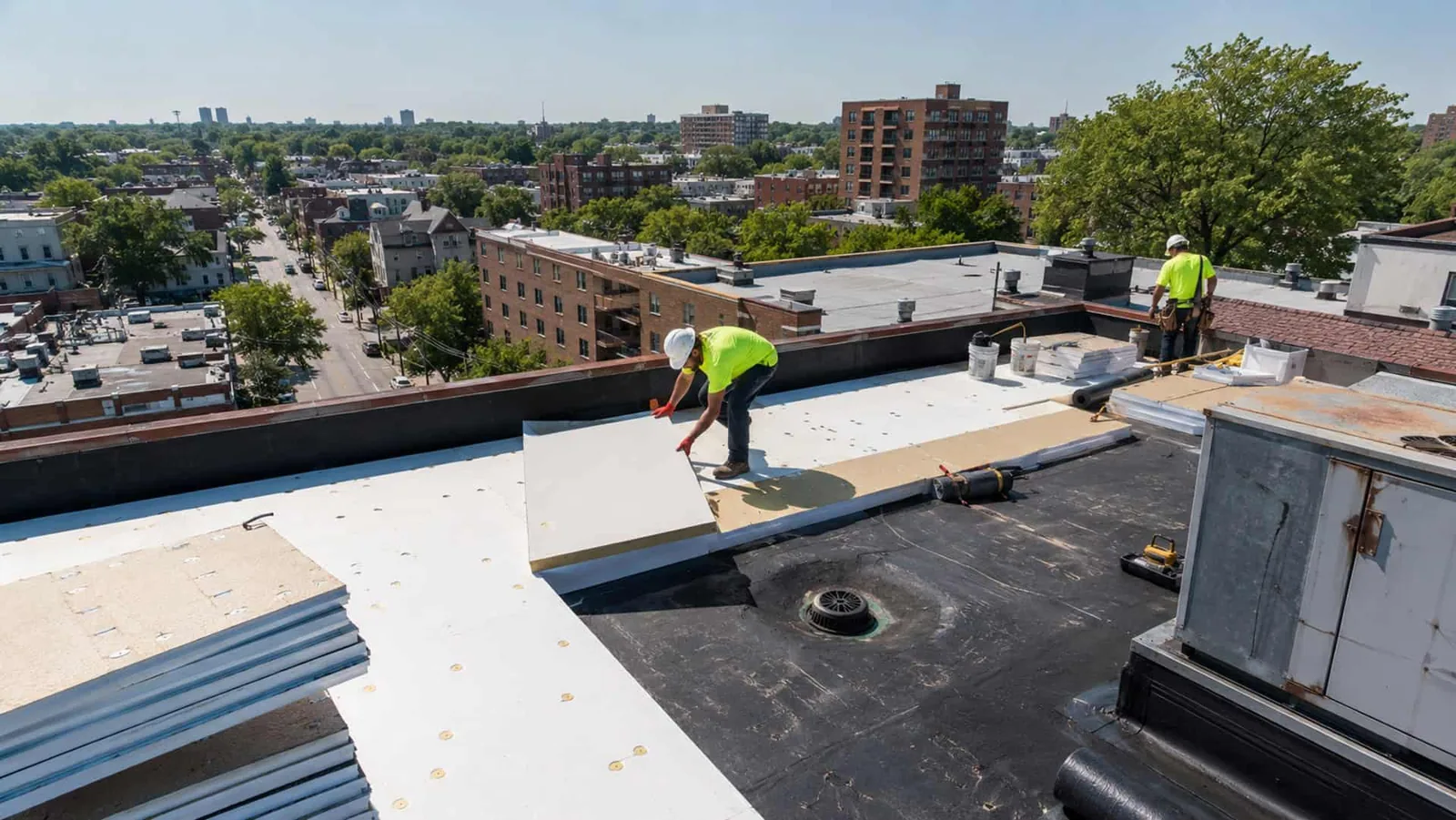
A repair is strongest when it addresses a confirmed defect with compatible materials and a defined boundary. We describe preparation, tie-in details, dry-in, protection below and the closeout check. If an opening reveals wet insulation, a second roof layer or an unexpected condition, the crew documents it and stops at the authorized limit. The owner can then decide whether to test, expand the repair or leave the area protected while a separate scope is prepared.
When a roof has recurring failures or broad moisture concerns, a local patch may not answer the larger question. We can compare repair, recover and replacement after reviewing the assembly, attachment, drainage and test results. A recover is considered only if the existing roof and structure can support another layer without trapping a problem. Replacement planning accounts for removal, disposal, staging, interior protection, daily dry-in and the work sequence needed to keep the building operating.
A preventive maintenance visit can track drains, edges, penetrations and prior repairs between larger projects. For owners managing several properties, roof asset management keeps observations by building and roof zone. A capital plan can separate immediate repairs from work that needs budgeting or more investigation. Each record distinguishes confirmed conditions from assumptions and future options.
Work in the places where Greeley operates
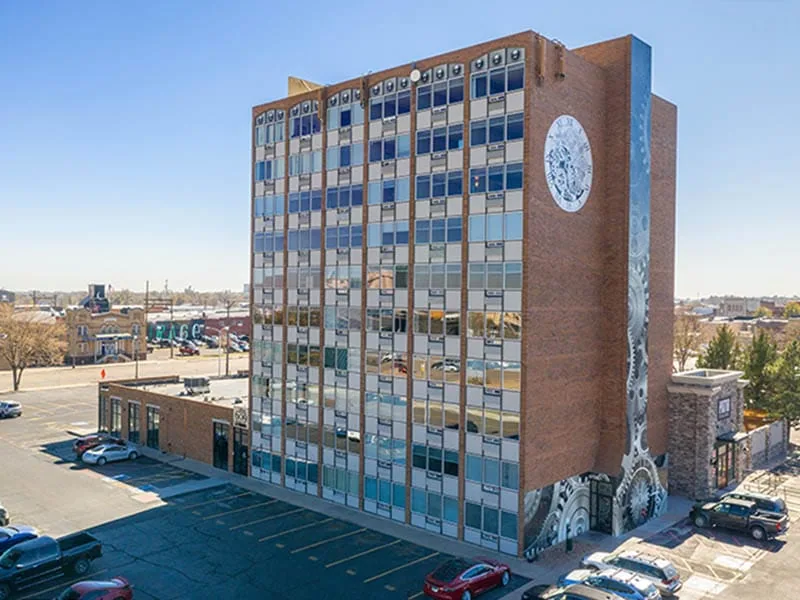
Greeley’s economy includes food production, agriculture, energy and manufacturing, alongside education, healthcare and technology. The City identifies Leprino, JBS Foods and Colorado Premium among major local companies. Those facts describe the market, not any one roof. They do remind us to ask about production, sanitation, refrigeration, deliveries, equipment and the interior areas that need protection before scheduling work. The facility contact sets the actual operating rules for the property.
Downtown Greeley has an active development authority, while the City identifies the 10th Street Urban Renewal Corridor and East 8th Street as separate renewal districts. Highpointe spans about 60 acres and includes industrial lots and buildings in several sizes, with a smaller commercial component. These areas differ in access and use; none of those designations reveals a building’s roof system or condition. We inspect each property independently and keep photos, quantities and recommendations attached to its address.
Evans sits at the South Platte River, where U.S. Highways 85 and 34 intersect. Regional work also reaches communities and broader areas such as Eaton Industrial Park and Great Western Industrial Park. A portfolio route may reduce repeated mobilization, but it never combines conditions from different buildings. Each site receives its own access confirmation, findings, approved work and closeout record.
Give the owner a usable closeout
Give the owner a usable closeout
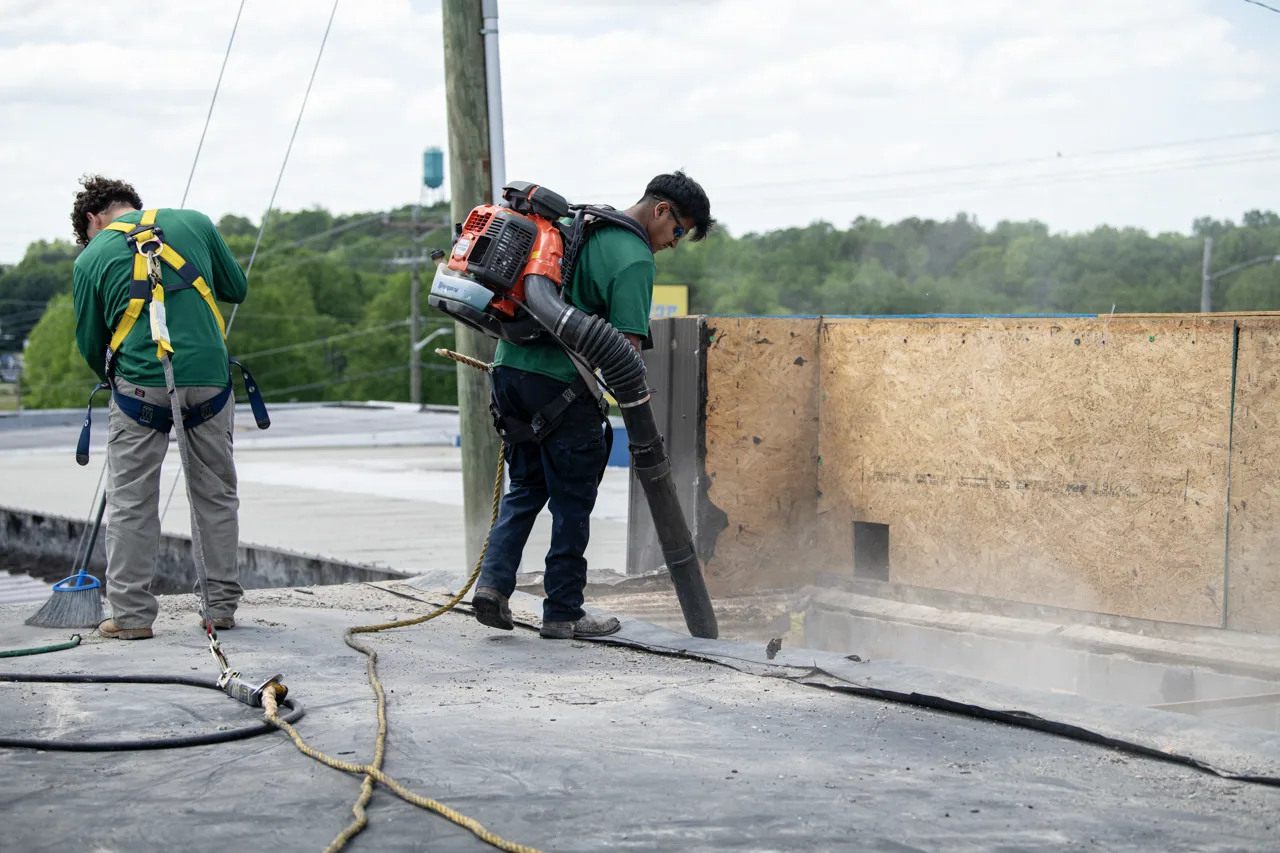
At the end of a visit, the owner should be able to identify what we inspected, what we found, what we repaired and what remains open. The closeout record includes photos, materials, the completed work boundary, tests performed and areas that could not be reached. A recommendation for added testing stays separate from authorized repair. If hidden conditions change the scope, we document the condition and request direction before proceeding beyond the approved limit.
Cost and timing depend on measurable conditions: roof area, system type, layers, access, equipment, material lead time, test requirements and the amount of protection or dry-in needed. We list assumptions and exclusions so the owner can compare a focused repair with a broader alternative. The proposal should make clear what happens during each shift, which rooms may be affected, when the building can use the area again and what evidence will be delivered at closeout.
To prepare a first visit, share the affected room or roof zone, leak timing, roof plans, repair history, warranty records, operating hours and access rules. Tell us who can approve a test opening or additional work. A commercial repair scope can address a confirmed defect, while a replacement assessment can evaluate broader renewal. We will confirm the visit details and leave the next decision tied to the actual roof.
Commercial Roofing Questions
What kind of roof work do you handle?
We inspect, repair, replace, recover, coat and maintain commercial low-slope and metal assemblies. The visit identifies which service fits the installed system and observed condition.
Can you work while our facility stays open?
The site contact sets operating limits, protected rooms and access hours. We sequence work by roof area and agree on a safe dry-in point for each shift.
Do you recommend replacement after every inspection?
No. We compare repair, testing, recover and replacement only after reviewing the assembly and findings. The report separates confirmed defects from decisions that need more information.
What should be ready before the first visit?
Send the affected area, timing, roof plans, prior repair records, warranty documents and access rules. Identify who can authorize testing or added work.