How can I tell whether flashing caused a commercial roof leak?
A roof inspection checks the transition and compares it with the reported interior location. The stain alone does not prove the entry point.

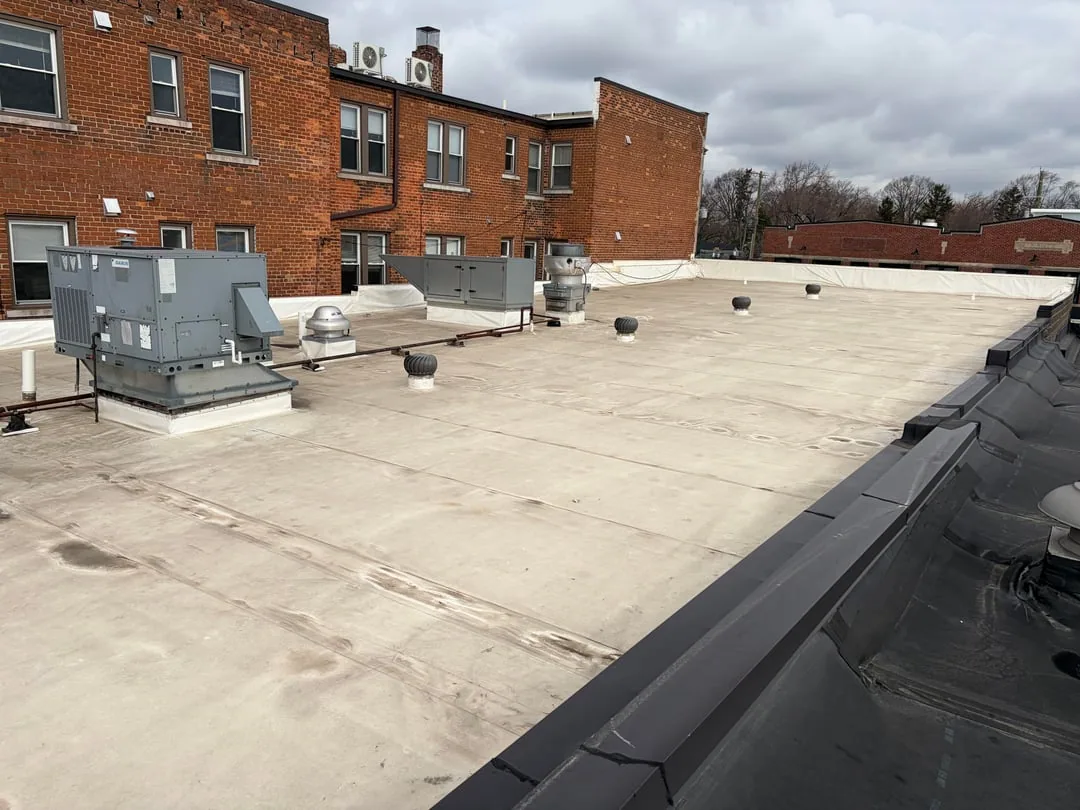
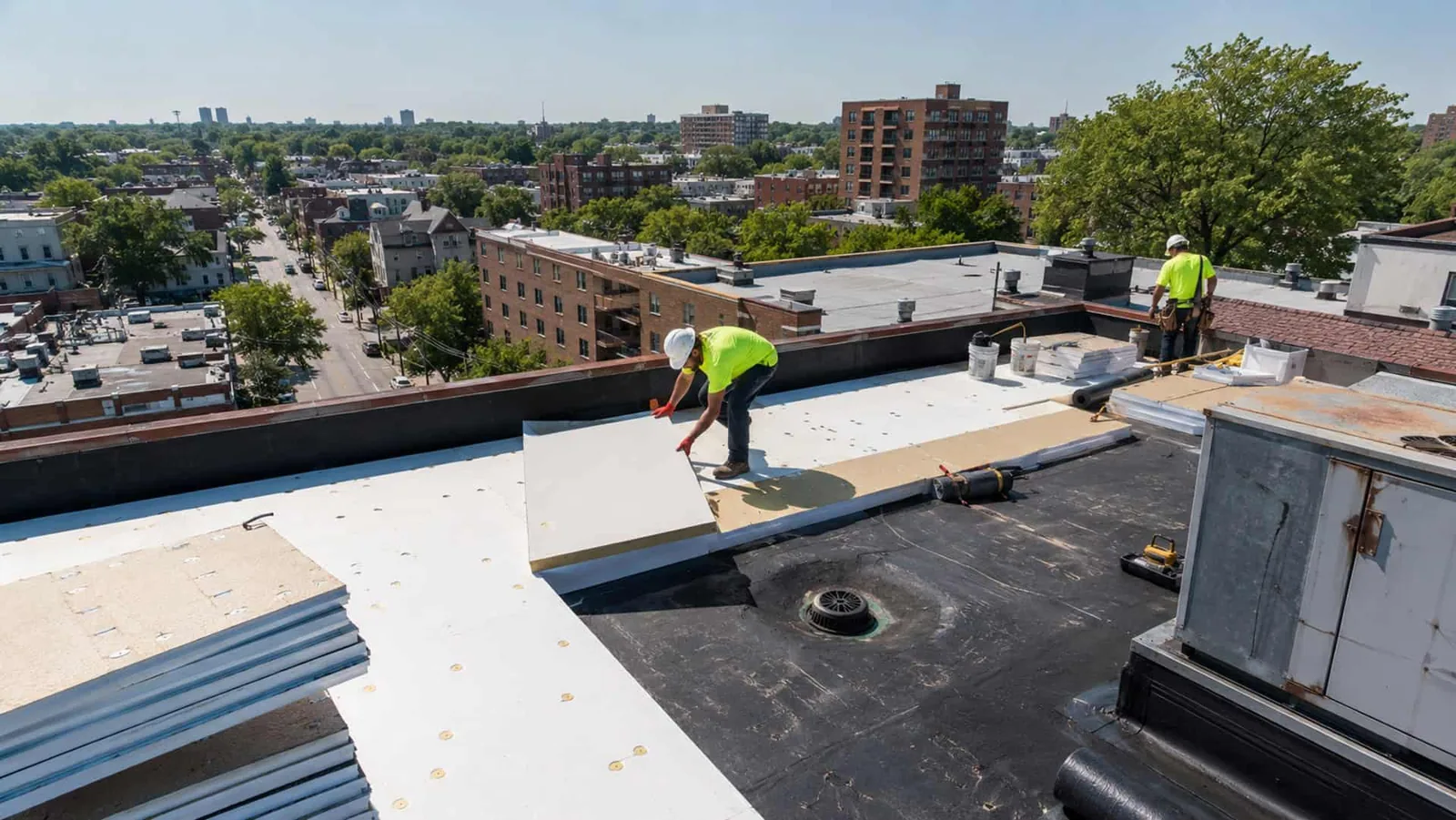
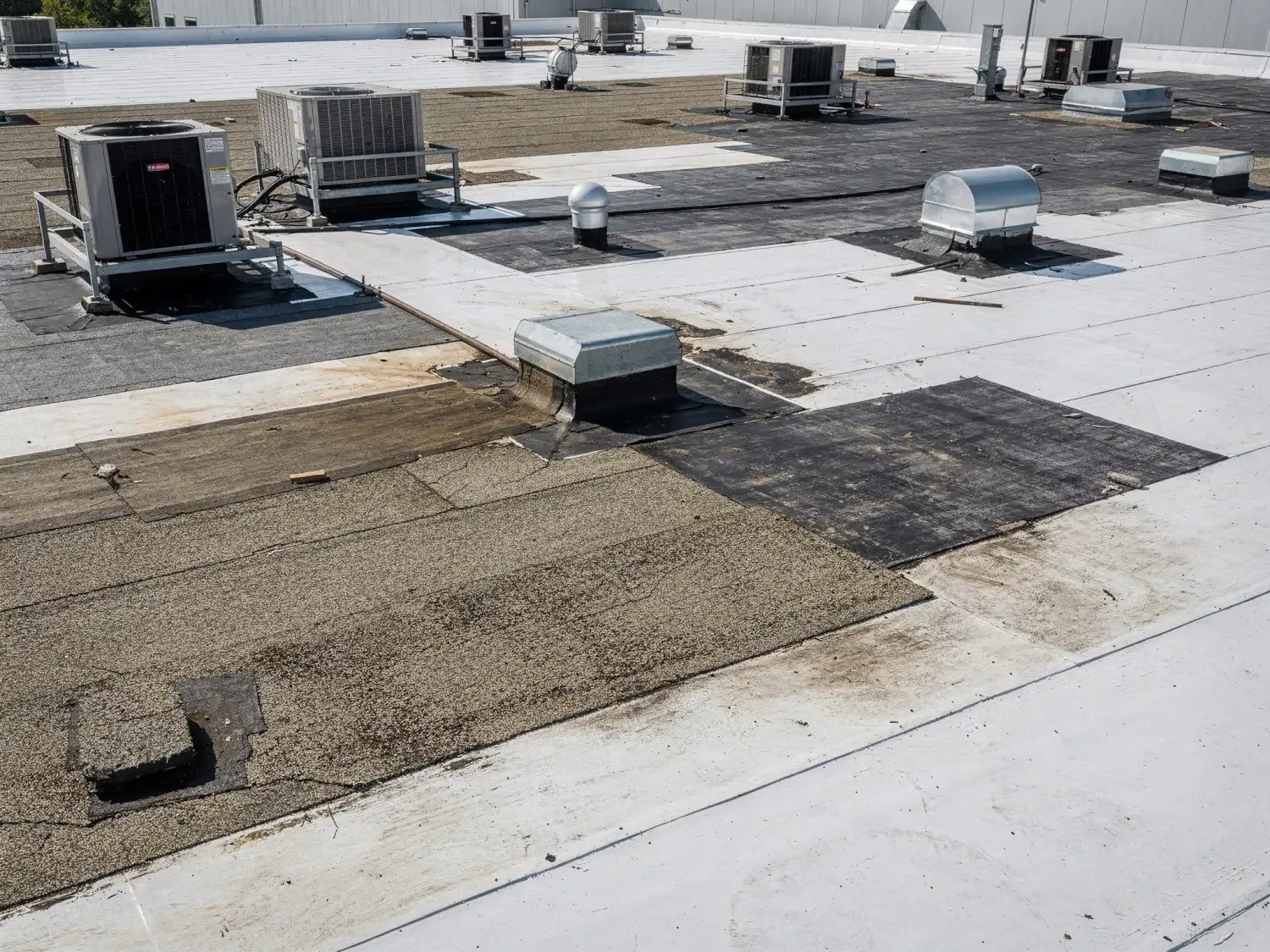
Water near a wall, curb or rooftop unit can point to a flashing problem, but the interior stain does not identify which transition failed. We inspect the reported area, trace the roof detail and check how flashing ties into the field membrane, metal edge or wall. The repair scope names the affected transition and describes the tie-in needed to make it continuous.
Greeley’s commercial settings range from Downtown Greeley to Highpointe Business Park, where different building forms can present different roof transitions. Those locations are service-area references, not a claim that a specific building has flashing damage. We confirm the property’s assembly and details before selecting a repair method.
We map the interior leak report to the nearest wall, curb, pipe, skylight, expansion joint or edge termination. The roof review checks laps, counterflashing, sealant, fasteners, cant strips, membrane termination and any patch that crosses the detail. Water may travel beneath a roof layer before appearing indoors, so we distinguish the likely path from the confirmed opening. Photographs show the transition before work and label the section for follow-up.
Different roof systems require different flashing methods. A membrane tie-in, metal wall counterflashing and a curb skirt cannot be treated as the same repair. We identify the system where visible and request drawings or product information when the assembly is unclear. A commercial roof inspection can document accessible details; if a nearby roof seam is also open, a separate seam failure repair may be necessary.
Previous work deserves close attention. A patch may have sealed one edge while leaving the water path or termination untouched. We record patch material, attachment and condition where accessible. If metal corrosion, movement or a deteriorated substrate prevents a durable tie-in, the report explains what must be corrected before a new flashing detail is installed.
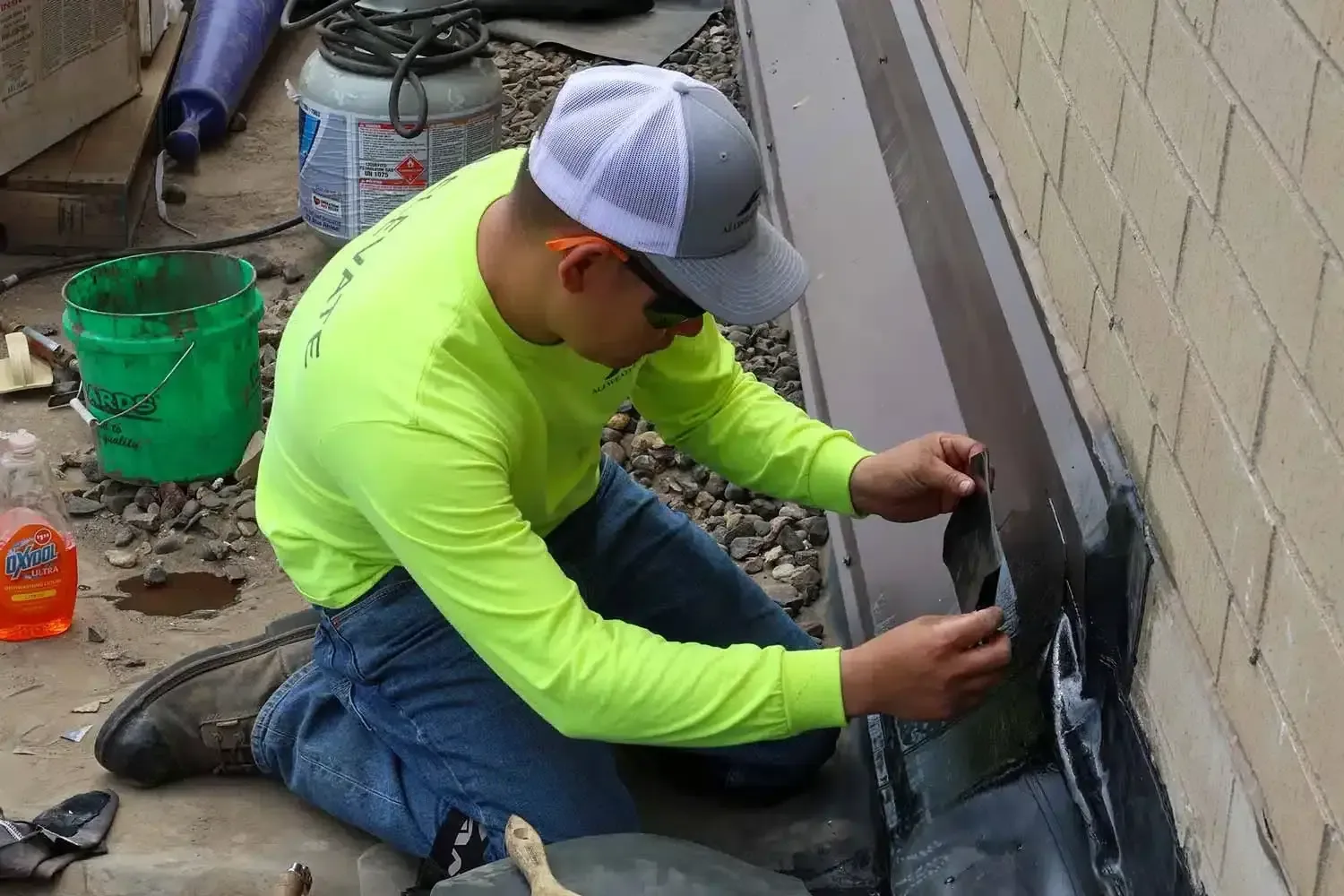
Before repair, we identify any HVAC, plumbing or sign contractor responsible for equipment or supports at the flashing. The owner confirms whether a unit can be isolated or whether a temporary opening is allowed. We remove failed material within the authorized limit, prepare the surface and install the selected flashing to the system requirements. The work is inspected before concealment, especially where a curb meets the field membrane or a wall termination receives metal counterflashing.
Temporary sealant can limit water entry during an urgent response, but it is not always a permanent detail. We state the material and expected follow-up if a short-term measure is used. Permanent repair may include replacement metal, new membrane flashing, termination securement or rebuilding a curb interface. For wind-lifted edge or counterflashing, wind damage repair can address the separate movement condition after inspection.
Access around the detail should be planned with the building contact. We protect the occupied area below, stage material away from drains and keep rooftop equipment service clear. If a wall or façade contractor owns part of the interface, the GC or owner identifies the handoff. A written sequence states which trade installs each layer and who checks the completed transition before the area returns to service.
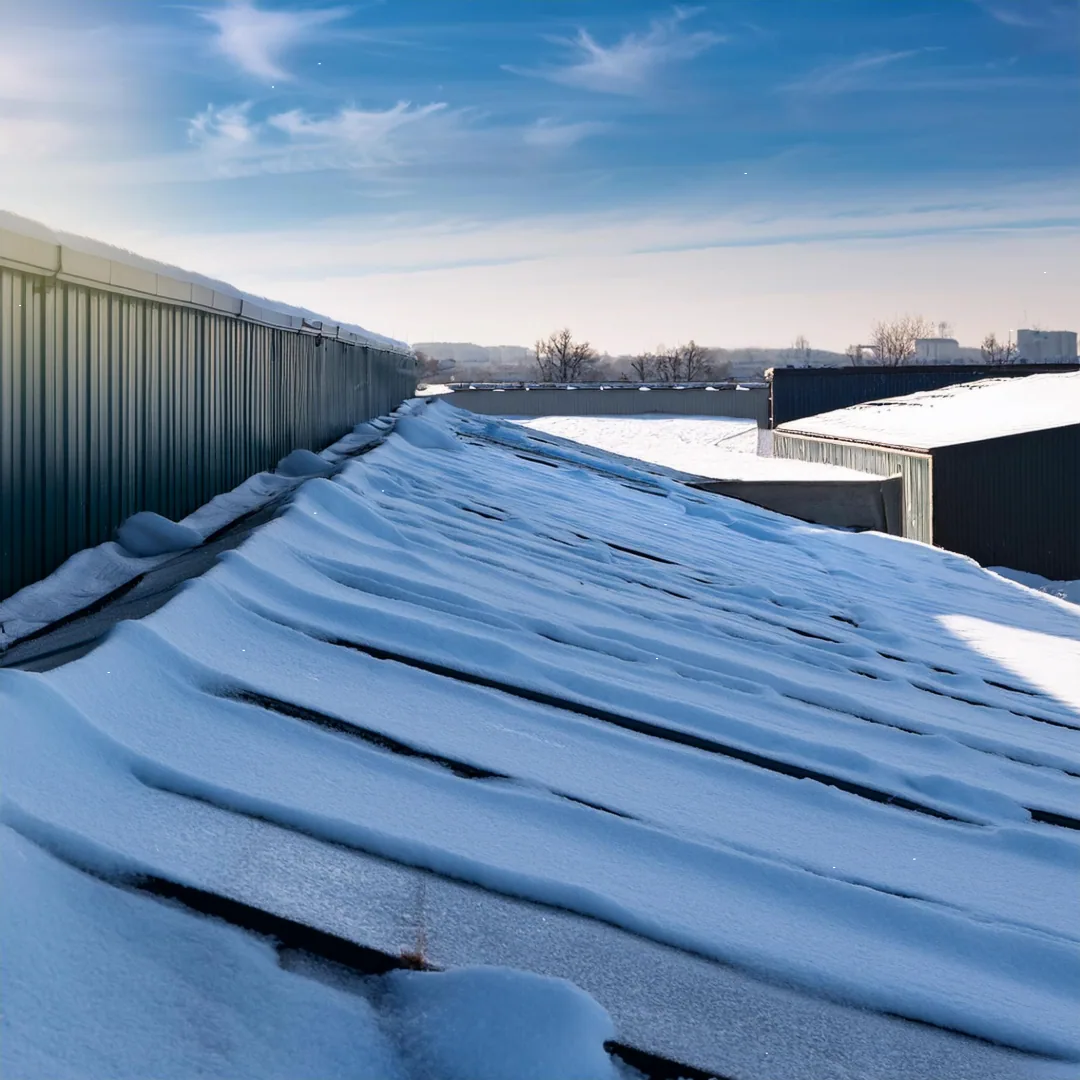
Greeley Airport climate observations include temperature, precipitation, wind and snow. Heat and cold can affect work windows and the handling of repair materials. Wind can stress perimeter details, and snow or ice may keep a crew from safely reaching a curb or wall. We check current conditions and the manufacturer’s application limits before planning a permanent repair.
When a building contact reports that flashing changed after weather, we inspect the detail itself. Regional conditions can explain the visit timing but do not prove that a transition failed. We document open laps, pulled fasteners, displaced metal or water entry where found. If snow or temporary cover hid the connection, we list the limit and schedule a return when safe access is available.
A roof inspection checks the transition and compares it with the reported interior location. The stain alone does not prove the entry point.
We can inspect the curb and membrane detail. The equipment owner or service contractor controls isolation and any removal or adjustment.
Sometimes it is a temporary safeguard, but a lasting repair depends on the assembly, substrate and required tie-in.
Not automatically. We document the affected detail and recommend broader work only when adjacent conditions support it.
Share roof plans, leak location, equipment details, prior repair notes, warranty information and access requirements.
A localized flashing repair may be sufficient when adjoining membrane, wall and substrate remain sound. If deterioration extends beneath the termination or affects several curbs, additional removal or testing may be needed. We identify the specific boundary, materials, tie-in length and inspection step. The scope separates roof flashing from façade reconstruction, equipment relocation and interior finish repair unless those tasks are assigned.
Cost and duration depend on height, access, metal fabrication, assembly, penetrations, substrate preparation and whether the area can be isolated. We compare repair with broader replacement only when the roof evidence supports both. If an owner reports a nearby seam leak, that seam condition should remain its own line item unless inspection confirms the same failure mechanism. This helps reviewers see what each task addresses.
For buildings with warranties, the owner should supply system records before a detail is changed. We confirm whether the proposed material is compatible with the roof assembly and state any manufacturer review needed. If the existing condition cannot be verified until demolition, the proposal notes that contingency and the approval step before added work proceeds.
At a parapet, the detail may include base flashing, a termination bar and metal counterflashing. At a curb, the repair must follow the curb height and membrane transition. We inspect the adjacent surface for movement, corrosion or a loose mechanical connection that could reopen the joint. After preparation, the crew installs the compatible detail and checks corners, laps and terminations before recording closeout photographs.
When wall construction or metal profile prevents a direct tie-in, the roofer should coordinate with the building-envelope designer or façade trade. We can identify the conflict and propose a roof-side limit, but structural or wall reconstruction belongs to the assigned design and construction scope. Clear boundaries help prevent water entry at an unowned transition after roof work is complete.
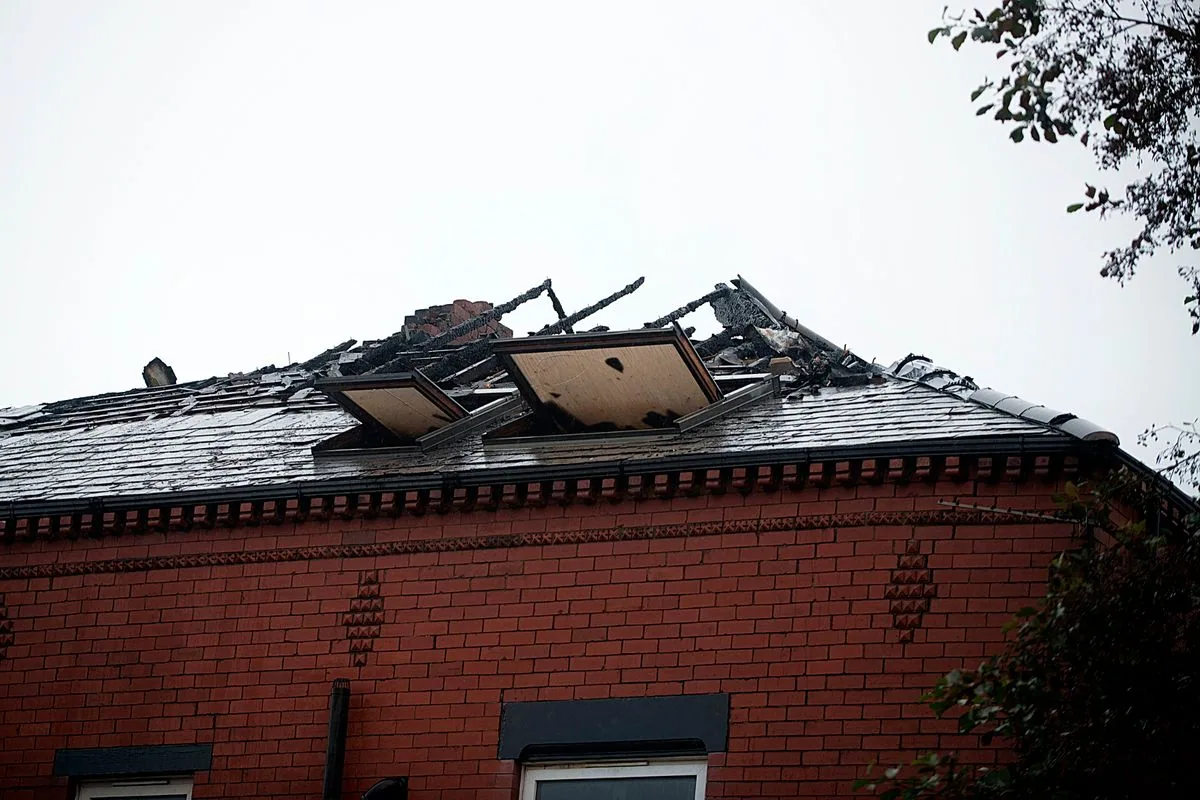
Closeout identifies the wall, curb, penetration or edge repaired, materials, photographs, substrate observations and any remaining concern. We note whether the tie-in was checked before cover-up and whether another contractor owns an adjacent layer. The property contact receives a roof-zone reference for future inspection.
Provide roof plans, leak timing, prior flashing repairs, equipment contacts, access rules and warranty information before the visit. Downtown Greeley and Highpointe Business Park represent different local commercial contexts, but each roof detail must be verified at the property. We return a clear repair boundary and follow-up recommendation.
If the same location is inspected later, dated photographs let facilities staff compare the repair with the current condition. We include access limits and any concealed section that was not opened. This makes a future service call more useful and avoids treating an adjacent detail as part of the completed flashing work without inspection.