Does strong wind prove my commercial roof was damaged?
No. We inspect the roof, document visible movement and identify any areas that could not be reached safely.
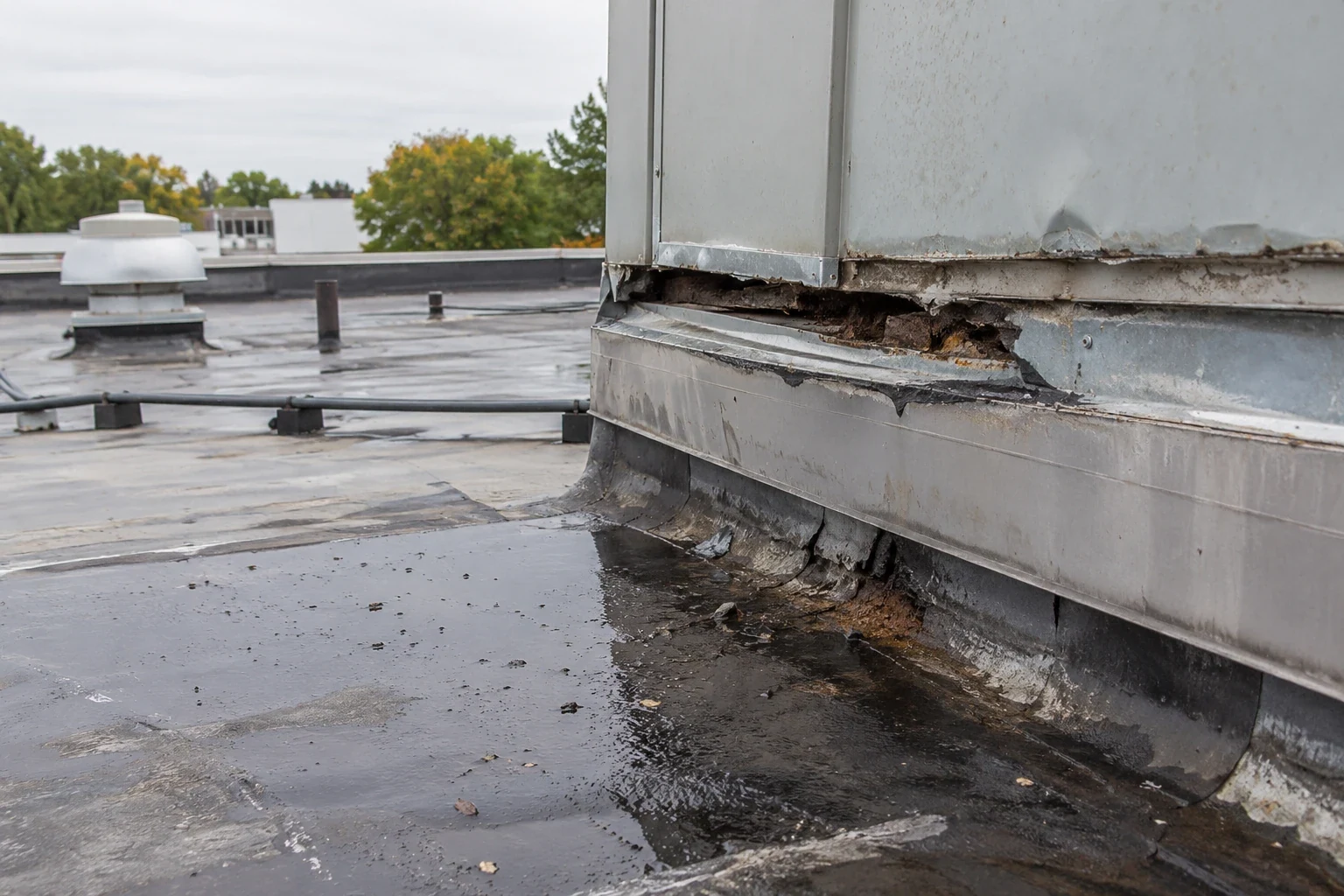
After strong wind, look for lifted edges, shifted metal, loose flashing or a leak that began during the weather. We inspect the reported roof area, record visible movement and check nearby attachment points before proposing permanent work. If the roof is unsafe to enter, we identify the access limit and discuss an interior safeguard with the building contact. A wind report alone does not establish that a roof component failed.
Greeley Airport observations track wind, while Greeley’s commercial districts include Downtown Greeley and Highpointe Business Park. Those place names give local service context; each roof still needs its own inspection. We ask the owner where the first leak or visible change appeared and map that report to a roof zone.
Wind can stress roof edges, corners, seams, metal panels, flashing and equipment supports differently. We inspect the point the owner reported, then check adjacent fasteners, terminations and transitions for movement. A loose cap may be visible from the ground, while a seam opening can sit behind a parapet. Photos capture the location and scale of observed conditions. We do not infer hidden damage from a single lifted piece.
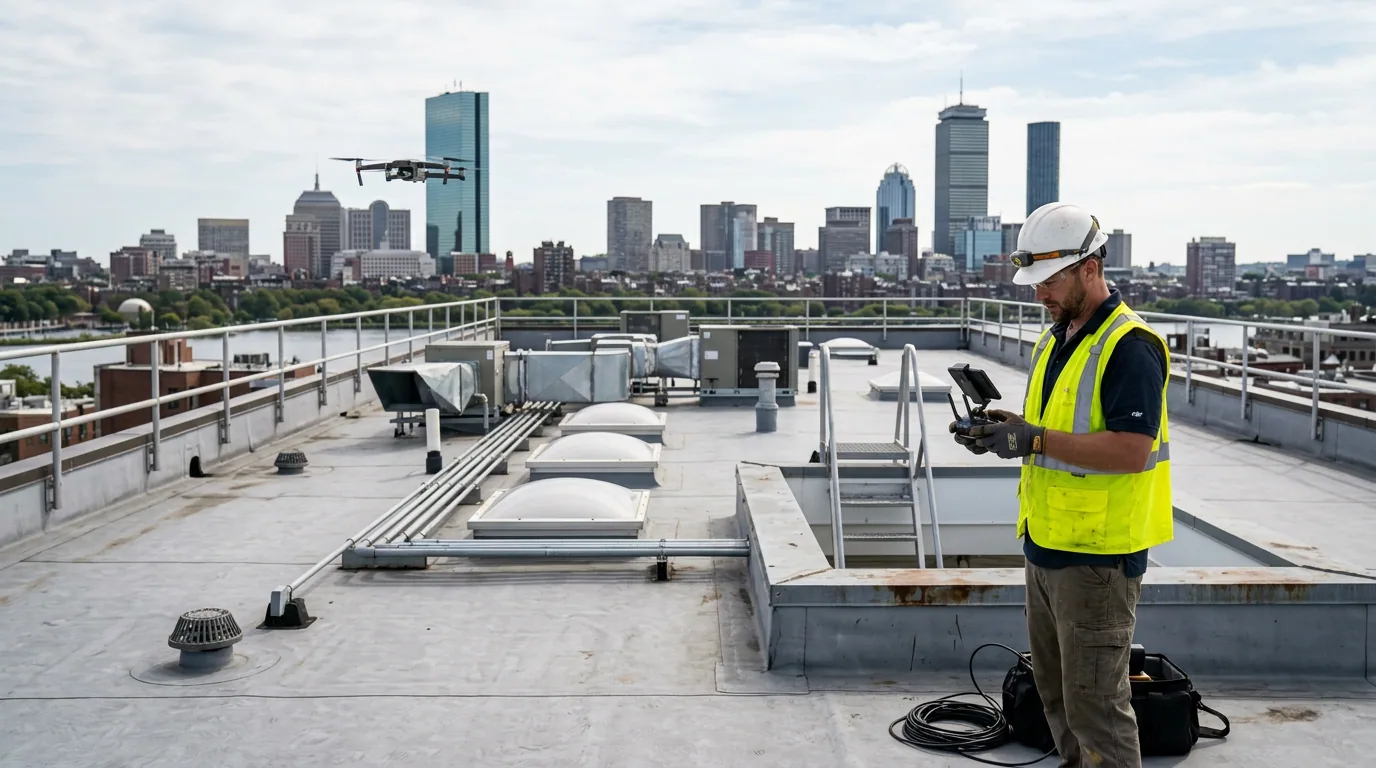
Inside, we compare stains, ceiling changes or water entry with the nearest roof details. Water can travel before becoming visible, so the interior mark may be offset from the opening. We note whether temporary tarping, prior repairs or equipment work has changed the area. A commercial roof inspection can document accessible findings; a drone inspection may help view certain elevations if approved and conditions allow.
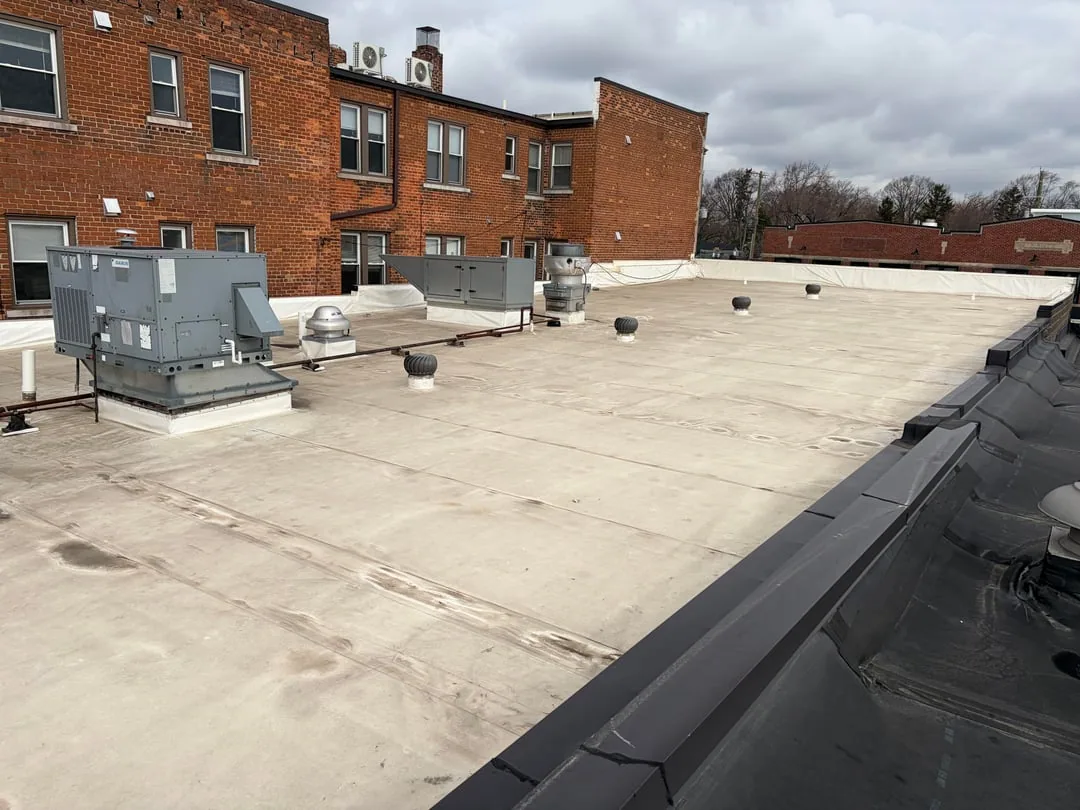
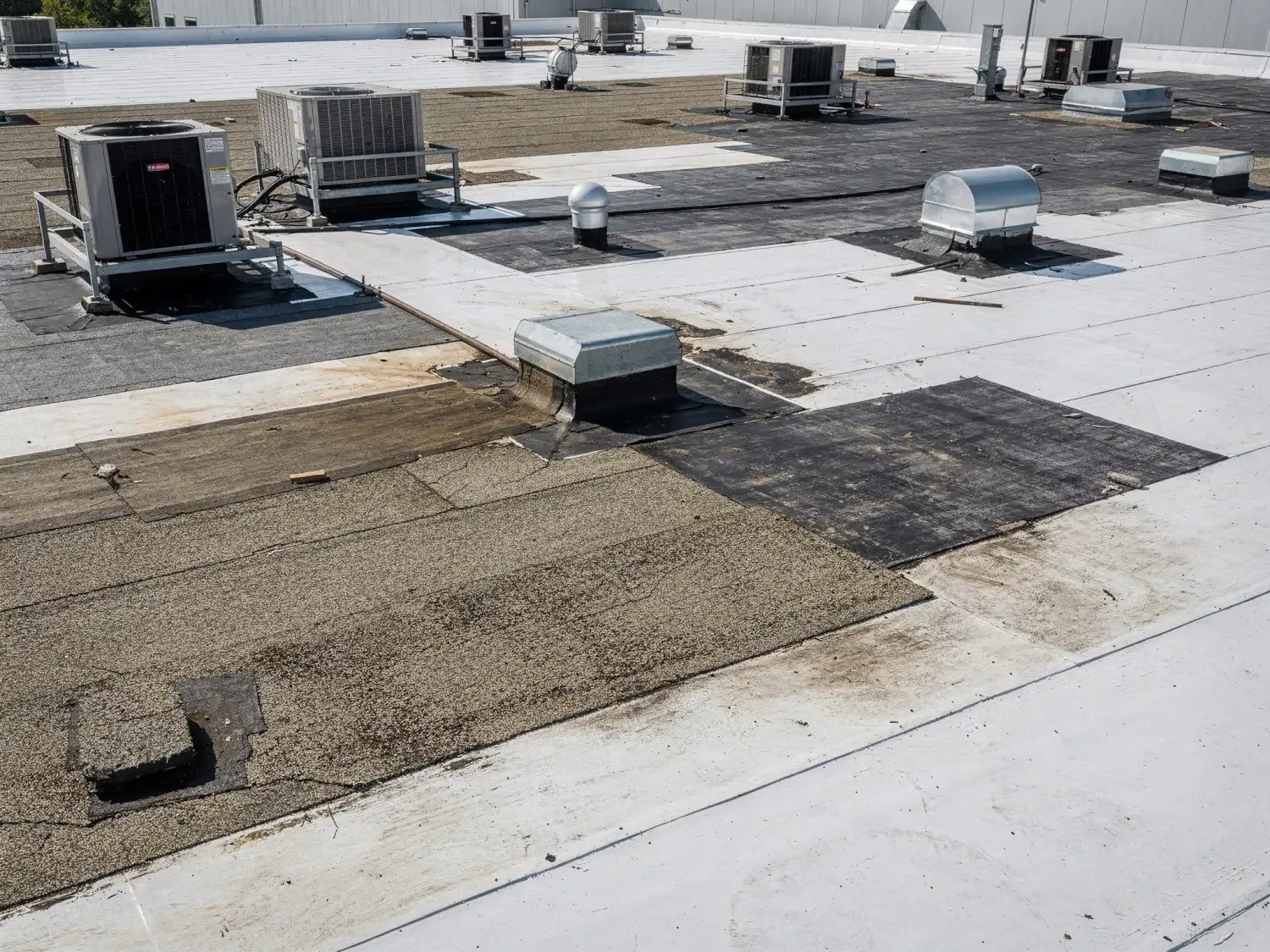
For metal roofs, we check panel laps, clips, exposed fasteners and perimeter transitions according to the assembly found. For membrane systems, we inspect seams, edge securement and flashing. The product type must be confirmed before selecting a repair method. If the manufacturer details or attachment pattern cannot be identified, we state that limit and request drawings or further testing rather than guessing at a compatible repair.
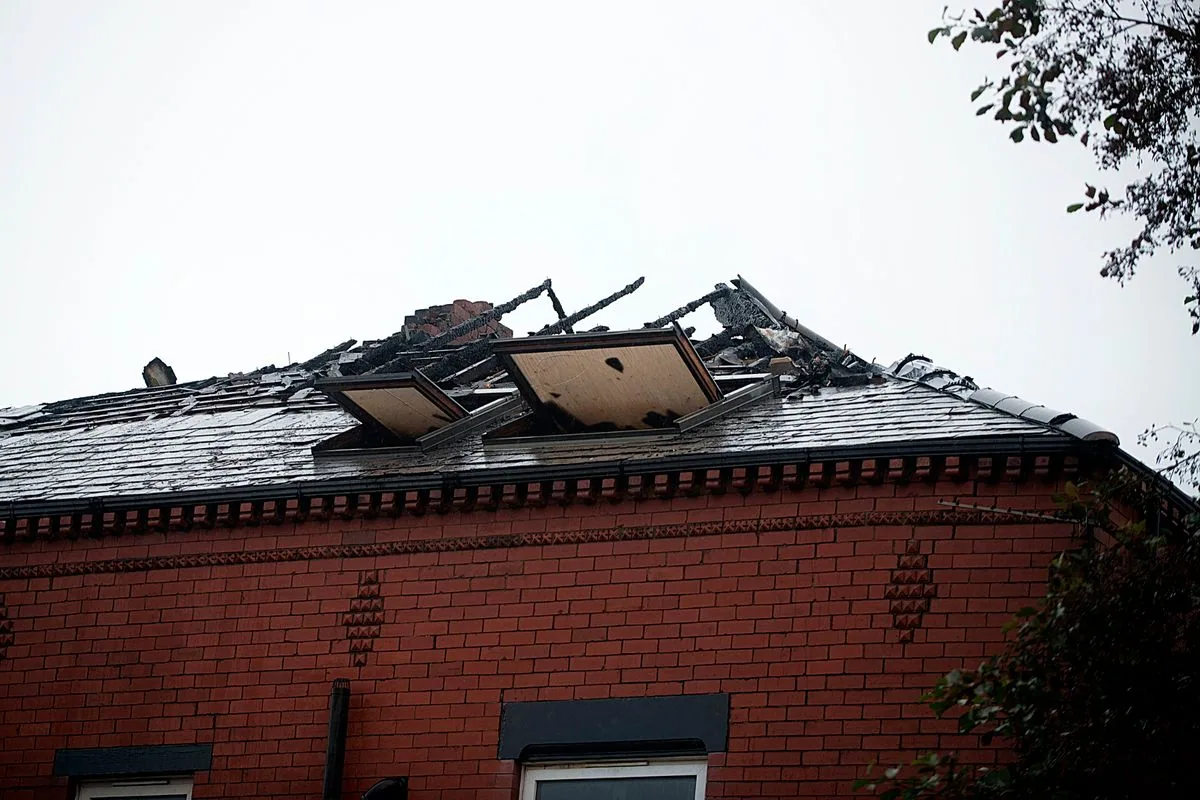
If water is entering, the first task is to protect the affected interior and determine whether a temporary roof measure can be installed safely. The owner identifies inventory, equipment or occupied rooms beneath the work zone. We set a temporary boundary, use compatible materials for short-term protection and note how often the area should be checked. Temporary coverage is not the same as permanent repair, and its limits belong in the service record.
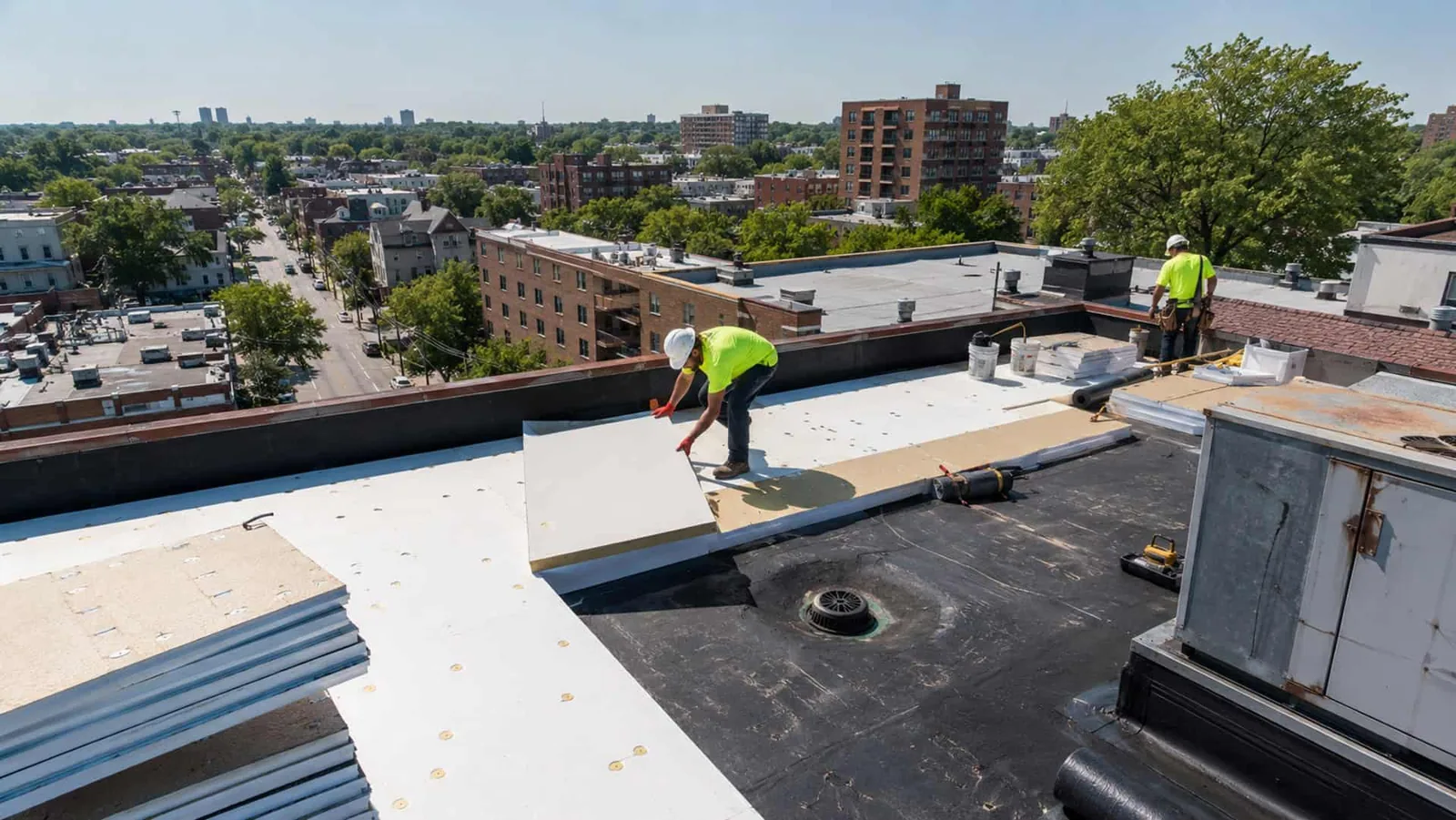
Permanent work begins after the roof assembly and displaced details are understood. We remove failed material only within the approved area, restore the attachment or flashing transition and inspect the tie-in before closing. If wind moved several components, the scope can separate urgent resecure work from a broader condition survey. For repeated edge movement or open joints, flashing failure repair and seam failure repair may address related details after inspection.
Access planning matters around public entrances, loading areas and rooftop equipment. A Downtown property manager or a Highpointe facility lead can identify safe staging and areas that must remain open. We coordinate those choices with the building contact without assuming a standard access route. A written sequence states what roof section is active, what area below is protected and who releases the zone after the work is checked.
Greeley Airport’s climate series includes wind observations. Those records help describe regional exposure, but they do not measure wind at a particular roof or prove that a component was damaged. We use the owner’s reported event timing, the site inspection and any accessible maintenance record to establish the visit context. Current surface and wind conditions determine whether a crew can safely inspect or repair the roof.
Weld County storm summaries include severe-weather events near Greeley. If the owner suspects wind damage, we photograph observed displacement, open seams or water entry and state areas that could not be inspected. We avoid assigning a cause beyond the evidence. A review after the property is safe may be needed when the roof remained wet, temporary protection concealed a detail or access was restricted during the first visit.
No. We inspect the roof, document visible movement and identify any areas that could not be reached safely.
If access is safe and authorized, we can discuss temporary protection and state how it differs from permanent repair.
We review edges, corners, seams, flashing, panels and equipment supports based on the roof system actually present.
We can assess adjacent attachment and recommend a broader survey when observed movement or access conditions support it.
Provide roof plans, event timing, leak locations, prior repairs, temporary cover details and site-access requirements.
A single displaced edge or flashing detail may be repairable if the surrounding attachment is sound. If multiple roof zones show movement, a broader survey can help define the work boundary. We state the observed condition, repair method, tie-in and any follow-up inspection. The owner can compare temporary protection, local repair and broader restoration as distinct choices.
Price and timing depend on roof system, height, access, material availability, amount of displaced area and interior protection. We compare targeted roof repair with replacement only when site findings support both. If a wind event also caused a puncture or tear, membrane puncture repair may apply to that separate condition. Each scope lists the specific roof zone and excludes unrelated interior restoration unless it is assigned.
For larger buildings, a phased approach can restore secure perimeter conditions first and then address interior roof fields. We identify which details must be tested before the next phase and whether rooftop equipment or solar attachments affect access. If the assembly is under warranty, the owner should provide its documents before a repair method is selected. We note the records requested and avoid promising warranty treatment without confirmation from the responsible party.
When the owner needs a claim or capital record, we can supply before-and-after photographs, a sketch of the affected perimeter, replaced components and observed attachment details. The file should distinguish material removed from material simply checked. Any area concealed by a temporary cover or inaccessible because of unsafe conditions is listed for follow-up. This makes the next maintenance or engineering review more precise.
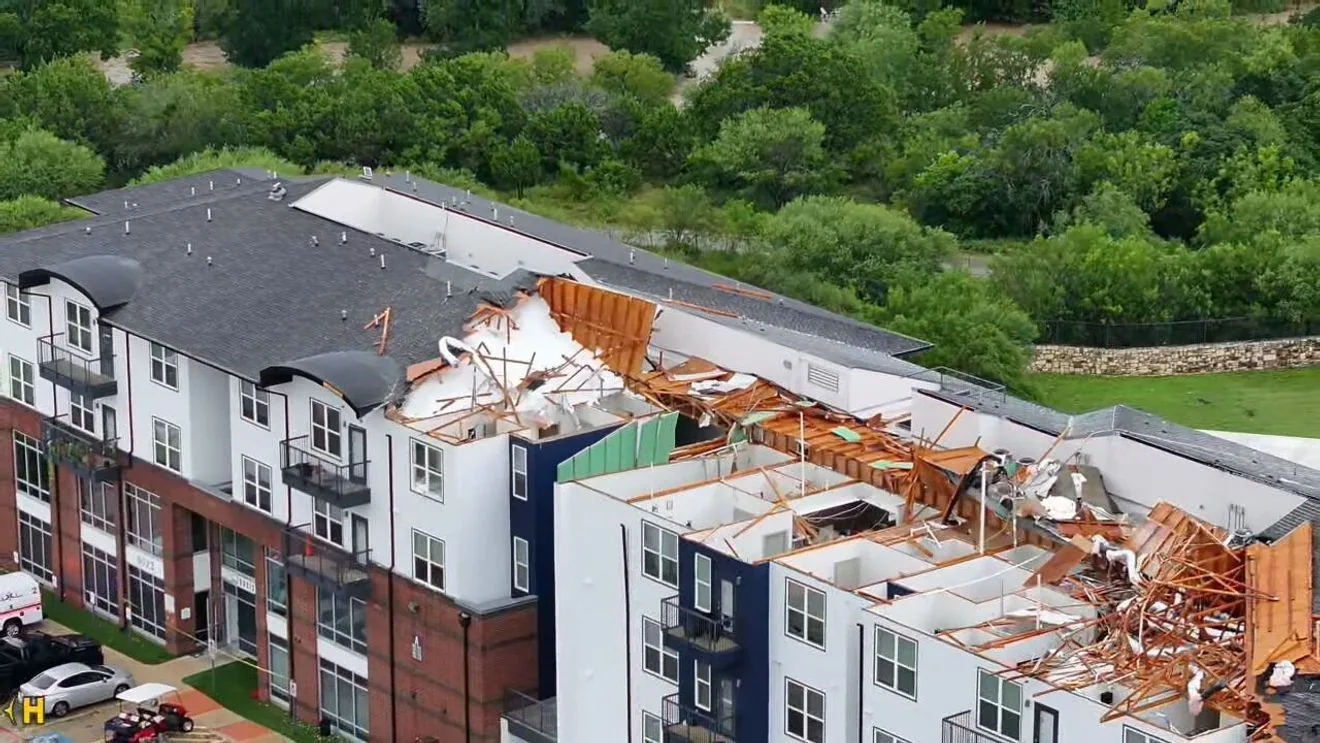
Closeout identifies the roof area inspected, displaced details corrected, materials used, photographs and remaining open items. We record temporary protection removal, any areas excluded from the visit and the follow-up date if more access is required. This gives the owner a timeline from the reported condition through permanent repair without overstating cause or extent.
Send roof plans, the first leak location, event timing, prior repair records, temporary protection notes and access rules before an assessment. Identify the person who can authorize an interior closure or roof entry. Downtown Greeley and Highpointe Business Park illustrate local commercial settings; the field inspection determines each building’s actual condition. We return a documented next step suited to that roof.
For a multi-building owner, we label each inspection by property and roof zone so photographs are not mistaken for conditions at another address. That makes a later maintenance check more direct and gives a facilities contact a record to hand to the next contractor.