Can a service department stay open during roof repairs?
We can coordinate work zones and barriers around the service schedule when access allows. The manager identifies vehicle routes and any bay that must stay available.
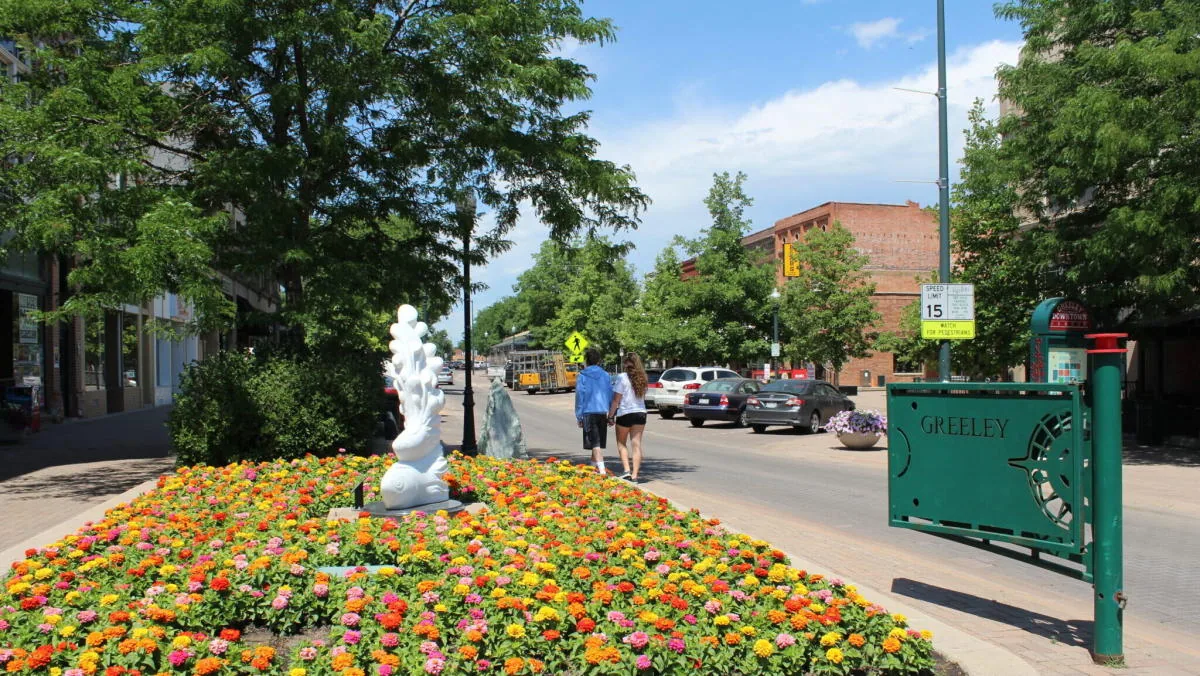
A drip over a showroom display or service lane can affect customers, vehicles and scheduled work at once. We locate the reported area, inspect the corresponding roof zone and check seams, drains, curbs, skylights and perimeter metal for a connected water path. The inspection map separates the visible mark from a confirmed opening and identifies any vehicle or interior protection needed. Greeley’s U.S. 34 Business route serves regional travel, and Highpointe Business Park includes light and medium-industrial properties. We verify the dealership’s actual access, layout and roof system at the property.
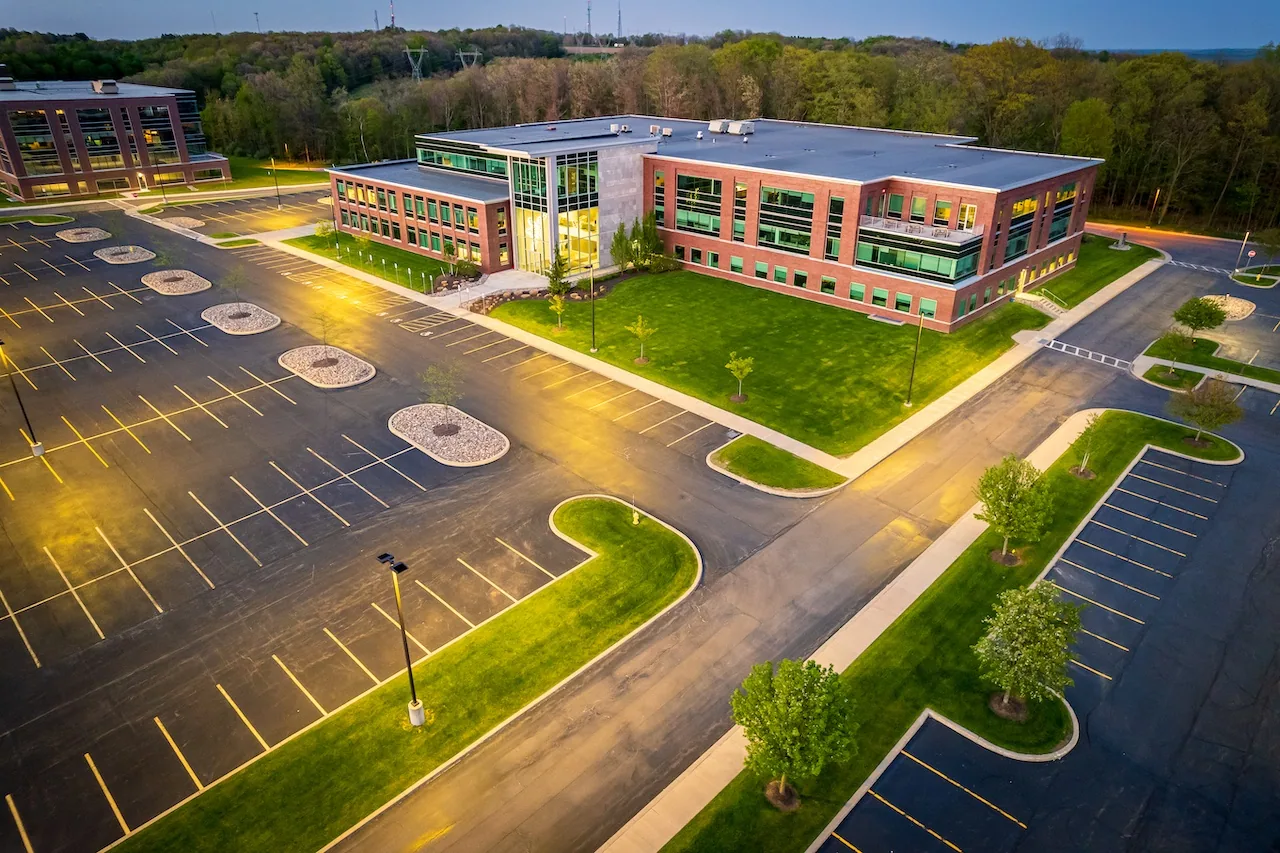
Dealership roofs can cover different uses, from sales floor to service bays and parts storage. We confirm the building layout, customer entrances, vehicle routes and equipment schedule with the manager before setting a work window. The manager confirms the dealership’s staging and access plan, including any constraints on the U.S. 34 Business Corridor or at Highpointe Business Park.
We record whether water appeared in the showroom, office, parts counter, wash area or service bay and compare it with drains and roof openings above. The stain may be offset from a seam or flashing because water can travel along a deck or insulation layer before it becomes visible. We inspect nearby curbs, skylight frames, penetrations, joints and prior repairs, then mark the roof zone and the indoor area that prompted the visit.
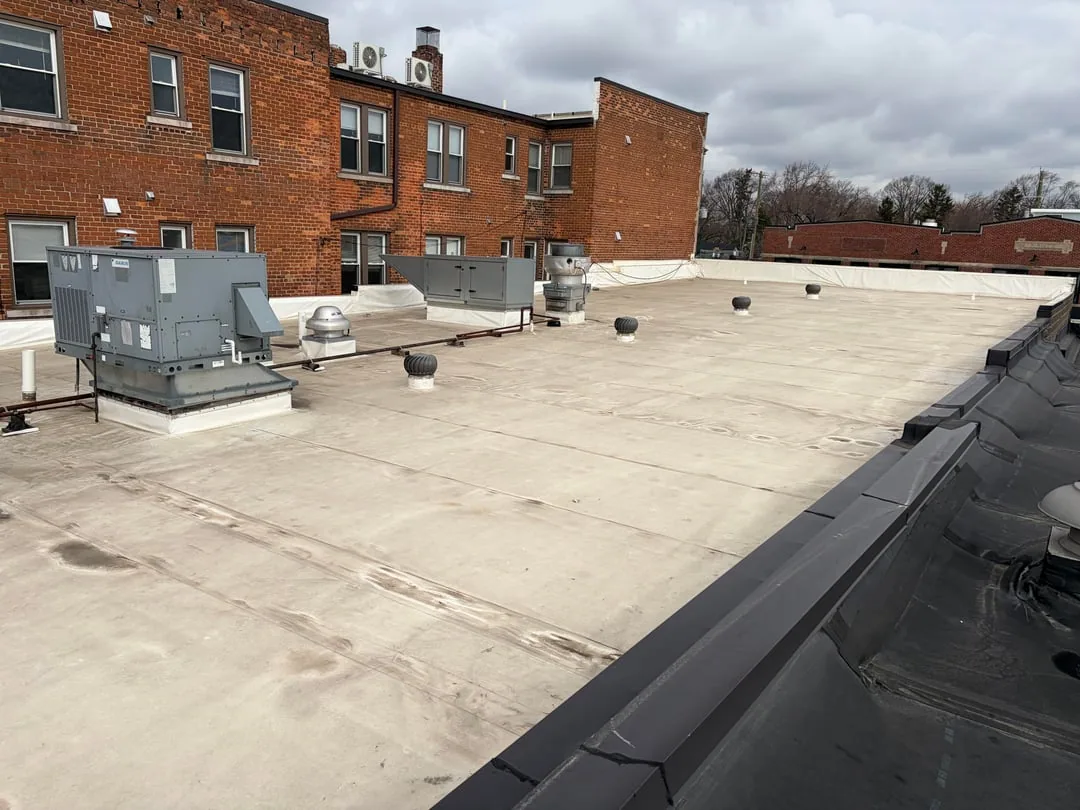
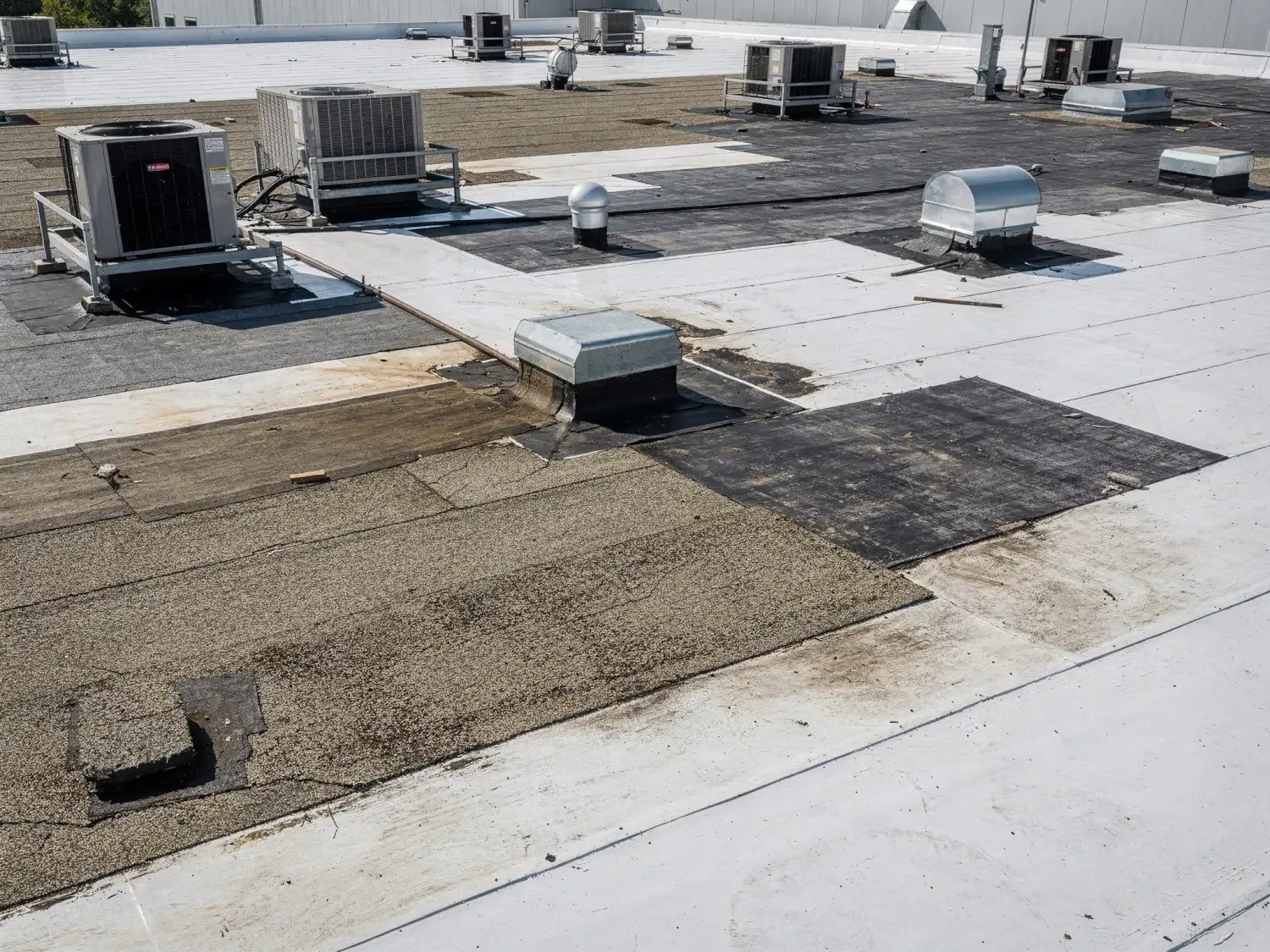
Service bays may have exhaust equipment, duct supports or vehicle lifts that affect interior access. We identify those locations without assuming every dealership has the same equipment. Loose flashing, blocked drainage, fastener movement, punctures and damaged sealant are recorded as distinct conditions. If the assembly may contain hidden moisture, infrared mapping can help define a test area. A roof inspection report gives management photos and a repair boundary suitable for follow-up.
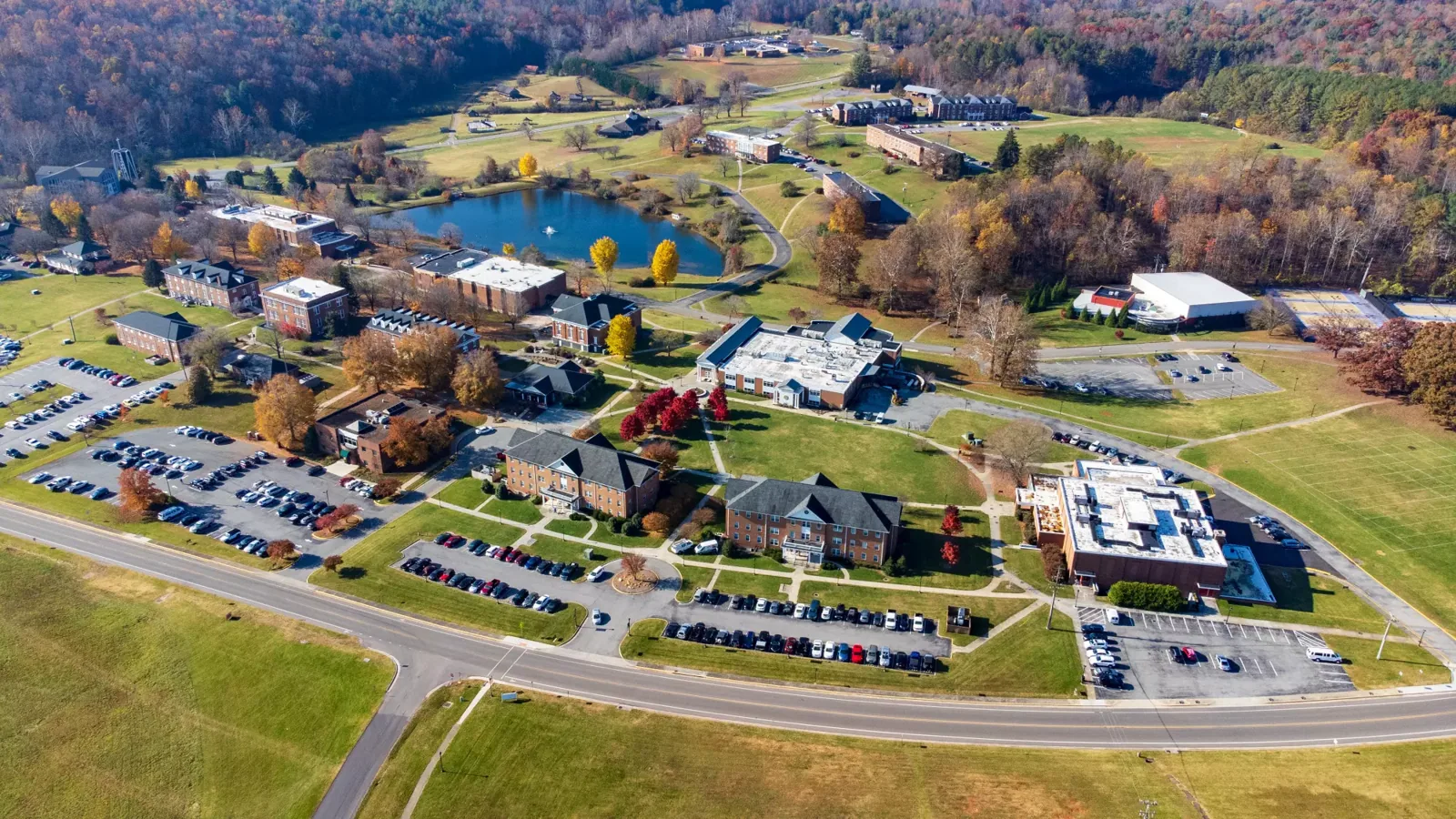
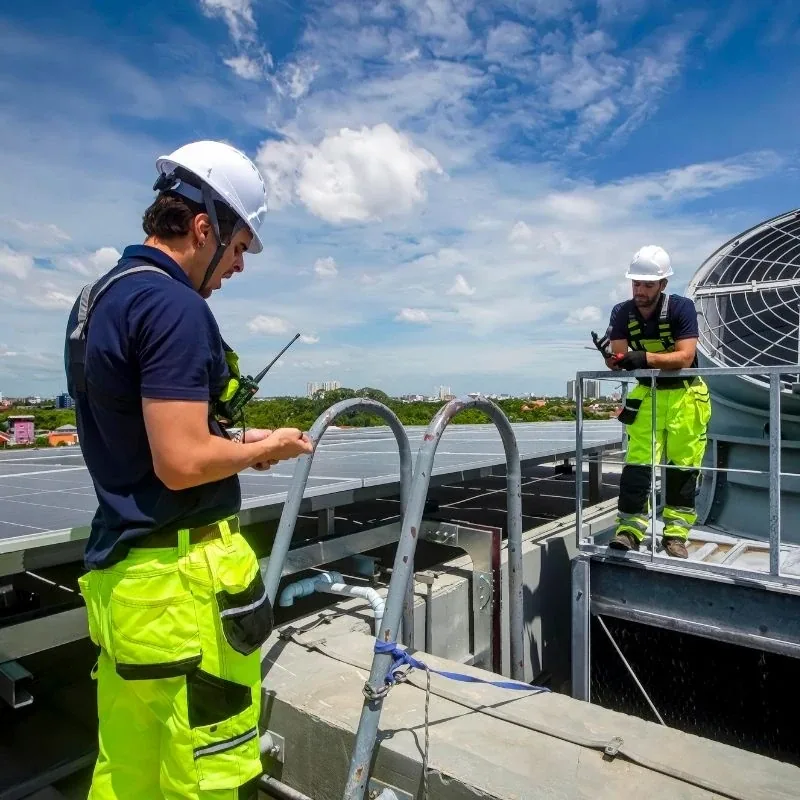
Before mobilization, we confirm customer entrances, vehicle display areas, delivery docks, service-advisor lanes and any route that must remain open. The dealership manager identifies peak hours, parts deliveries and the person who can approve a temporary closure. We plan lift placement and material drops away from vehicles, set barriers below active work and coordinate notices with sales and service leaders. If the leak requires interior protection, the manager helps clear the affected bay or display area before the roof is opened.
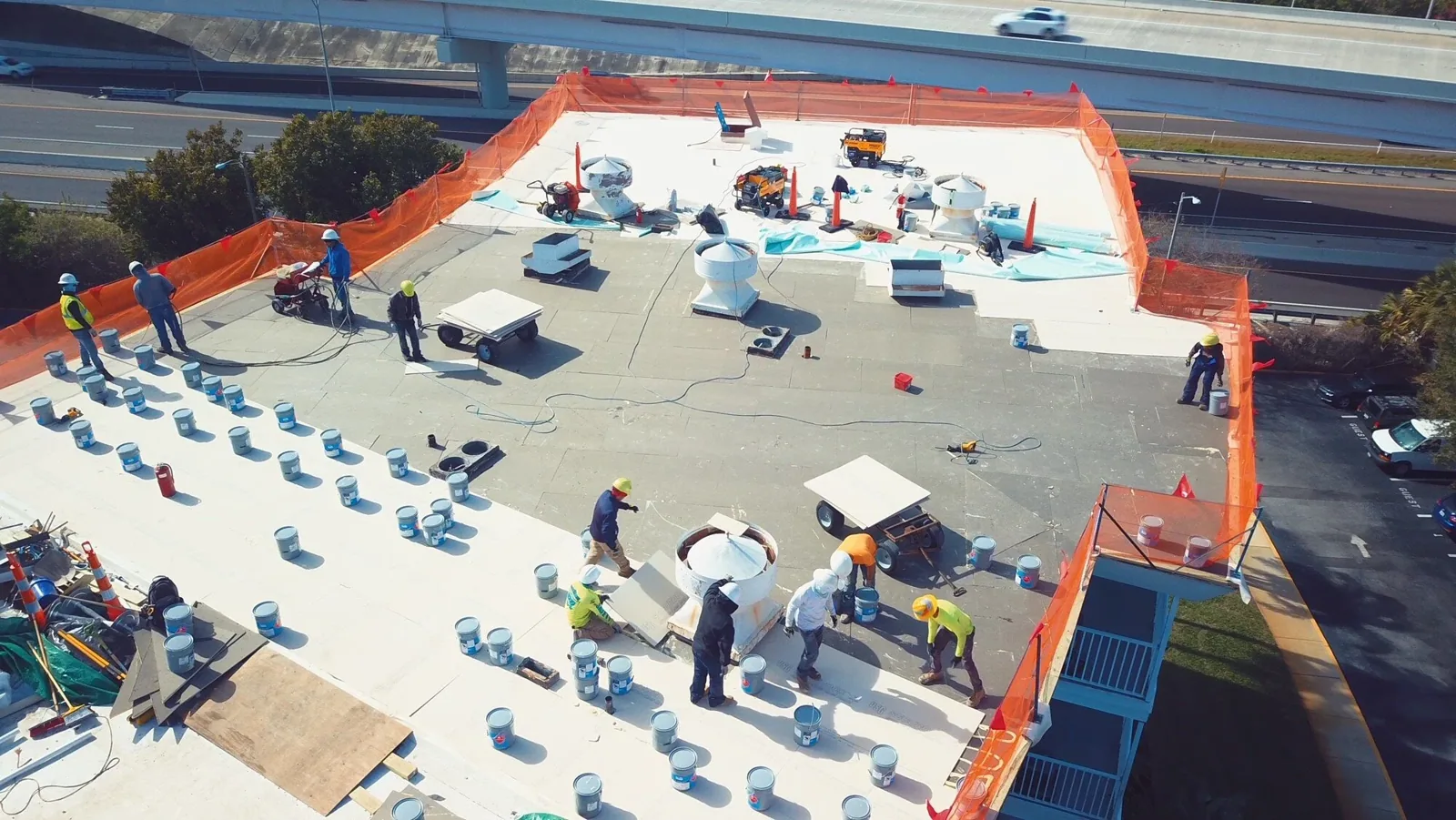
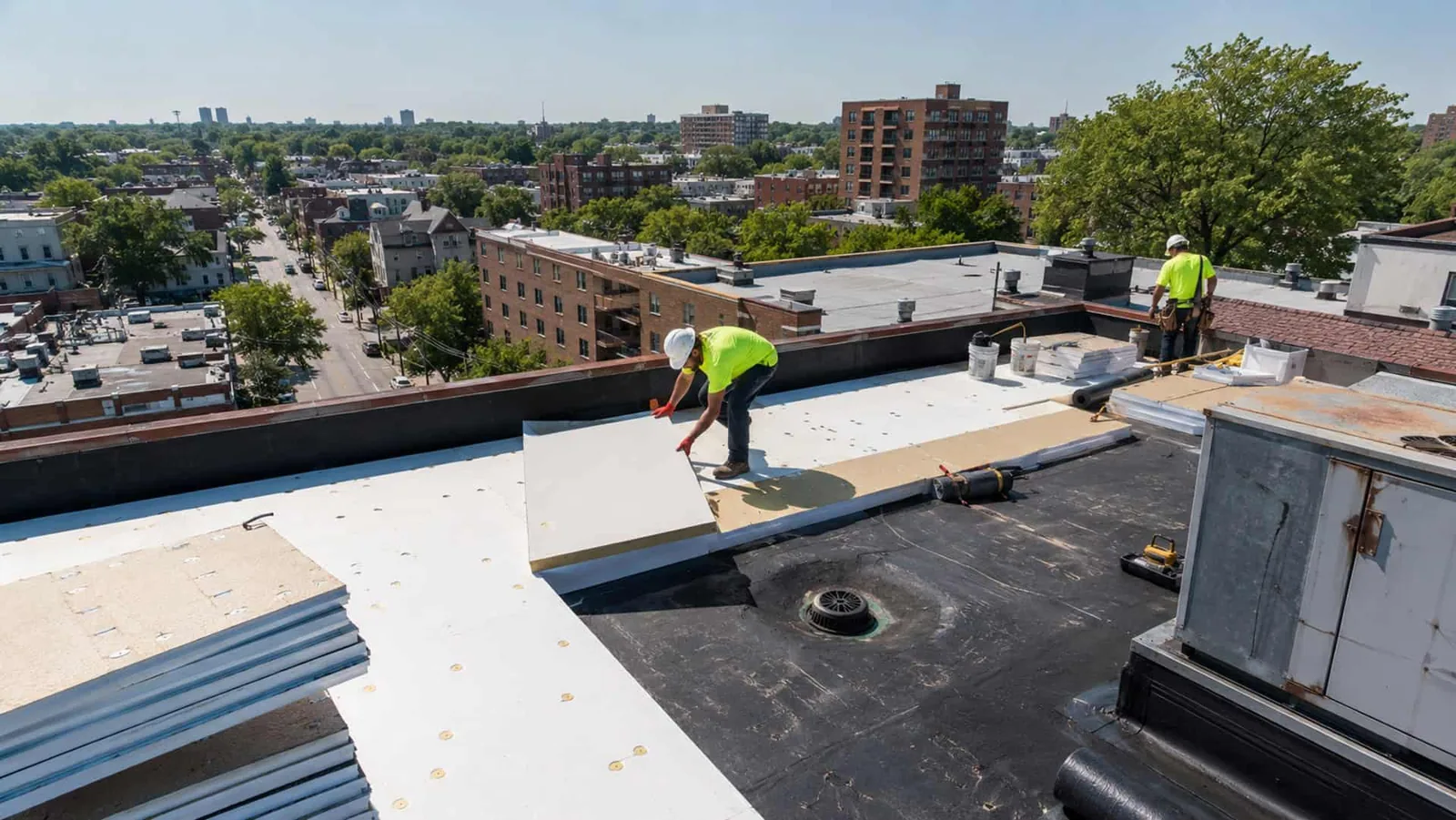
Replacement may be phased so work stays over one section while other service or sales areas continue operating. We plan daily tear-off limits, temporary dry-in, roof equipment coordination and a shift-end handoff. An occupied-building reroof plan can reduce simultaneous disruption when the layout supports it. We update the site contact before a material lift, weather delay or change to the active roof boundary so vehicle and customer movement can be redirected safely.
The airport’s long-term climate observations include hot periods, wind and measurable snow depth. Each can change when a dealership crew can safely reach roof edges, handle membrane or move a lift. We check the current surface and conditions at the property before choosing an application window. The manager can share service appointments and inventory movements so delivery traffic does not compete with staging or lift access. After winter weather, inspection notes should identify which drains and perimeter areas were safely reachable.
Weld County storm summaries include hail near Greeley and tornado events. Following a report, we inspect the dealership roof and document any puncture, displaced panel, opened seam or damaged flashing. We inspect the roof and any reported vehicle area directly before recommending work. We compare the roof observations with the reported room or service bay, and note any area that could not be checked safely. Snow and wind also warrant a review of roof-edge securement and drainage.
We can coordinate work zones and barriers around the service schedule when access allows. The manager identifies vehicle routes and any bay that must stay available.
The dealership identifies vehicles or display areas beneath the active zone. We plan interior or ground protection and confirm the area is clear before opening the roof.
No. We inspect the roof and any reported vehicle area directly, then document conditions at the property before recommending a repair.
An evening or early shift may work when roof access, staffing, weather and security allow. The manager confirms the approved time and delivery route.
Share roof drawings, leak reports, service-bay layouts, delivery hours, vehicle controls and the contact who can approve access or equipment changes.
A local seam, curb or skylight repair may be sufficient when the surrounding roof is sound. Repeated leaks, wet insulation or deteriorated attachment can lead to further testing or replacement. We identify whether cars, parts or customer areas need temporary protection and list those controls separately from permanent roof work. The manager receives a scope that names the affected section rather than an unsupported dealership-wide conclusion.
Cost and duration depend on roof area, assembly, number of openings, equipment, traffic control, lift access, interior barriers and any time limits on noisy work. We compare targeted repair with replacement using inspection findings. A flex-industrial building may contain multiple tenant uses, while a large retail store has different inventory and customer flow. The dealership’s own service and sales schedule guides the work sequence.
For phased work, we map roof sections against the showroom, offices, parts room and active service bays. That map helps the manager decide which area can close briefly, which must remain operational and whether a repair should wait for a quieter shift. We also identify roof access points, approved staging space, overhead doors that need clearance and any security procedure for after-hours work. These are coordination questions, not assumptions about a standard dealership layout. The written scope separates the roof task, interior safeguards, vehicle movement and customer notices so each decision has an owner.
When replacement is under consideration, we document the limits of the current assembly and the evidence supporting the recommendation. A test cut or moisture survey may answer a specific question before a larger commitment. We state the proposed limits, penetrations and equipment interfaces, then note where existing conditions require confirmation after opening. This gives ownership and the facility manager a basis to compare immediate repair, additional investigation and phased capital work without treating one leak as proof that every roof section has failed.
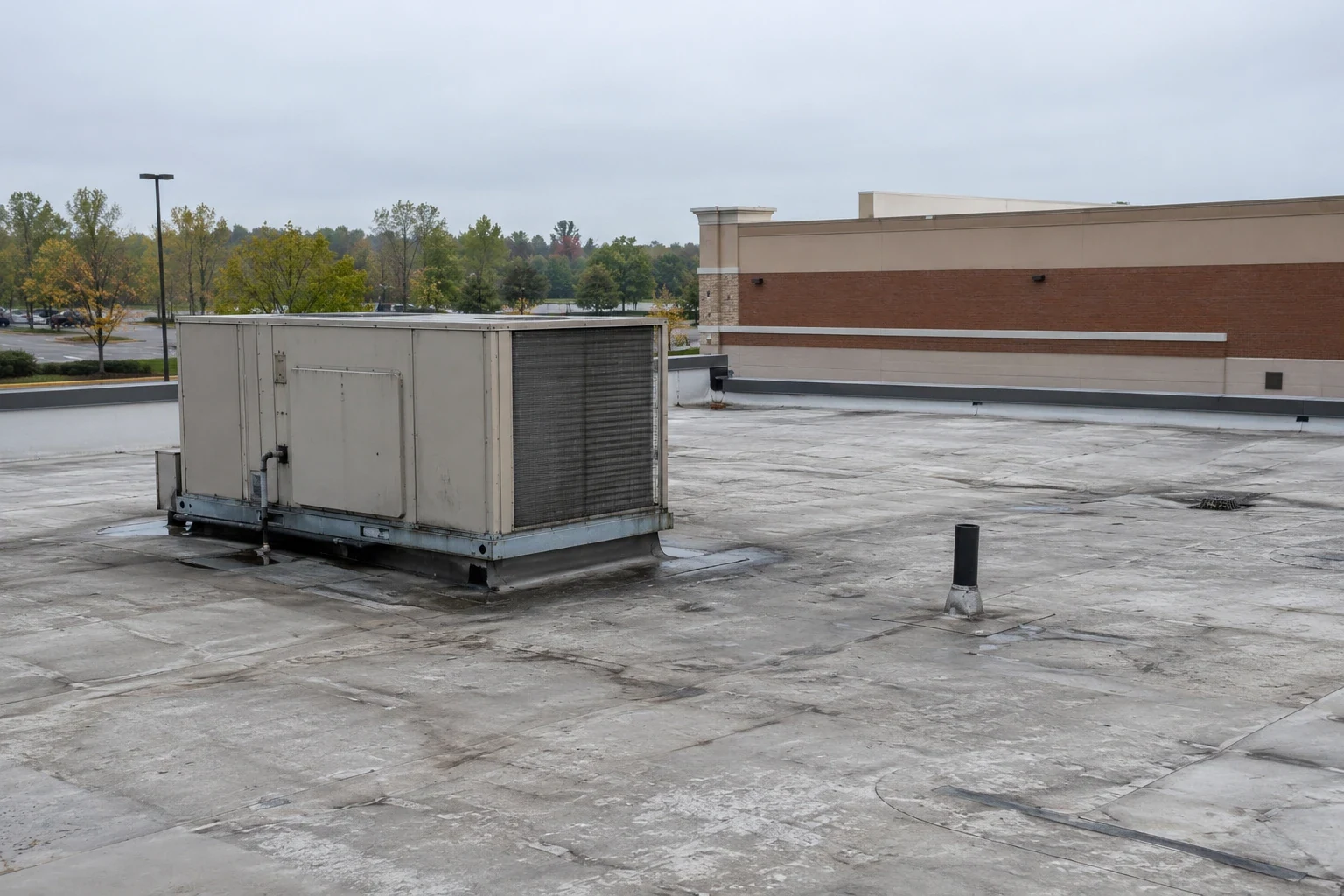
Closeout documents the repaired zone, photographs, materials, drain and curb details and any open item. We identify whether vehicles or equipment were moved for the work and when the area was released. Maintenance staff can use the roof plan before a future HVAC or signage visit and can match a new leak report with the earlier repair boundary. If another trade must finish a step, the record identifies the interface and contact needed.
Send roof plans, leak timing, service-bay layout, delivery schedules, prior repairs and access rules before an assessment. Identify who can authorize vehicle movement, after-hours entry or a temporary closure. The U.S. 34 Business route and Highpointe Business Park add local commercial context, but the dealership’s actual property determines access and assembly. We inspect that roof and return a written next step for management.