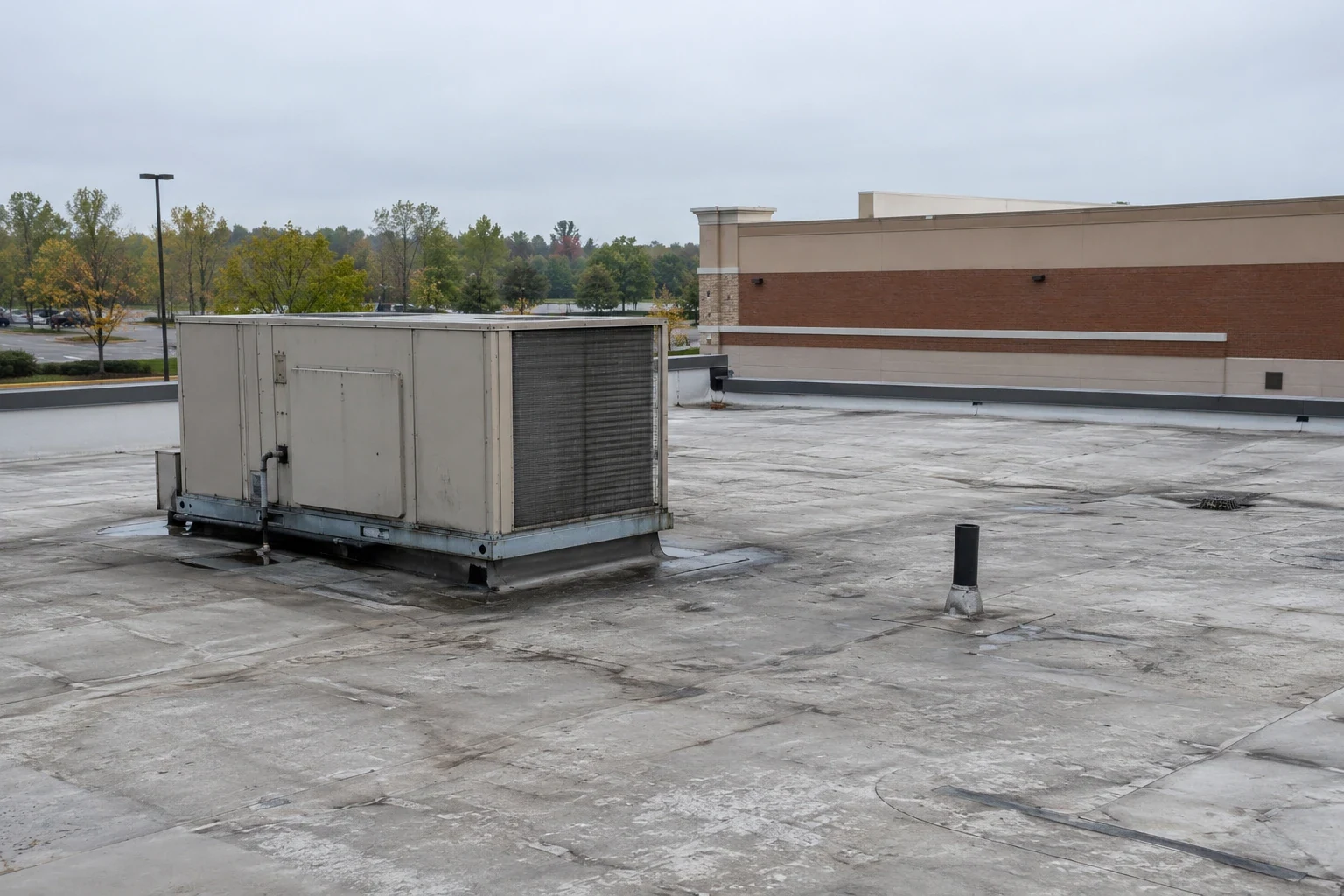
Can the store stay open during roof repairs?
Work may be separated by roof and interior zones when customer paths and inventory can be protected. The manager confirms hours, barriers and any temporary aisle closure.

A leak over a sales aisle can require floor protection, inventory movement and a roof inspection before the store manager knows whether one repair or several are needed. We locate the reported bay, compare it with the roof drainage area and inspect seams, curbs, drains, penetrations and edge details. The work plan identifies what can be repaired while the store operates and what needs a scheduled closure. Greeley’s Two Rivers Marketplace is a planned retail, dining and entertainment project at U.S. 34 Business and 83rd Avenue, providing a local retail context without making any claim about the roof at an individual store.
Large-format retail operations often combine public doors, receiving docks, signage, rooftop equipment and extensive interior aisles. We confirm each store’s access route, customer hours, delivery window and inventory controls before mobilizing. The U.S. 34 Business Corridor connects Greeley streets with regional routes, while the property manager sets the actual staging and safety rules at a retail building.
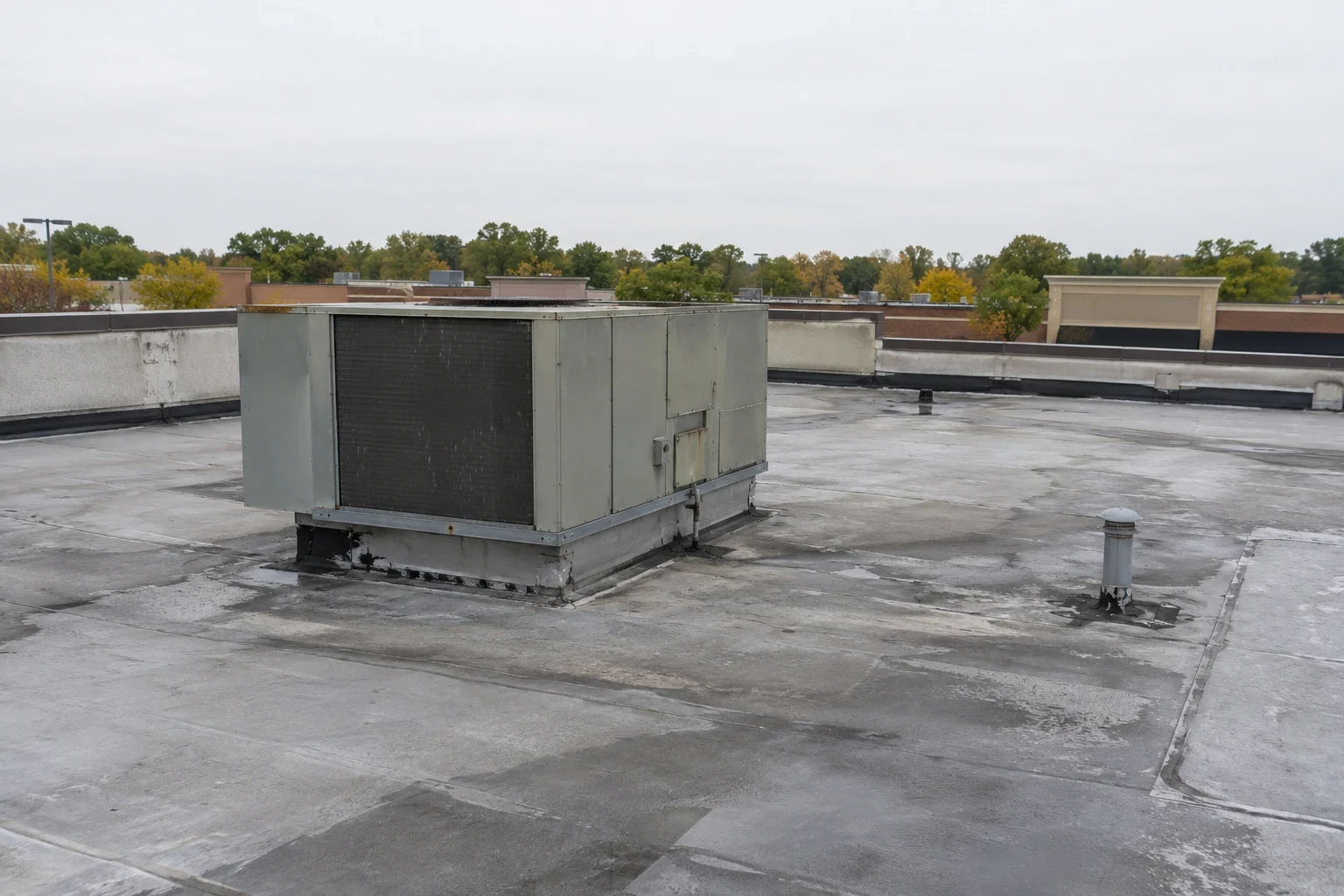
A wide roof can send water toward an outlet far from the aisle where a stain appears. We map interior reports against roof slopes, drains, seams, rooftop units, skylights and parapets, then inspect connecting details along the likely route. The field record notes whether water is standing, moving or tied to a visible opening. Separate observations matter when multiple departments report drips during the same storm; one symptom does not prove a shared source.
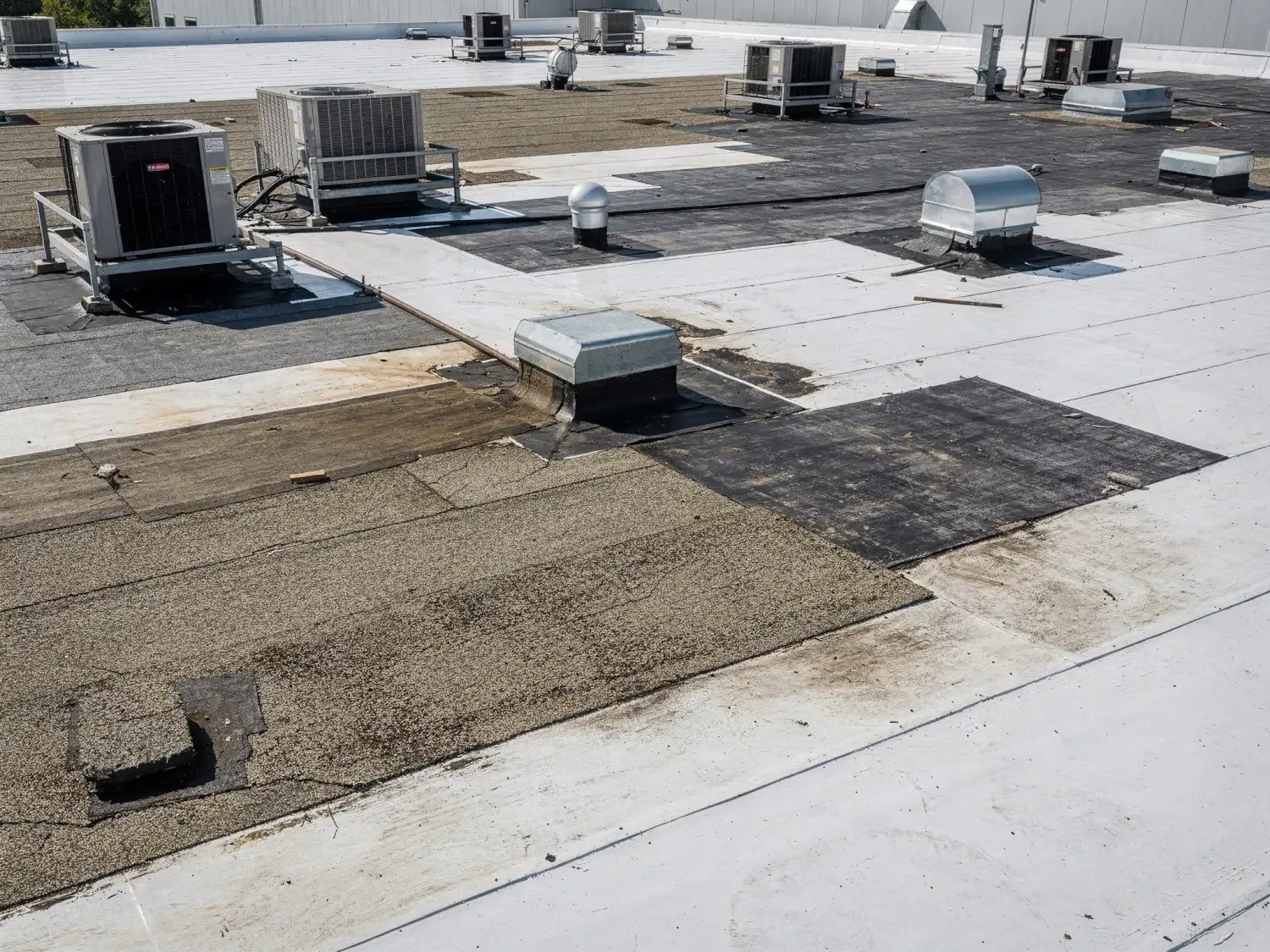
We mark the roof by section and document areas where repairs or equipment work may have changed the surface. Loose membrane, damaged metal, open seams, blocked drain strainers and failed curbs are listed by location. If moisture may extend below the membrane, infrared mapping can target a test area before material removal. The store receives a roof plan that distinguishes confirmed conditions from a possible source requiring another check.
A roof inventory for a large store should show drainage districts, equipment clusters and any transition where the roof plane changes. We record roof seams and penetrations by their position relative to a store grid or landmark, not by a vague label such as “north side.” That helps the facilities contact compare a repair with a future HVAC visit and keeps the scope tied to a location. Where no reliable plan exists, we agree on temporary labels with the site contact and capture them in the photographs.
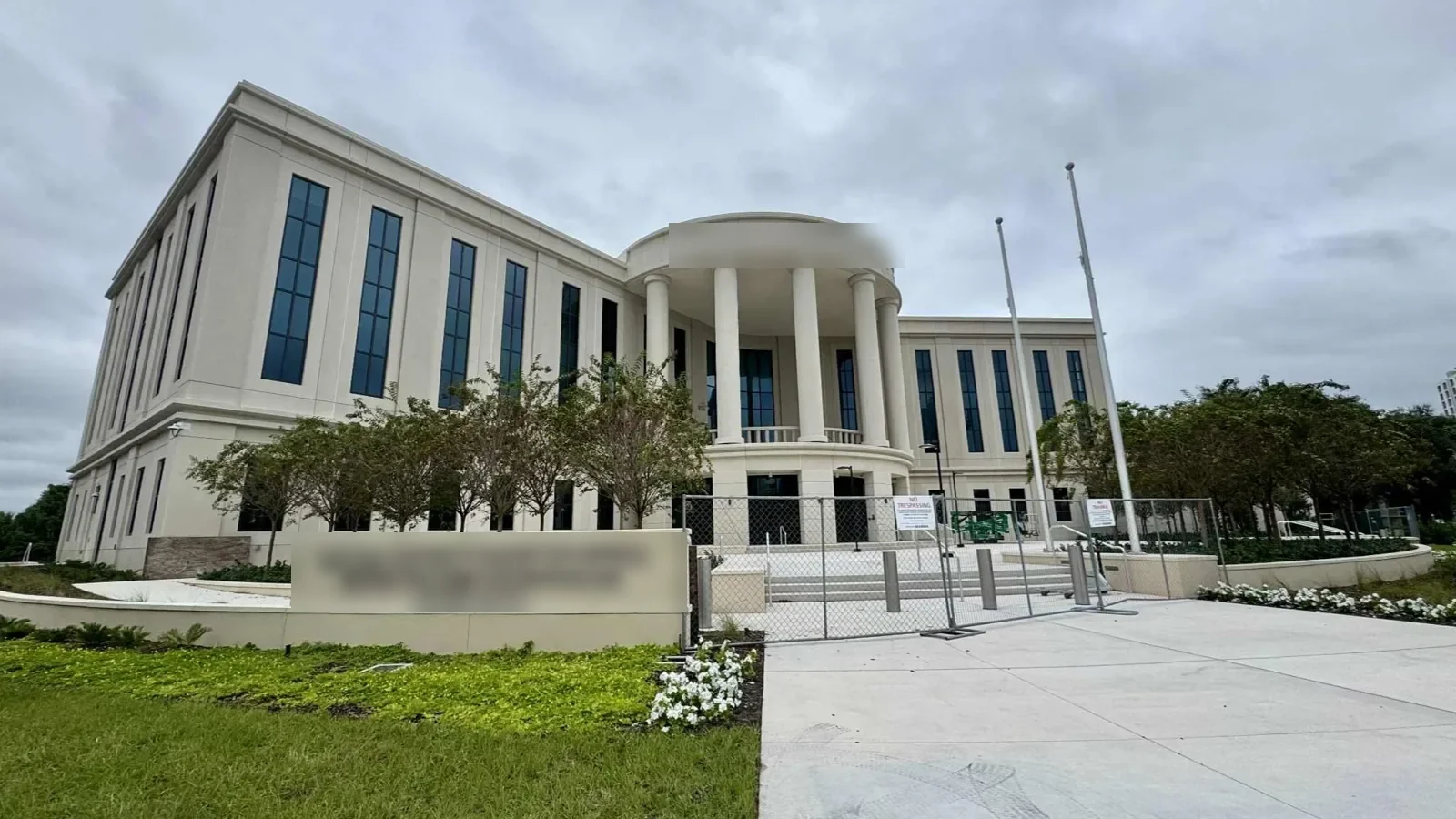
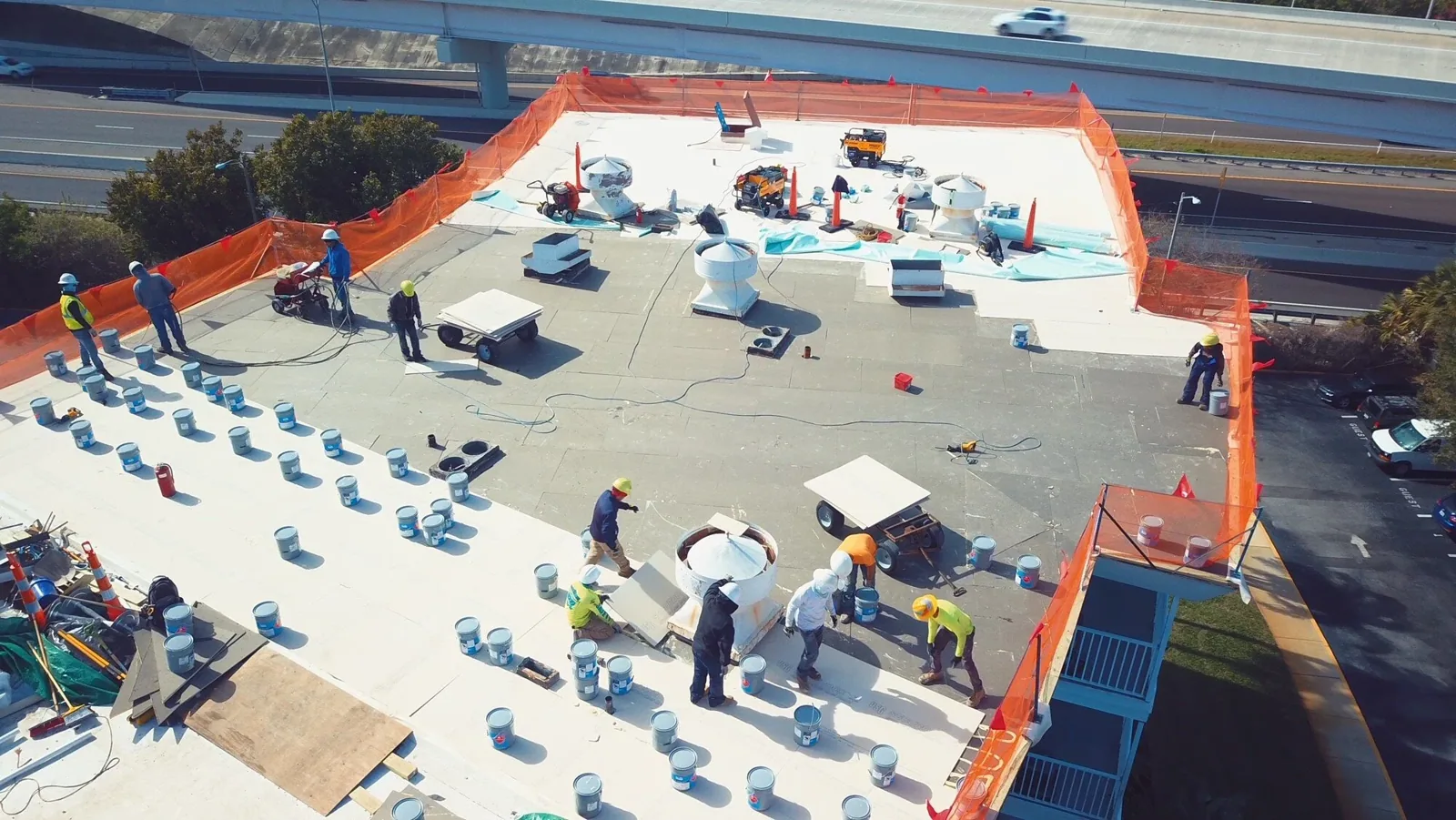
Before a crew begins, the manager identifies entrances, cart paths, receiving hours, service corridors and stock that needs extra protection. We plan equipment lifts and material drops away from customer traffic, coordinate barriers below the roof work and agree on how the store will be notified if an aisle or loading area changes. For a leak response, we identify the interior location that needs a cover or temporary closure and who will confirm that the space is ready to reopen.
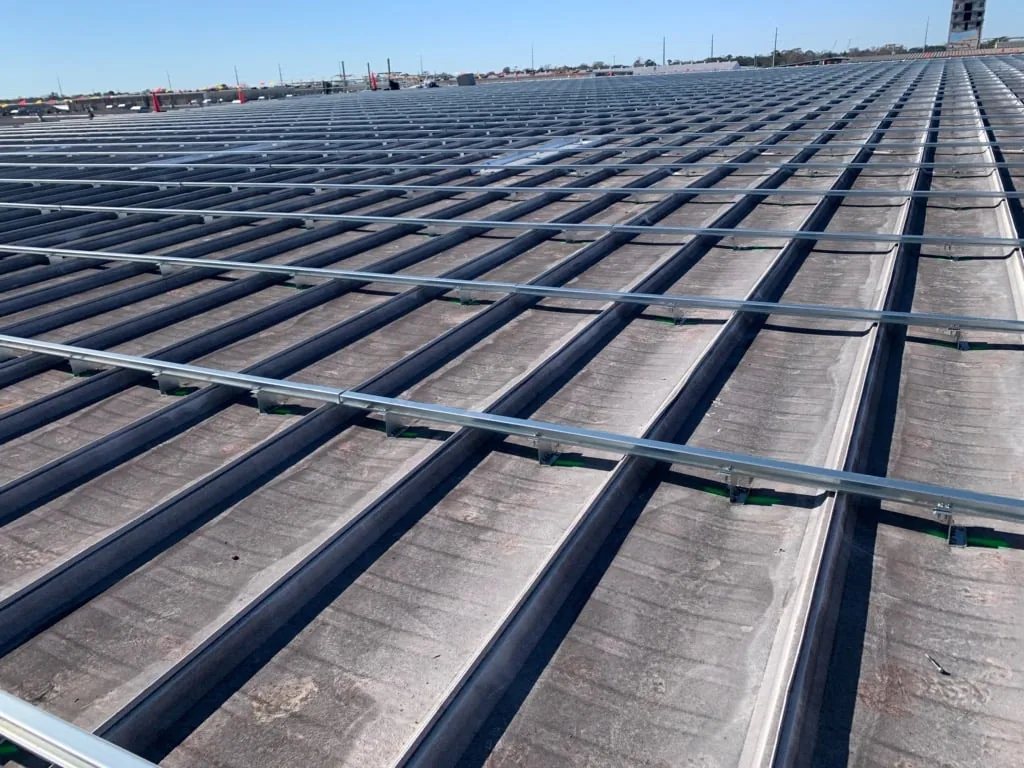
Replacement needs a zone sequence that limits exposure above merchandise and keeps a dry-in boundary at the end of each shift. We coordinate temporary protection, roof access, deliveries and rooftop unit service with the store contact. An occupied-store reroof plan can keep unaffected departments open when the property layout allows it. The work calendar should account for inventory resets, seasonal peaks and delivery restrictions supplied by the operator.
Hot surfaces, snowfall, snow depth and wind affect safe access and installation. We check conditions before setting each work period and protect roof sections at the planned stop point. Snow or debris that blocks a drain can also change how water moves across a large retail roof.
Hail near Greeley can prompt a store inspection. We check for punctures, displaced metal, loose flashing and water entry, then compare findings with the store’s leak notes. Two Rivers Marketplace is in the city’s project pipeline at the U.S. 34 Business and 83rd Avenue junction; any traffic or delivery constraint at another retail site must be confirmed with its manager.
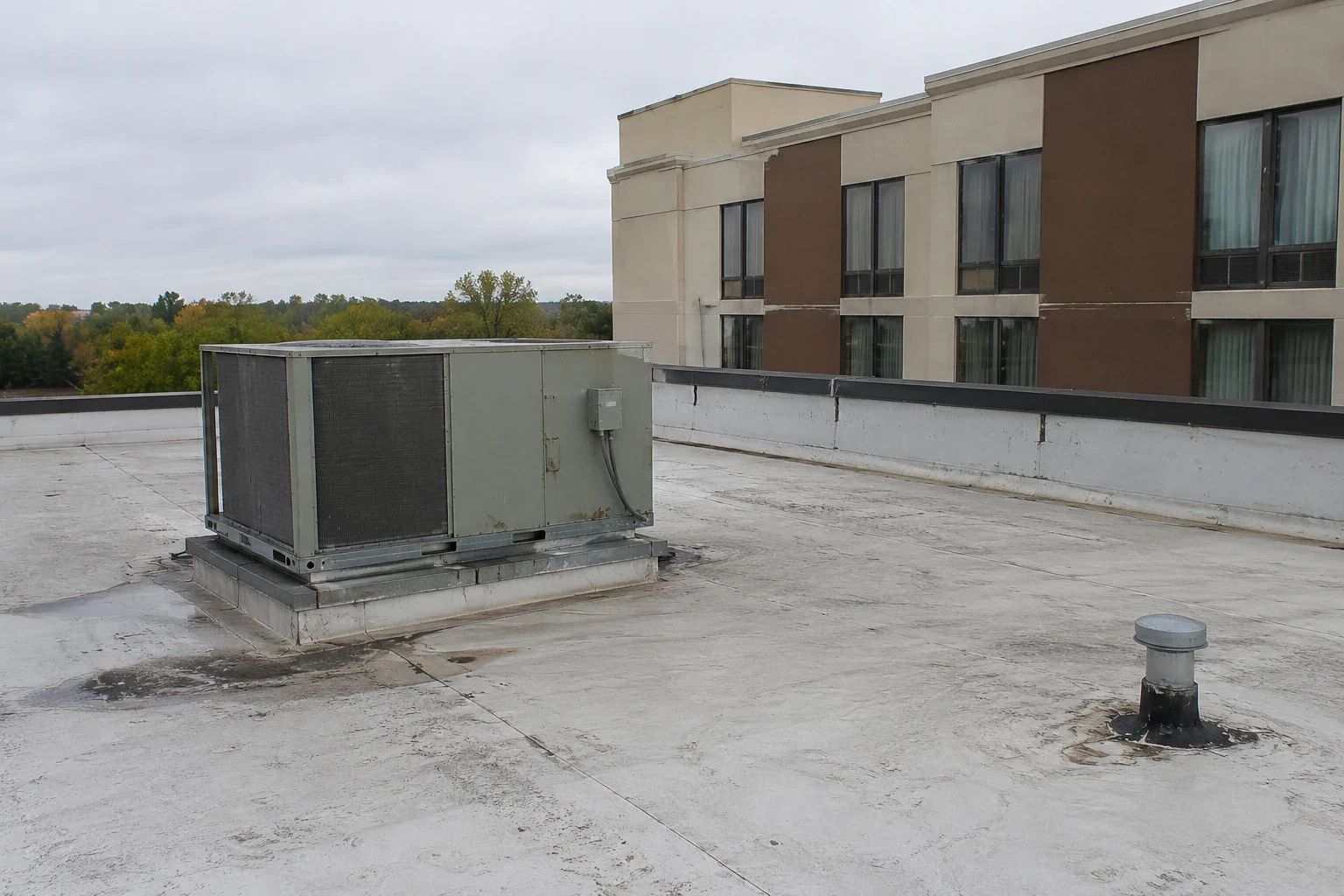
Work may be separated by roof and interior zones when customer paths and inventory can be protected. The manager confirms hours, barriers and any temporary aisle closure.
We map the affected area and coordinate covers, barriers or relocation with store staff before opening the roof. The permanent work boundary is recorded separately. We note when the space can reopen and which staff contact received the handoff.
We divide the roof into drainage sections, trace low areas to outlets and map findings by location. That keeps a distant stain from being assigned to the wrong roof zone.
Yes. The store can share reset dates, delivery peaks and hours when lift or loading activity is restricted, and we can build those constraints into a phased sequence.
Roof plans, leak history, prior repairs, equipment layouts and inventory controls help define access and protection. Include the contact who can approve a work-area change and receive the findings before pricing.
A small curb or seam repair may solve a localized leak if the surrounding assembly remains sound. Repeated moisture, failed attachment or deterioration across separate zones can support a replacement discussion. We identify interior protection, roof repairs, drainage corrections and items outside the work boundary separately. The manager can then compare the cost of focused repairs with a larger project and coordinate any department closure only where needed.
Cost and timing depend on the roof system, total area, number of drains and curbs, lift access, inventory movement, protection and delivery windows. A recover assessment depends on substrate condition and added height; a replacement scope includes tear-off, insulation and new perimeter details as required. A multi-tenant center has shared tenant notices, while a grocery store may have temperature-controlled departments. The actual building use drives the sequencing.
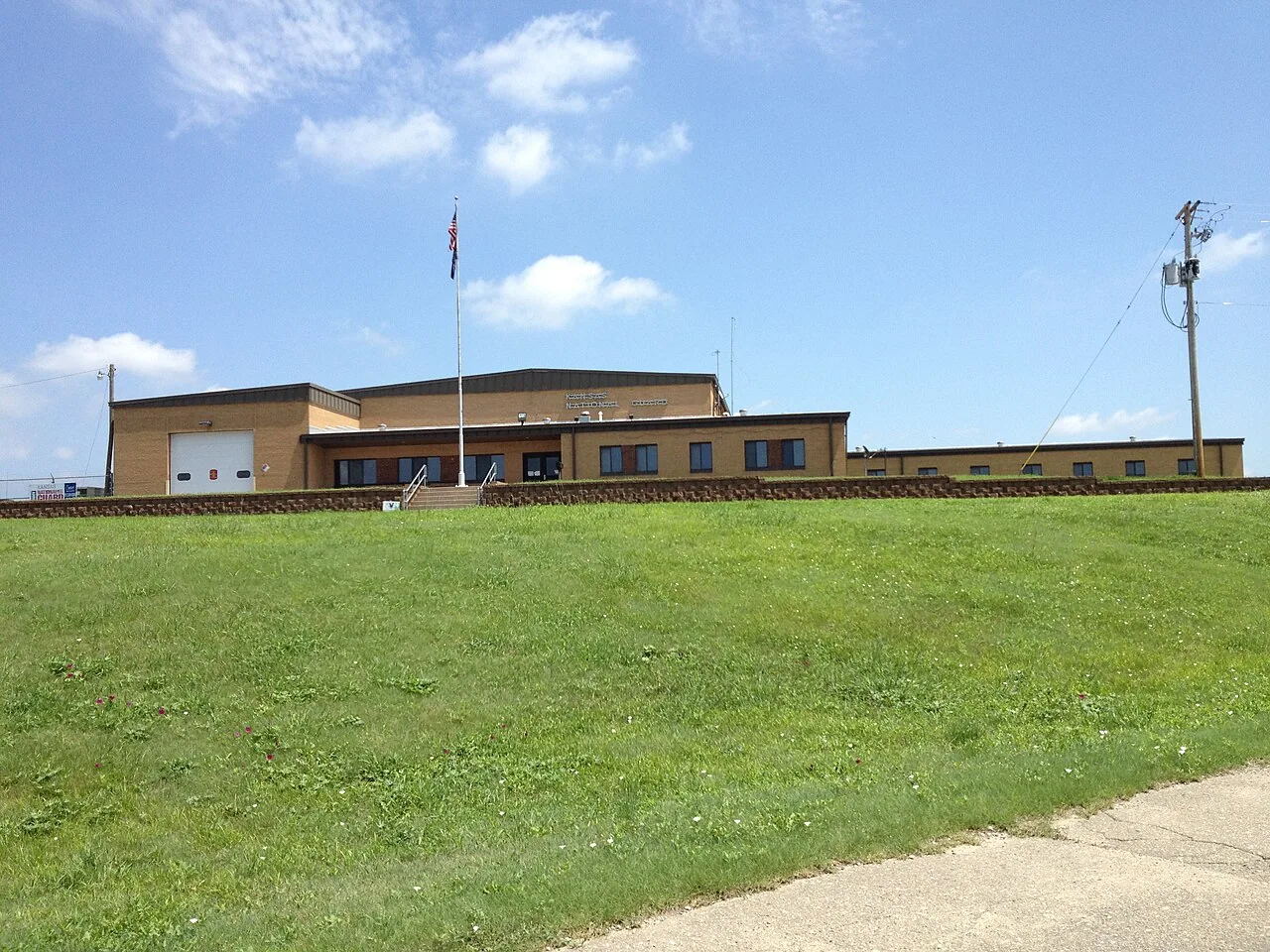
Closeout includes marked roof sections, photographs of repaired seams and penetrations, drain conditions, material records and any follow-up item. The store manager receives the location of each repair and the access precautions for future service trades. If inventory was moved or an aisle was protected, the work log can document the affected zone and release time. That gives the next facilities visit a usable reference instead of a vague note that roofing took place.
Share leak dates, roof drawings, store hours, inventory rules, loading schedule, equipment service plans and site access procedures before an inspection. Identify who can approve after-hours work and who will notify department leads. Two Rivers Marketplace and the U.S. 34 Business Corridor add Greeley retail context. We base each recommendation on the inspected store. The manager can use the roof map during seasonal planning, equipment work and the next leak review.
If a large-format store has multiple roof levels, we identify each drainage area, edge and equipment group on the marked plan. A facilities lead can assign future work by zone and check that a recurring leak has not moved to a separate area. We also note which entrances or loading routes stayed open during each phase, so store operations can compare the work log with customer and delivery notices. A clearly defined work zone lets maintenance staff route later HVAC or sign contractors away from completed membrane repairs and confirm who must approve a new penetration.