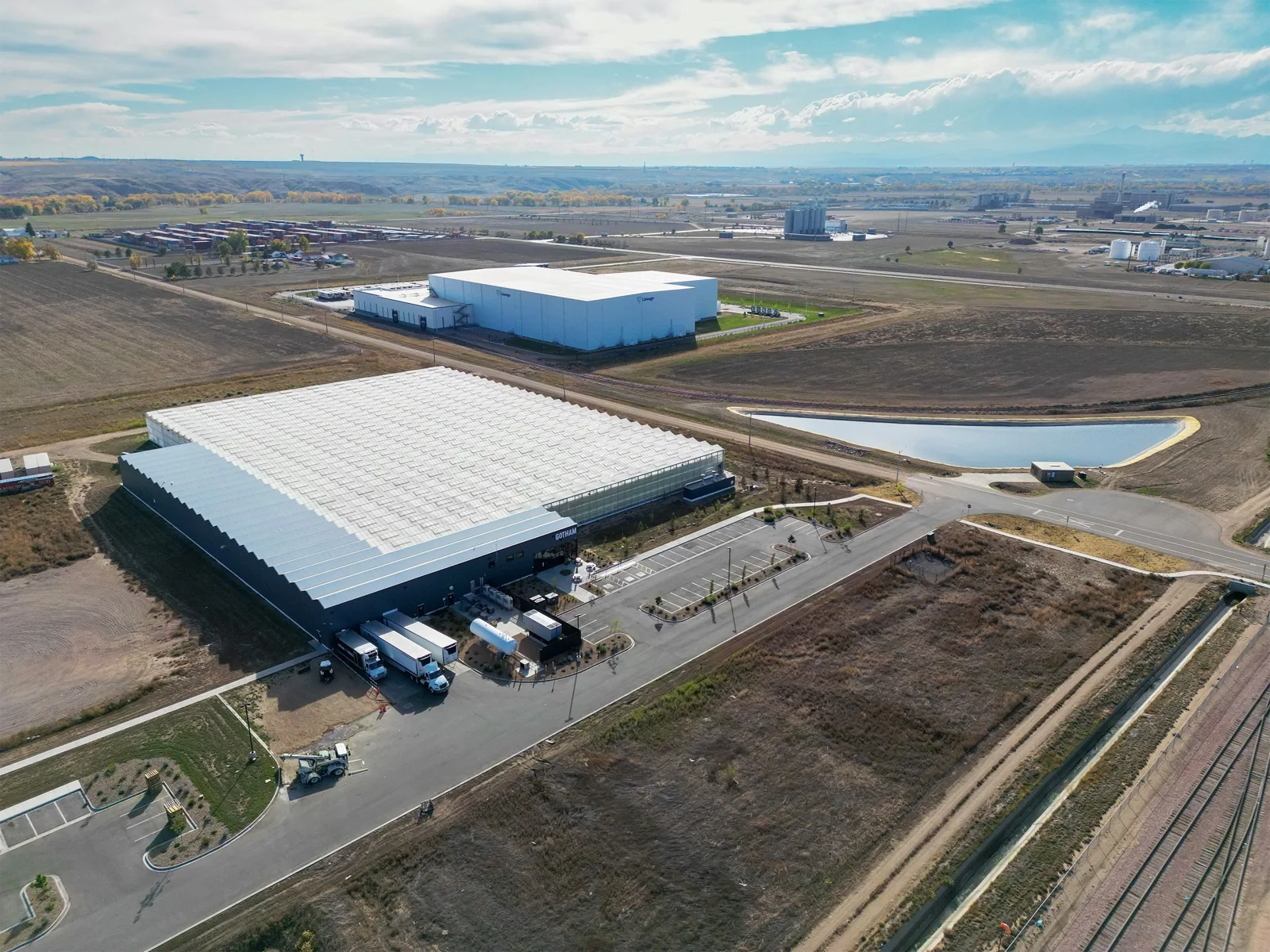
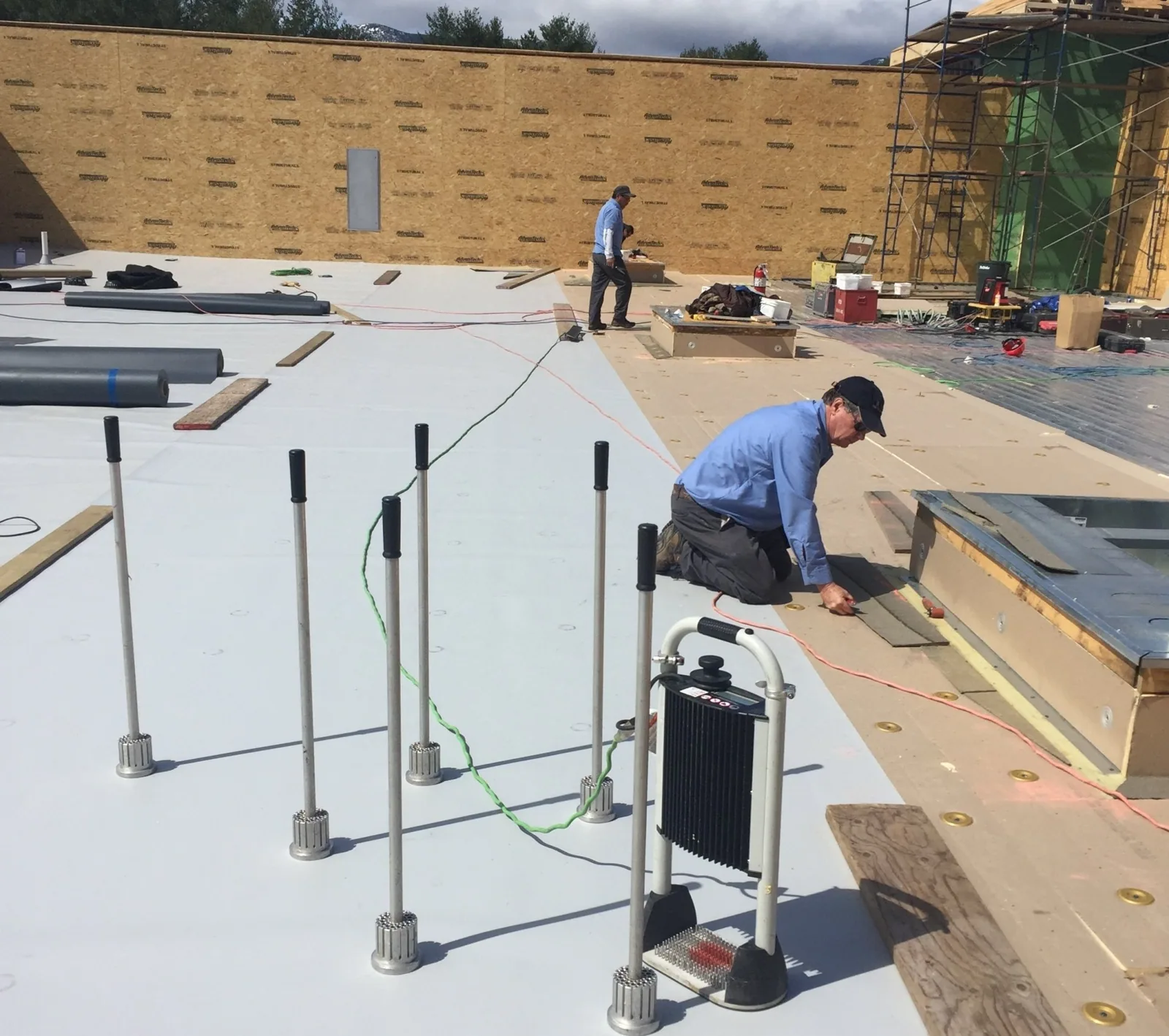
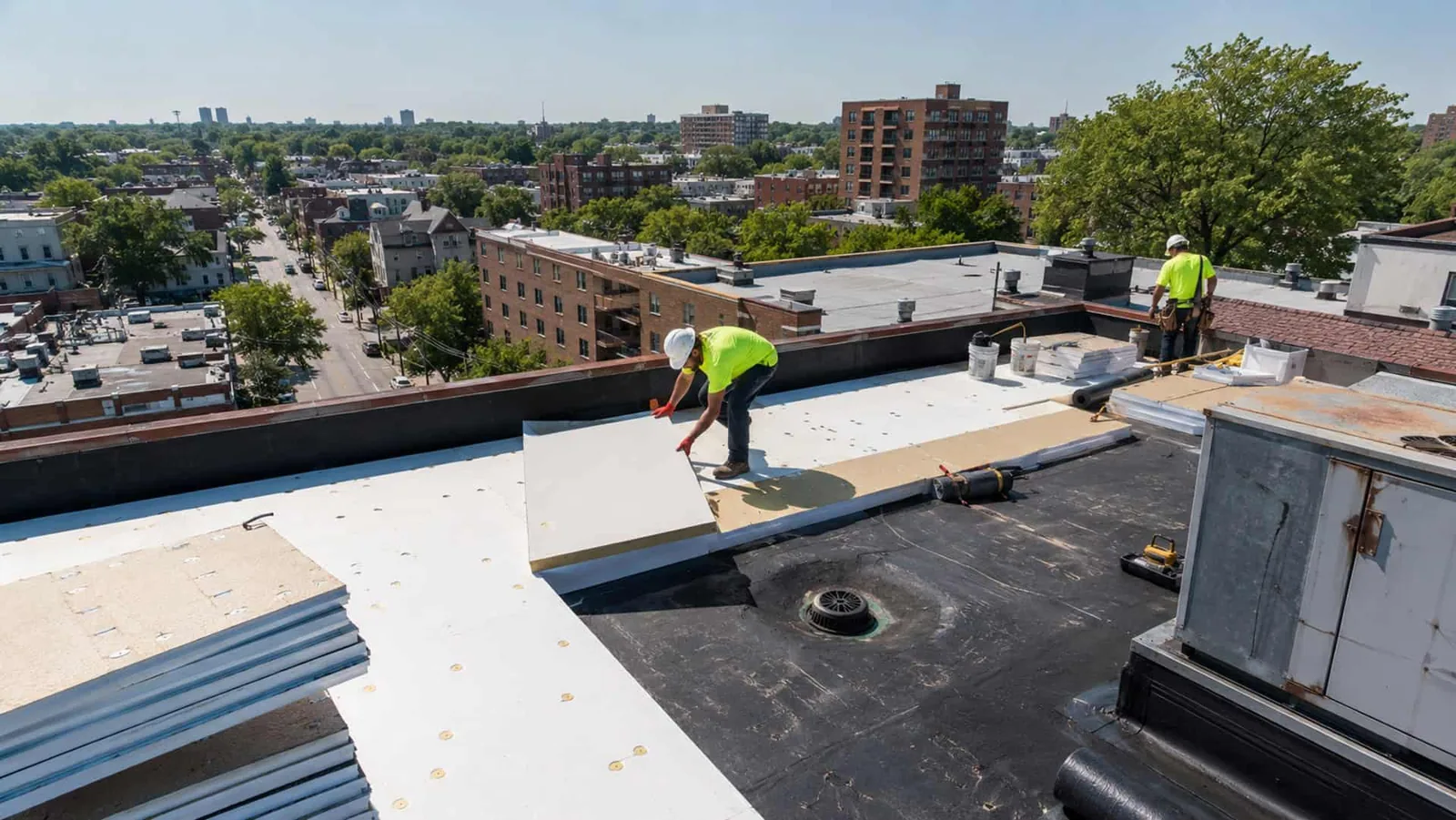
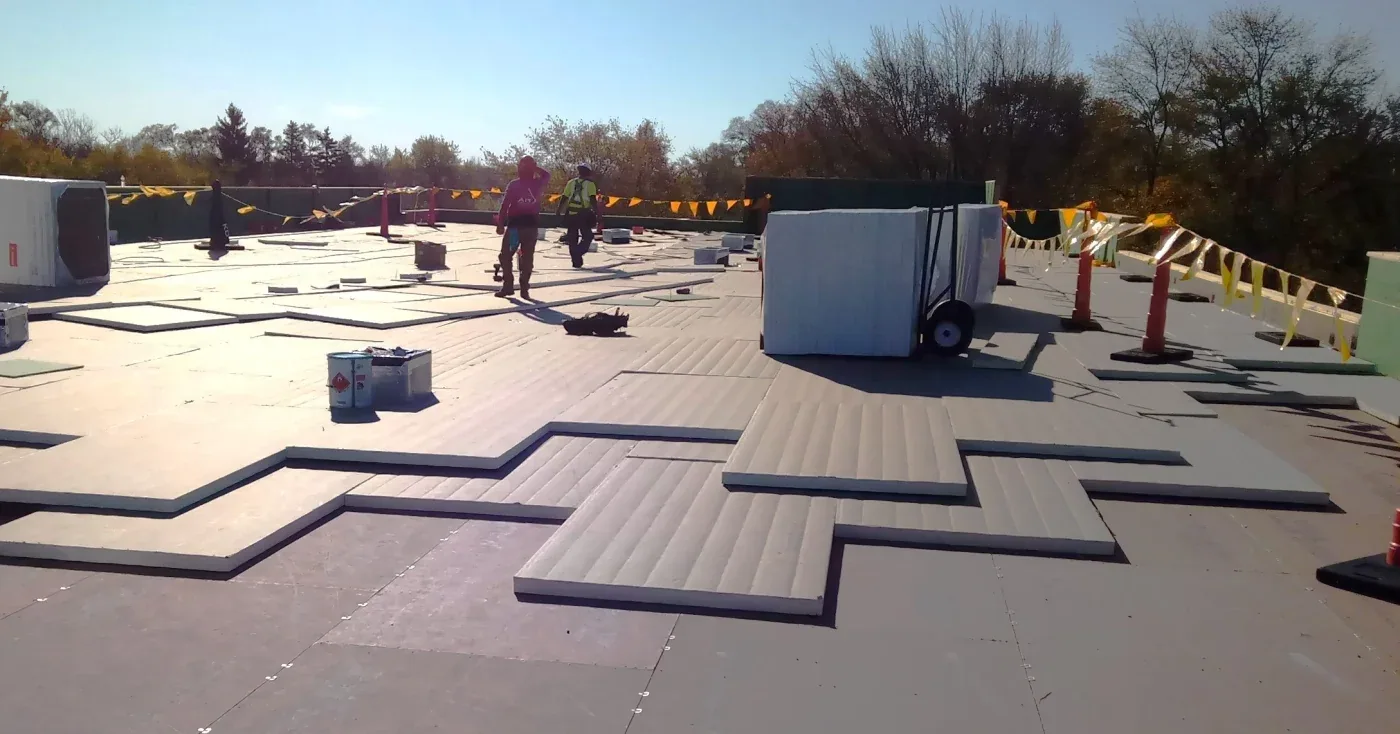
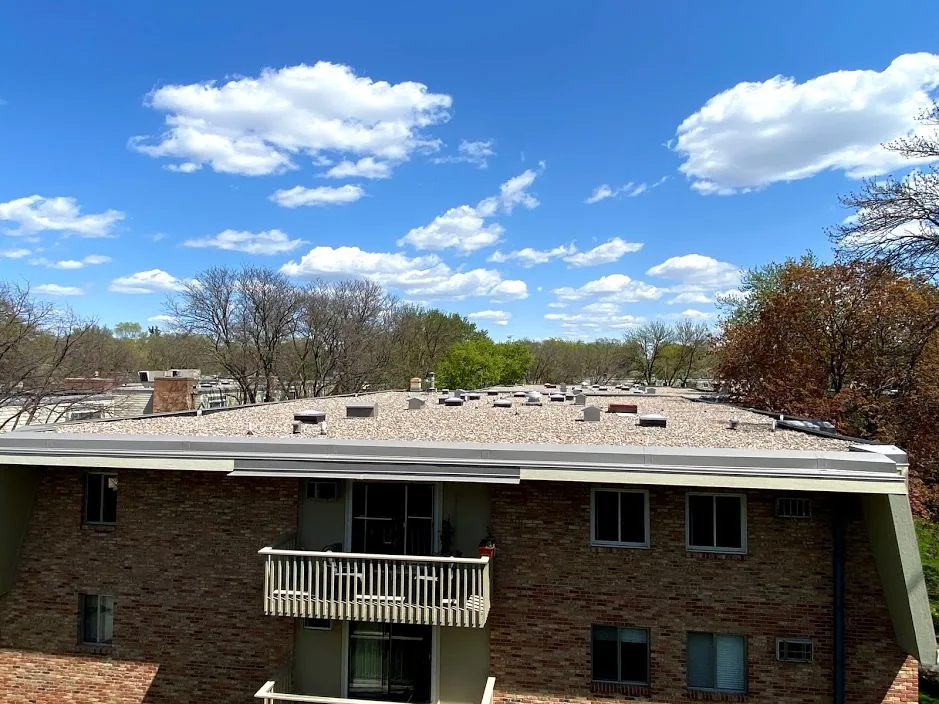
Before mobilizing, we confirm the contact authorized to open the roof, site orientation, arrival window, material drop and work restrictions. The owner identifies any production or loading area that must remain available. If a lift, crane or roof hatch is involved, the site contact approves its route and setup. We protect equipment, drains and pedestrian routes specified in the work plan. The industrial-site designation helps identify coordination questions, not the answers for a particular tenant or building.
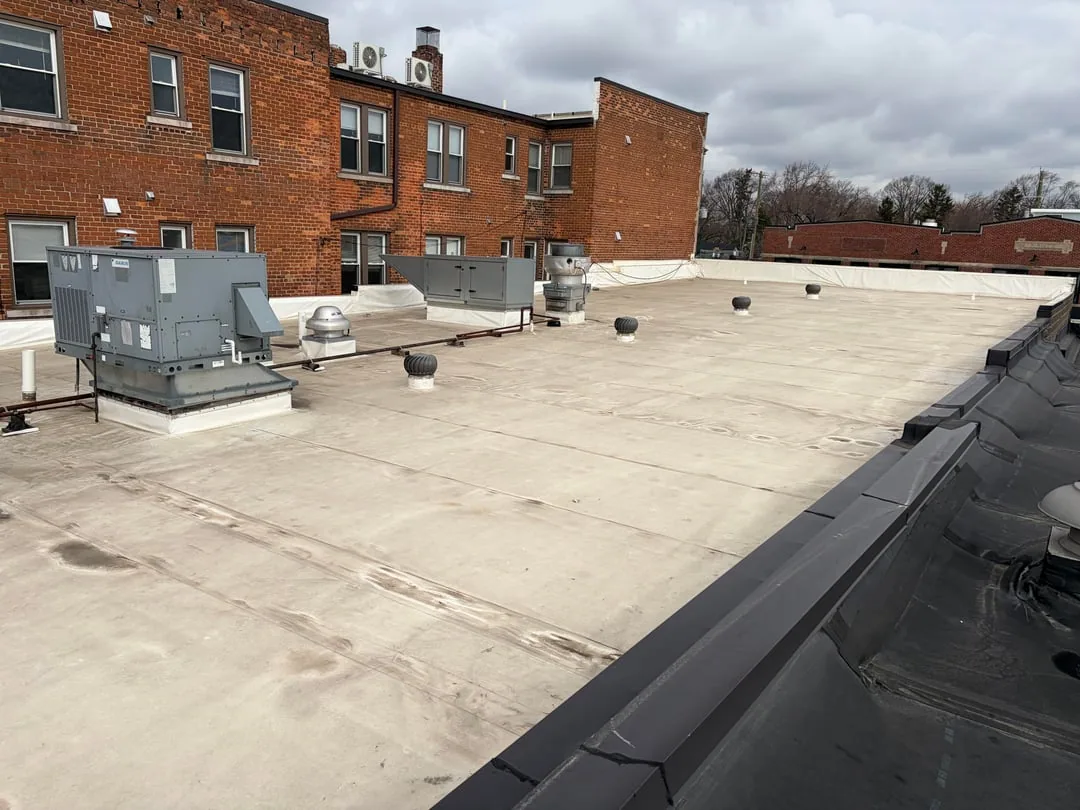
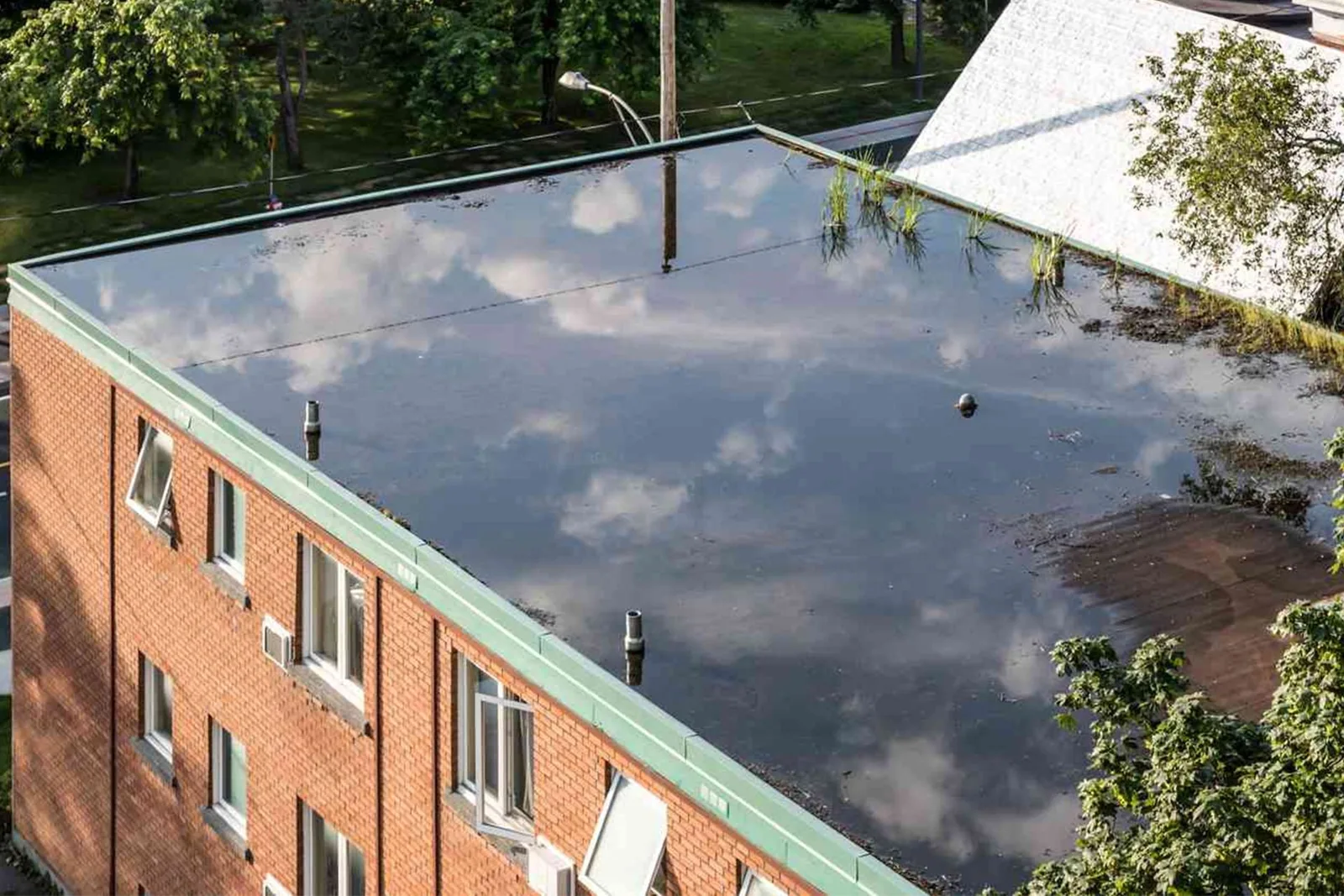
The written scope sets out preparation, materials, repair area, tie-in, dry-in and closeout. We remove only what the owner approved and keep discarded membrane and fasteners away from drainage. If concealed insulation is wet or the exposed system differs from the records, we stop at the authorization limit, document the condition and request direction. A targeted roof repair remains separate from optional testing or replacement.
For multi-building owners, a roof asset record keeps system, condition, photographs and next steps assigned to the inspected structure. The park’s acreage is not an individual roof measurement. We take dimensions at the building and record access or loading issues that can affect a later maintenance visit. A separate inspection at Downtown Eaton uses that property’s own roof records and daily operating limits.