Do the corridor development names tell us which roofs need repairs?
No. They identify commercial and industrial developments in the area. We inspect the individual building and document its system and current condition.

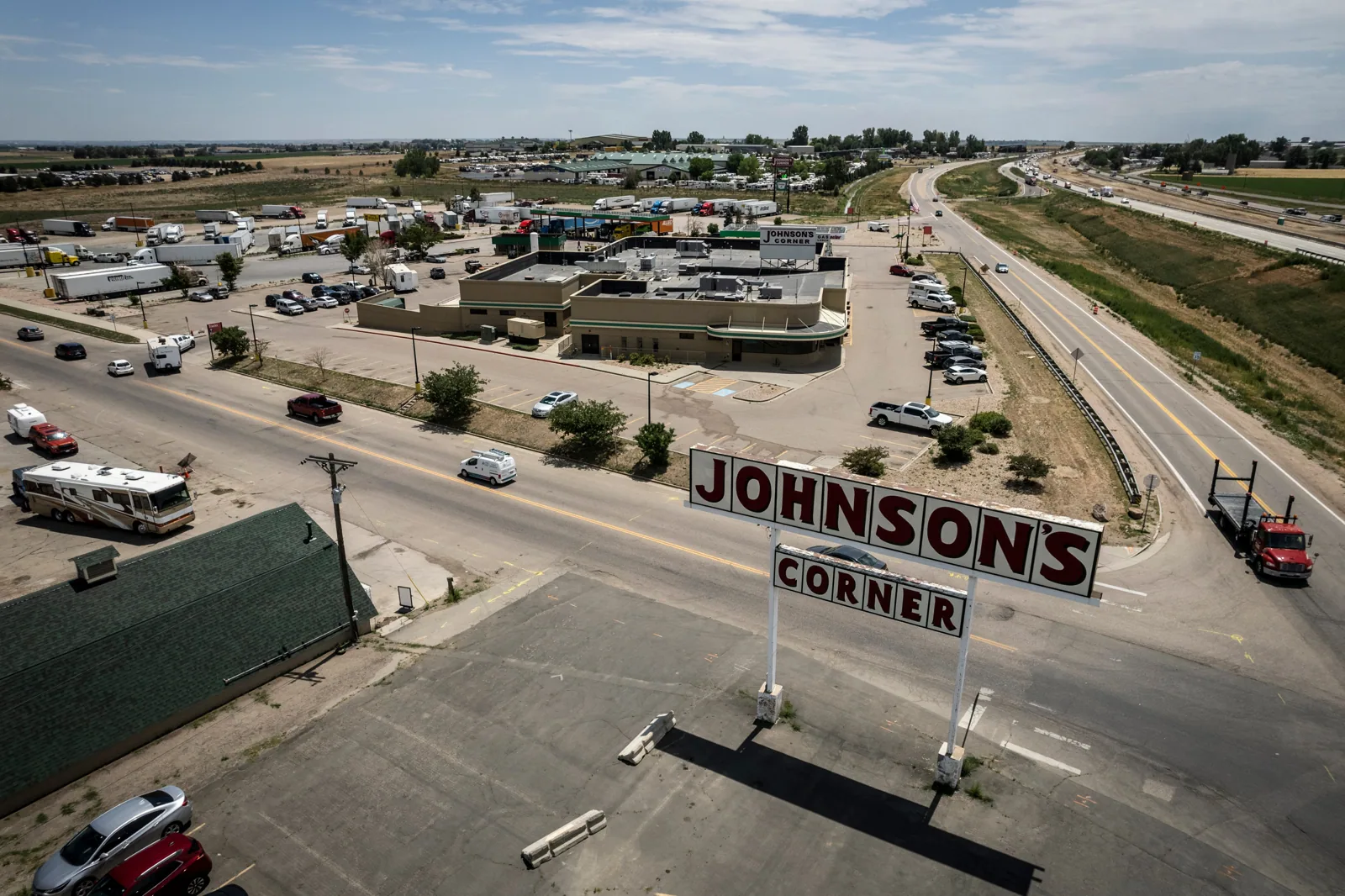
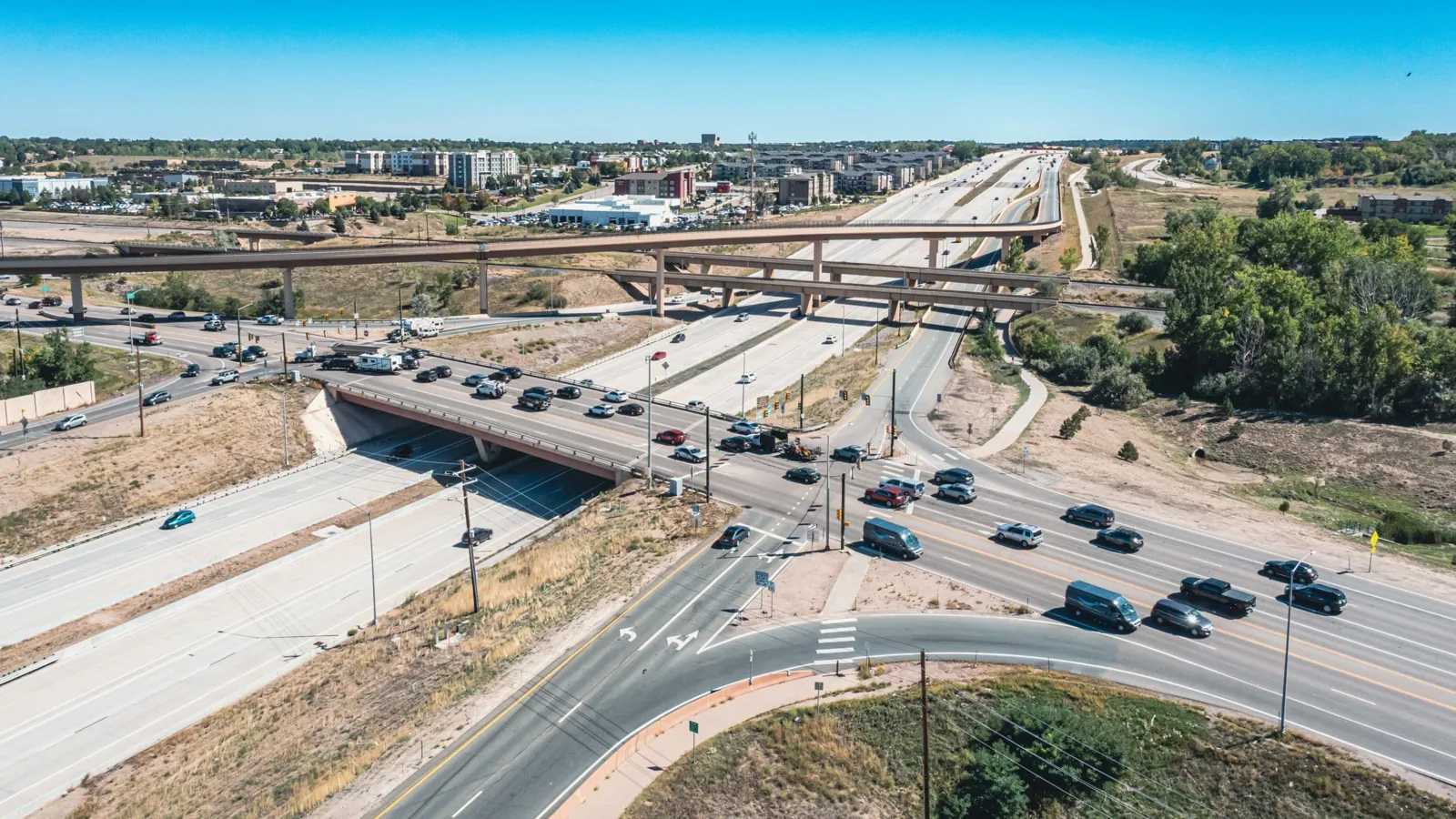
Near I-25, the Highway 34 corridor includes retail, commercial, employment and industrial development, including 2534 Shopping Center, Johnstown Plaza, Trade @2534 and Iron Horse. Those places help orient a service call; the site contact confirms entry and the roof area involved before we inspect transitions and set a repair boundary.
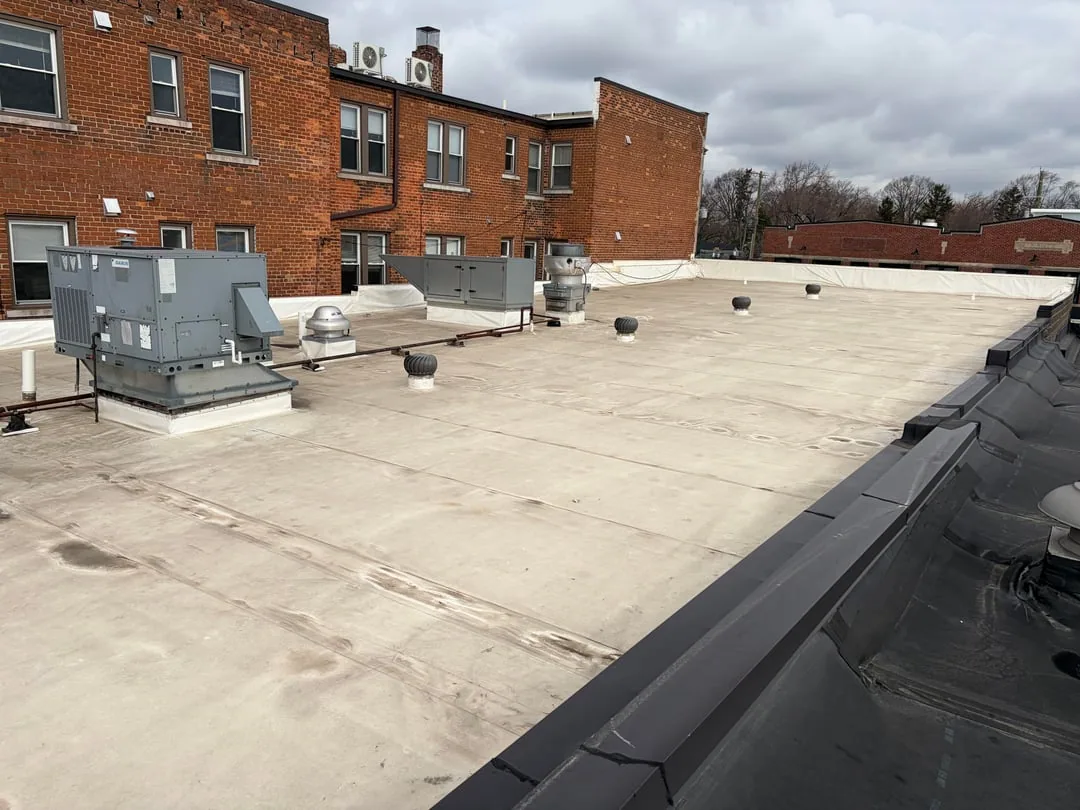
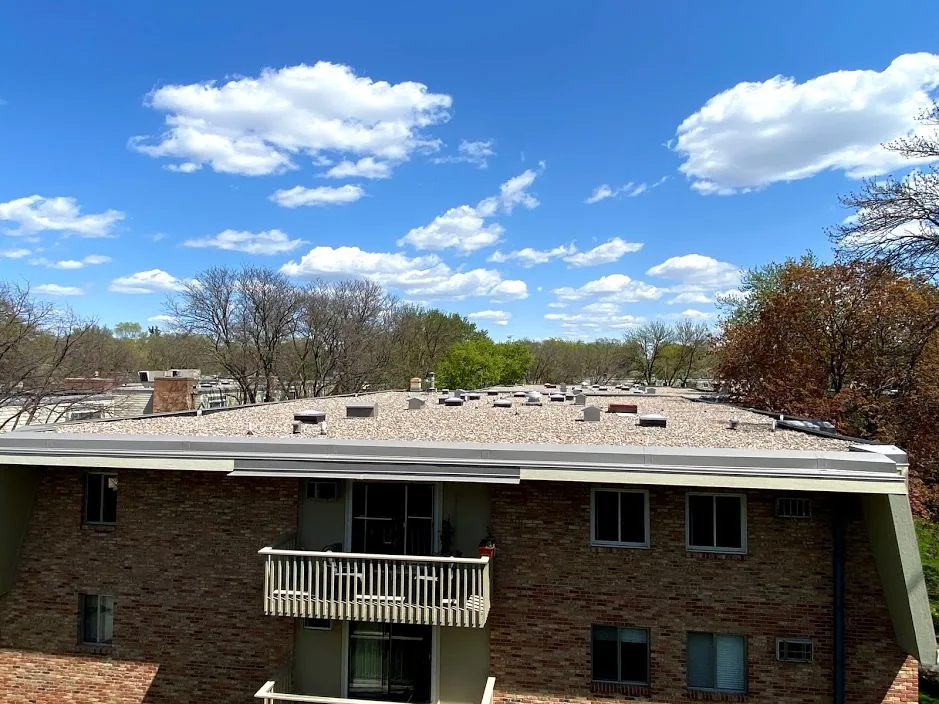
Shops, employment space and industrial properties can carry different roof assemblies and access needs. The property manager tells us what hours, equipment or delivery zones must remain available. A commercial roof inspection documents the visible assembly and any testing needed before the owner selects repair or renewal.
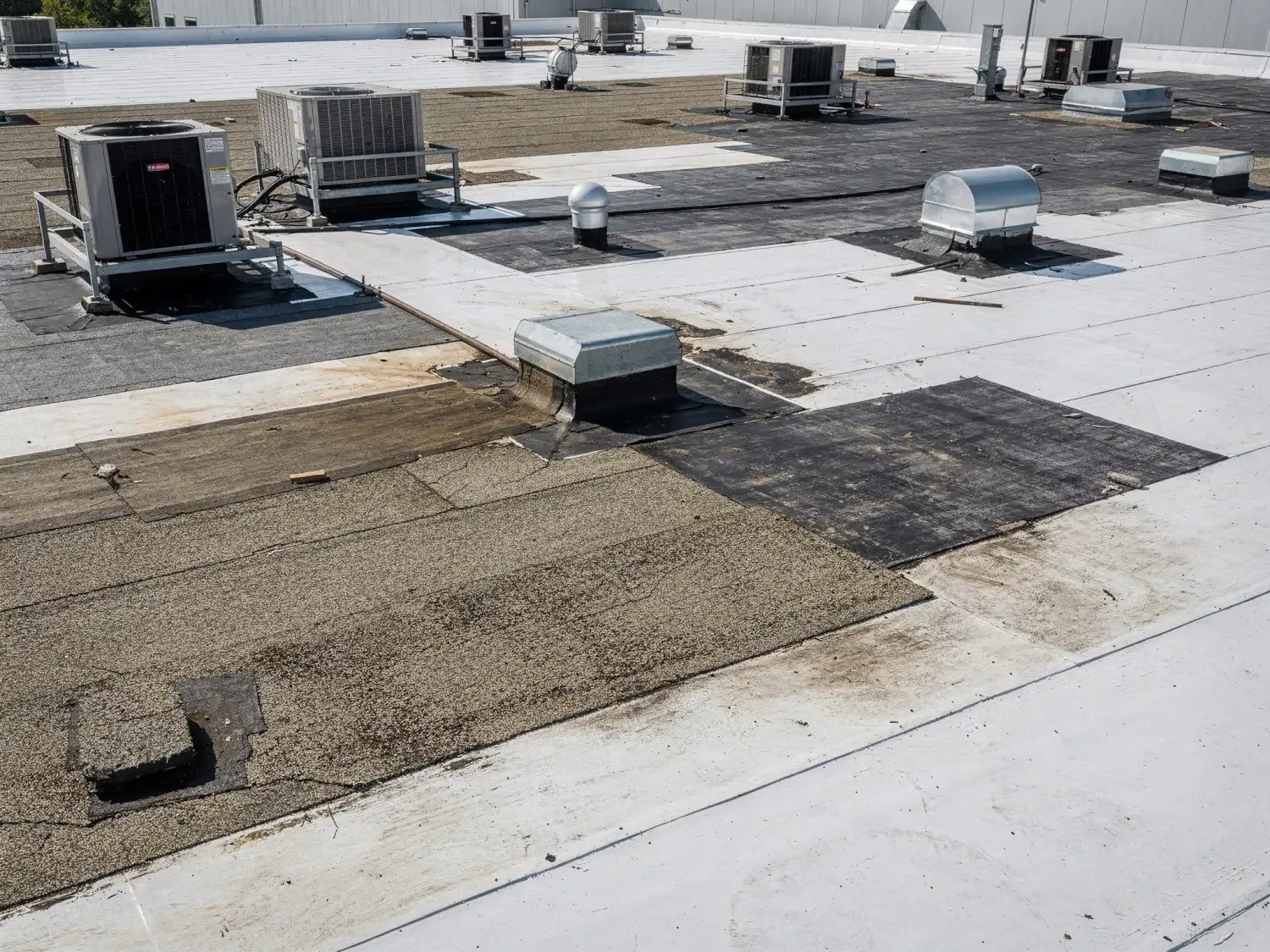
We begin with the room, the timing and any previous patch or equipment change. Water can move across a deck or insulation before it becomes visible, so the closest roof opening is not always above the stain. We inspect seams, drains, curbs, penetrations, perimeter details and past repairs around the reported area. Photos mark each observation by roof zone. If the cause is uncertain, the report identifies the test or access needed to resolve it instead of presenting an assumption as a confirmed failure.
At a shopping or business development, we compare the owner’s roof plans and warranty records with the assembly seen in the field. A condition report with zone photographs can support a facility manager’s repair decision by distinguishing confirmed issues from hidden or inaccessible areas.
If water is entering during inspection, we can install temporary emergency protection and record its limit. Permanent work may require drying, removal or a test opening. The site contact receives a clear next action, including any interior review needed after the roof is secure.

Before the crew mobilizes, we confirm roof access, staging, loading, operating hours and whether any lift or equipment shutdown needs advance approval. The corridor’s connection to I-25 helps orient an arrival, while the property manager confirms the actual gate and work area. If work may affect a customer entrance or active loading lane, the site contact sets the protection zone and confirms who can keep it clear.
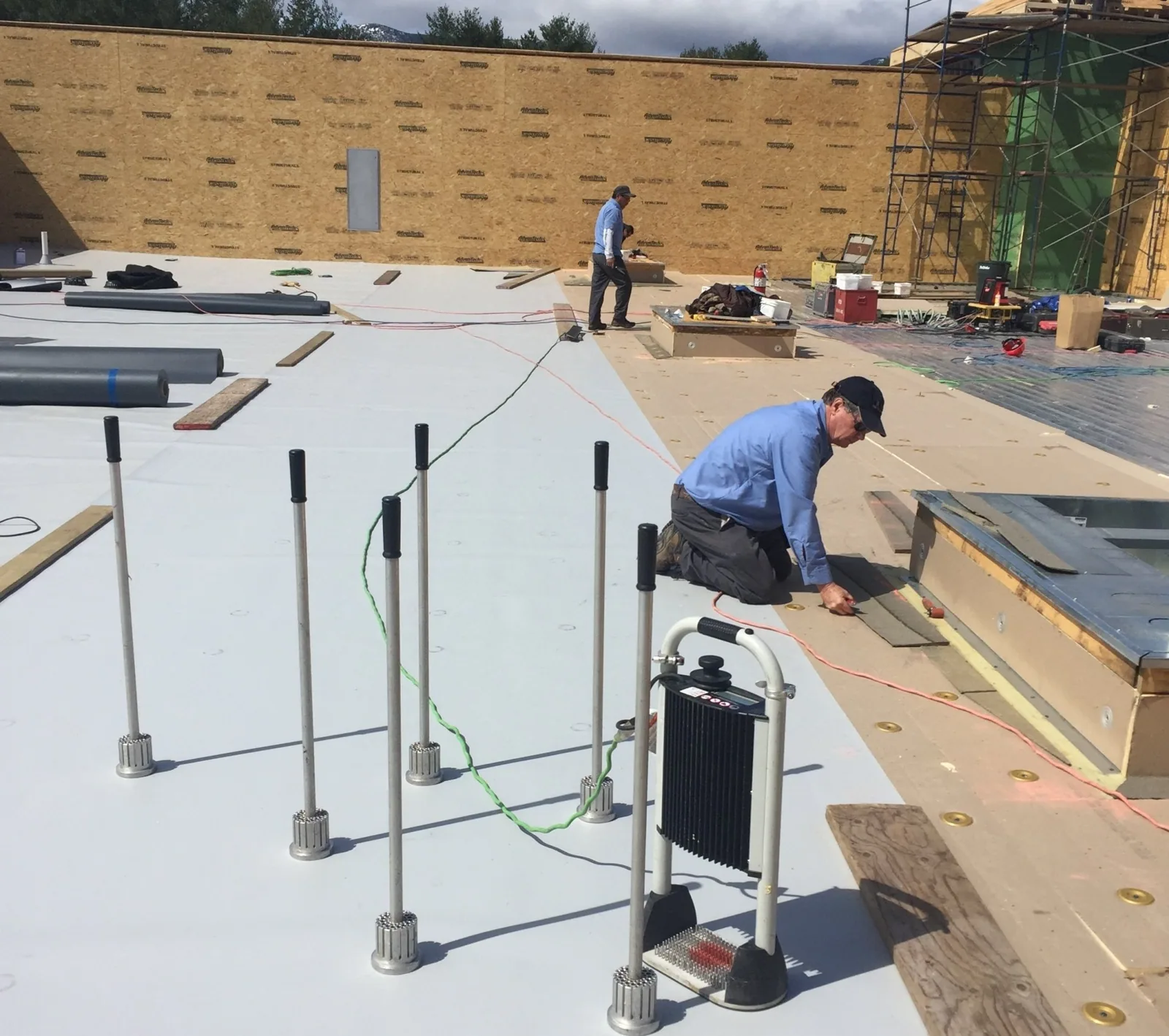
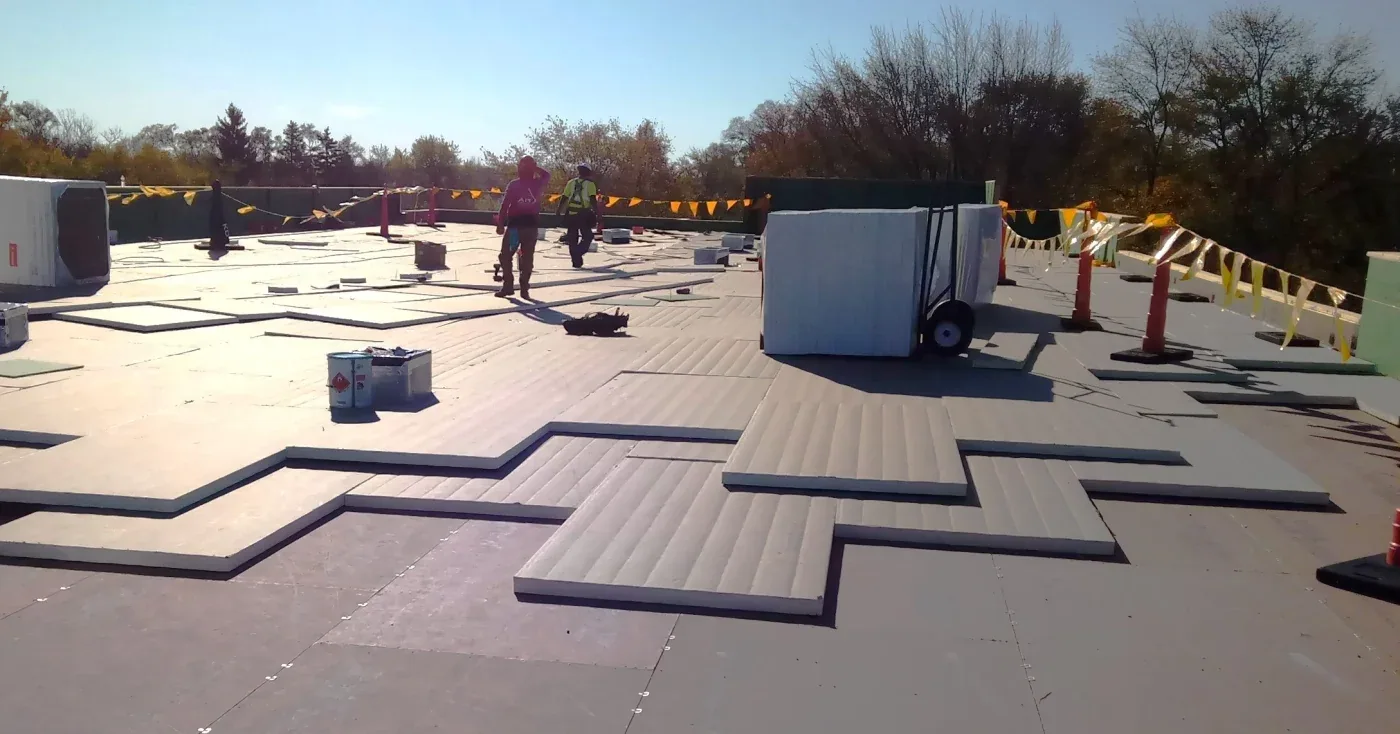
The proposal states preparation, compatible material, repair dimensions, flashing or seam detail, daily dry-in and closeout. We remove only approved material and protect drains, equipment and the area below. If hidden moisture or another roof layer changes the plan, work pauses at the authorization boundary. The crew photographs the condition and requests direction before extending the quantity. A measured repair remains distinct from optional investigation or replacement.
Owners managing several corridor properties can track inspections by building and roof section in a roof asset record. The report should retain the development name, address, observed system and pending tests without mixing findings from Johnstown Plaza and another property. A separate Highway 60 corridor visit receives its own contact and roof record.
Heat can change surface conditions, while snow or ice can restrict roof access and drainage. We check the property’s surface and moisture before selecting an adhesive, membrane or coating process. Heat can change the work window; a wet substrate can undermine preparation. Each shift is planned so the approved opening can be protected and closed. If product conditions cannot be met, the owner receives a revised sequence.
After a reported hail or tornado event, we inspect for punctures, separated flashing, disturbed edge metal and debris near outlets. Photographs identify what we found and any part the crew could not reach. The owner can then decide whether testing, repair or insurance documentation is appropriate for the observed condition.
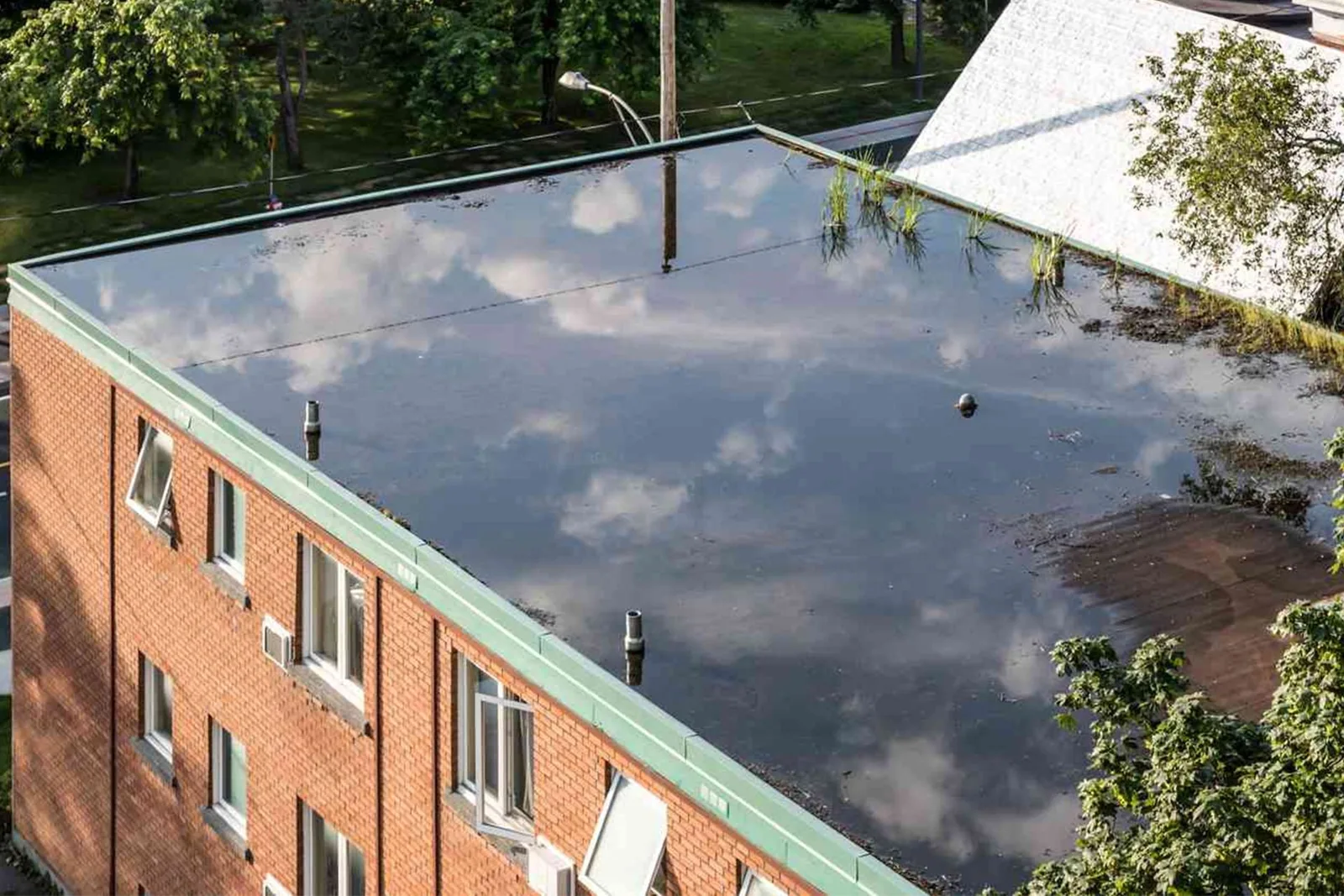
For properties where drains or scuppers are part of a leak report, we trace the water path from roof area to discharge and note obstruction or damage. A drainage and scupper check can focus the inspection without assuming that a named shopping center has a particular drainage defect. Current permit requirements for replacement or structural work should be confirmed with the appropriate authority.
No. They identify commercial and industrial developments in the area. We inspect the individual building and document its system and current condition.
The property contact provides the current delivery schedule, approved staging area and access route. We use those instructions to set the work sequence and protection below.
We map the observed route, inspect adjoining seams and transitions, and identify where testing could confirm concealed movement. Each section remains separately documented.
No. The roof needs an inspection. We record visible impacts and limits, then provide documentation tied to the property for the owner’s decision.
The estimate follows the measured roof area, material system, layers, moisture, access, staging, protection, edge details and disposal. A single leak near a penetration may support a local fix when nearby materials are sound. Repeated failures or concealed water can require testing before a wider scope is chosen. We identify what is confirmed, what remains unknown and what an additional test would show.
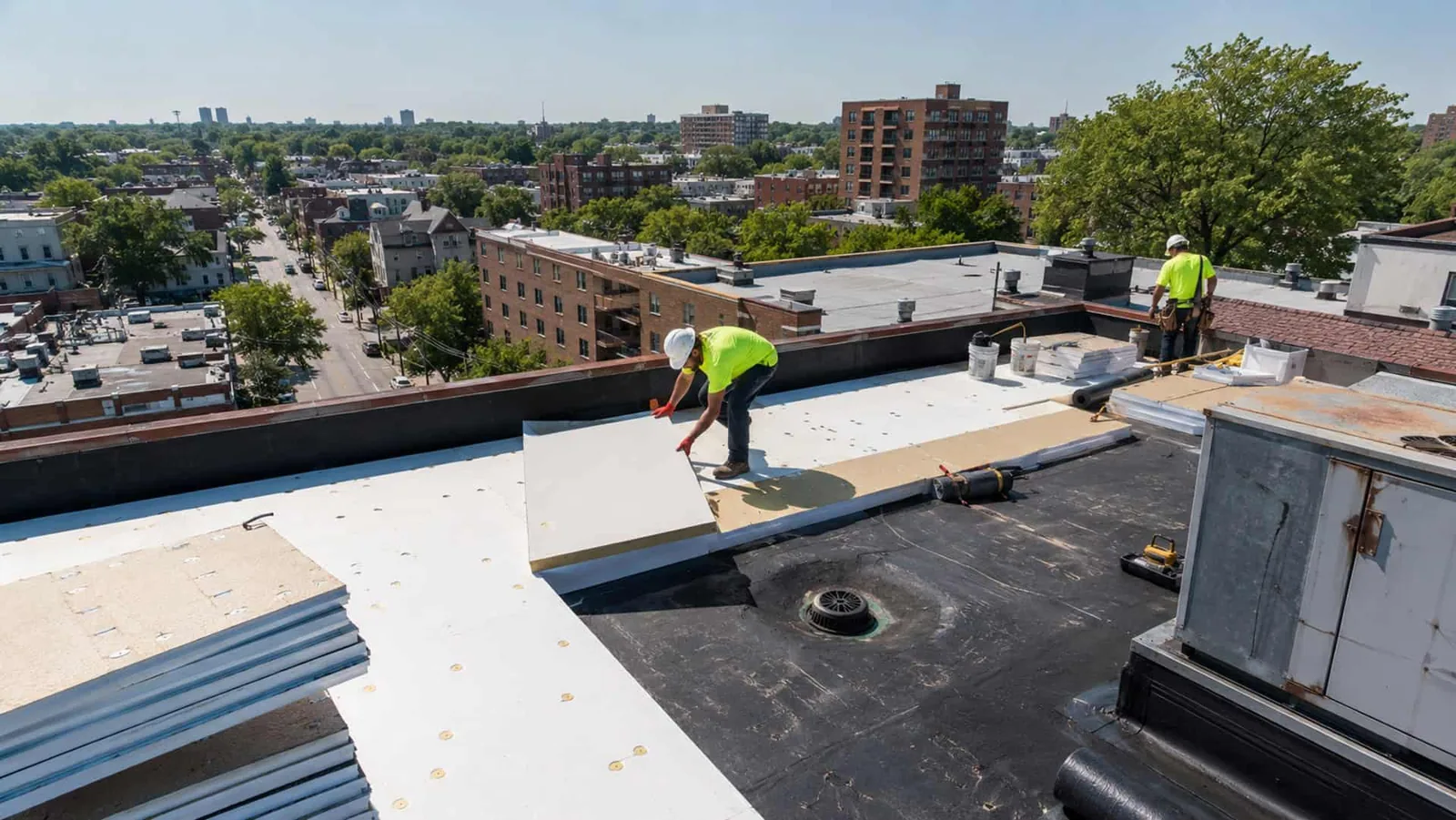
A recover is an option only when the deck and existing layers can support another assembly without trapping moisture. Replacement can uncover hidden conditions but requires more removal and coordination with tenants or operations below. We compare options using field findings and records for that property. The work plan names entrances, delivery restrictions, dry-in points, protection and exclusions. A replacement evaluation is based on the roof itself, not the number of named developments along Highway 34.
When an owner manages both shopping and industrial properties, each roof file should keep its own photos, repairs and next steps. If another trade changes rooftop equipment, we identify the transitions that should be checked after that work is complete.
The closeout record lists the roof zone, observed system, material installed, photographs, tests and open items. It notes the areas inspected and any portion inaccessible because of equipment, weather or safety. If hidden conditions changed the approved repair, the report records the finding and authorization. A manager can use the marked reference to compare a later service call with the work that was completed. Each zone has its own photo and status.
Before we arrive, share the affected room, timing, roof plans, previous repairs, access rules and current operating schedule. Name the person who can approve testing or added work. We will confirm site entry, protect the area below and return a scope that separates repair from further investigation. A separate visit in Downtown Johnstown uses that property’s own access plan and roof record. The corridor’s retail and industrial context frames this visit; the inspected roof determines the work.
For retail work, the contact identifies customer entrances, delivery periods and any area that cannot be blocked. Employment or industrial properties may need a separate route for lifts, materials and service traffic. We verify these site controls before selecting a repair sequence, because a sound roof detail still needs safe access and a weather-tight closeout.
If several buildings share an owner, each visit receives its own roof map and approval boundary. We can compare the condition and urgency across those files, but an observed leak at one site does not set the scope at another. A later inspection can then match its photographs to the correct roof zone and earlier work.