Can aircraft remain in a hangar during roof work?
The owner and site lead decide whether an aircraft can remain beneath a planned work zone. We define the active area and protection needs before tools or materials move overhead.

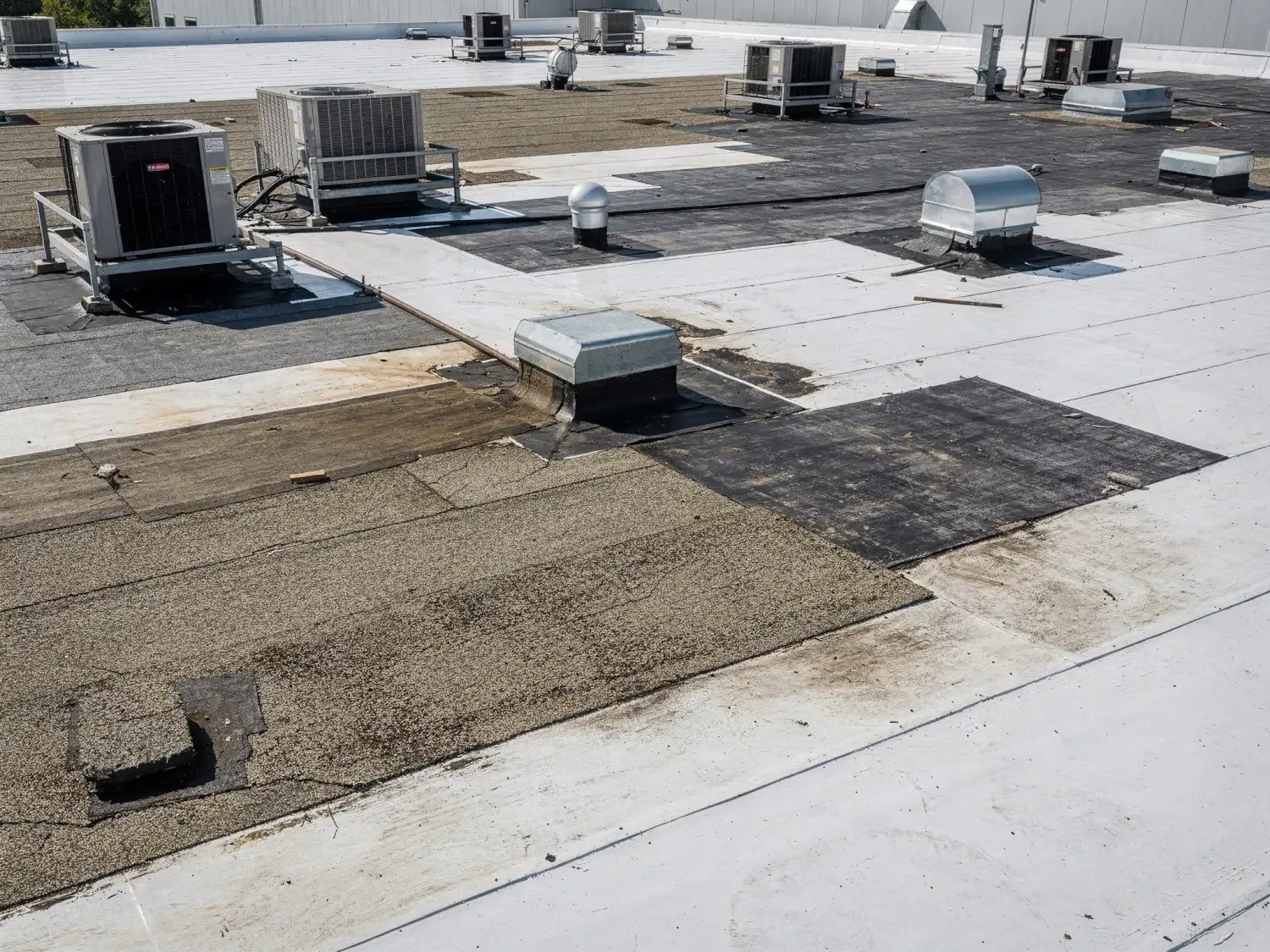
A roof leak above an aircraft bay needs a controlled response. Water can threaten an aircraft, tools, electrical equipment or a scheduled inspection before the roof opening is visible. We start with the reported drip or stain, map it to the roof zone, and inspect seams, fasteners, drains, curbs and edge transitions. The record separates confirmed damage from suspected paths and identifies any aircraft or equipment that must move before work. Greeley-Weld County Airport is part of the City’s current aviation improvement program, and the regional aviation setting makes access planning a practical first step.
Hangars vary in span, door arrangement, roof assembly and maintenance use. We verify the actual structure rather than assuming it has a common profile. The U.S. 34 Business Corridor provides regional route context. Greeley Air National Guard Station is another local aviation institution, with the 233rd Space Group based in the city; that fact does not imply any connection to a commercial hangar. Great Western Industrial Park is a regional industrial setting with active tenants and rail access, a reminder that roof logistics can intersect with freight and equipment planning. The owner or airport contact determines permitted entry, escorts, equipment staging and operating limits for each property. For mixed-use buildings, see our notes on flex-industrial roofing.
We ask when the water appeared, whether wind or precipitation accompanied it, and what is stored below the affected roof area. A stain can sit away from a roof defect because water may travel along a deck, framing member or insulation before reaching the interior. We inspect the closest plausible transitions first, including eaves, ridge details, door-side edges, curbs, penetrations and previous patches. Photos identify the exact bay and roof section so a later inspection can compare the same locations.
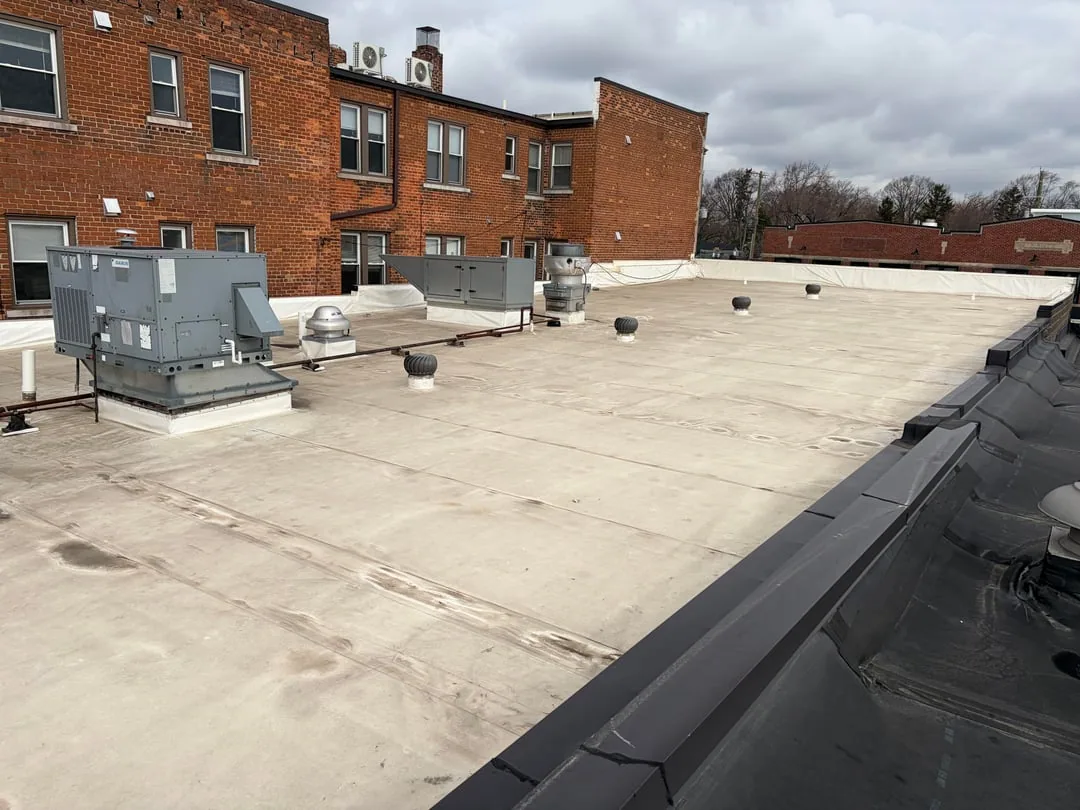
Large doors and clear-span framing create conditions that differ from offices or retail buildings. The inspection plan accounts for door cycles, aircraft movement, overhead equipment and visibility from the floor. We note where a lift can safely operate and whether the aircraft needs relocation. If moisture may extend beyond the visible stain, an infrared moisture survey can help define a test area. A documented roof inspection gives the owner a repair boundary, photographs and a list of unresolved questions. Hangars with parts or equipment storage can share concerns found on a warehouse roof.
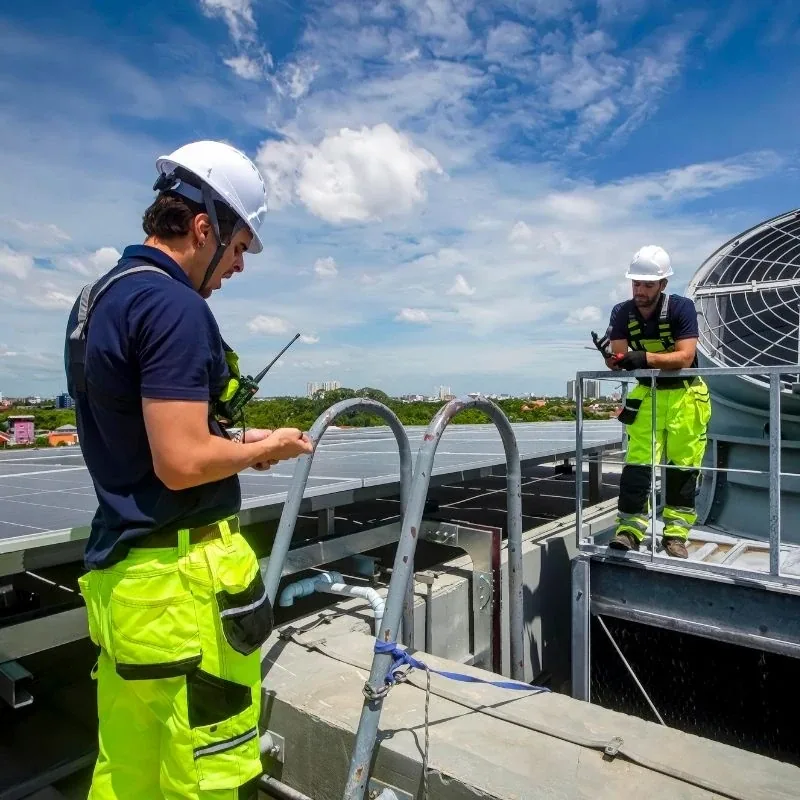
Before mobilization, we confirm who controls access, which bay can be isolated and when aircraft or maintenance activity may cross the work zone. The site contact identifies door schedules, security steps, escort rules and any restrictions on lifts, hot work or material storage. We place barriers below active roof work, protect tools and aircraft from debris, and keep an agreed route open for personnel. A written sequence identifies the roof area for each shift and the point at which the bay can return to service.
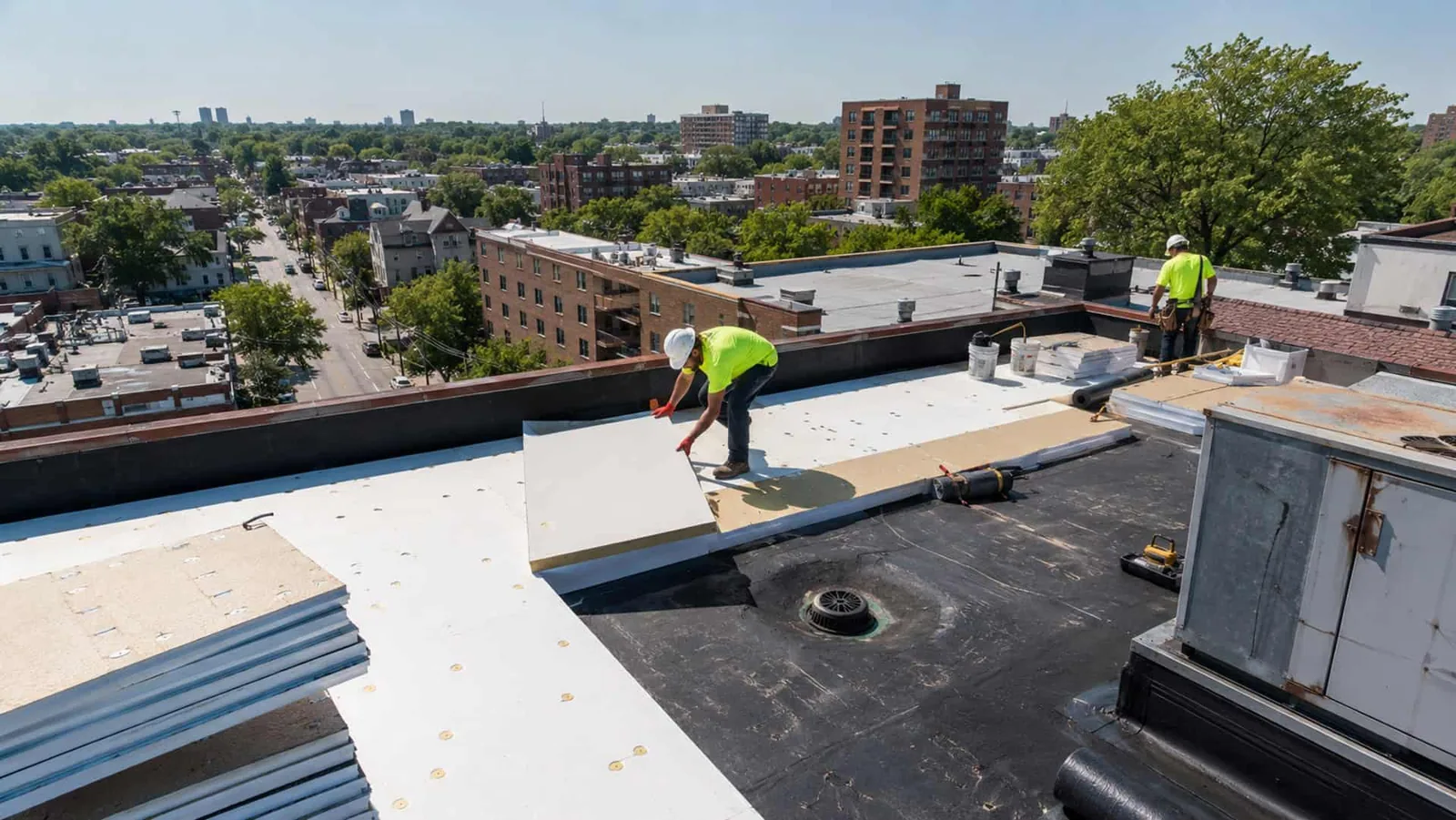
For a localized repair, we stage only the materials and tools needed for the verified defect. Larger work may be divided into roof sections, with temporary dry-in and a daily inspection before the crew leaves. We coordinate crane or lift timing with the responsible site contact and pause when aircraft movement or weather makes the roof area unsafe. Each change to the work boundary is documented before the crew shifts to a different bay.
Greeley’s heat, wind, precipitation and snow affect safe roof access and the daily work window. Heat can affect worker exposure and the handling limits of repair materials; wind can make work around large doors and exposed roof edges difficult. We check conditions at the property and follow the product requirements for the specific repair. Snow or ice can limit safe movement near edges and drains. A clear weather window on a forecast is not enough by itself; the roof surface, access route and interior operations must also be suitable.
A hangar inspection after severe weather focuses on large door-side edges, long seams and penetrations connected to the reported bay. That regional history helps frame an inspection after a reported event, but it does not establish damage to a particular hangar or aircraft. We look for punctures, displaced components, opened seams and damaged edge metal, then compare those observations with the affected bay. We can organize photographs and repair records when an owner asks for help documenting work after an event, while keeping the cause statement within what inspection supports.
The owner and site lead decide whether an aircraft can remain beneath a planned work zone. We define the active area and protection needs before tools or materials move overhead.
We compare the interior stain with roof seams, penetrations, edges and drainage details, then document the likely path and any limits on inspection.
No. Regional storm history is context only. We inspect the roof and document conditions at the specific building before recommending a repair.
Often, if the owner can provide a controlled work zone and an approved schedule. Door cycles, access rules and aircraft movement shape the sequence.
Share drawings, leak locations, repair history, access rules, door schedules and the contact who can coordinate aircraft protection and entry.
A repair may be appropriate when the defect is isolated and adjacent materials remain serviceable. Repeated leaks, widespread attachment concerns or moisture beneath multiple roof zones may justify broader testing. We identify the evidence for each option and describe what remains unknown. A single drip does not determine whether an entire hangar needs replacement. Where repair is supported, the scope names the seam, penetration, edge or opening and explains how the tie-in will be checked.
Project cost and timing depend on roof geometry, assembly, height, access equipment, door operations, interior protection, staging and the area requiring work. We compare targeted repair with replacement based on observed conditions. Metal panels, membrane systems and other assemblies need different fastening and transition details. If a coating or recover option is considered, we first confirm substrate suitability and drainage rather than treating it as a default. Permit questions should be checked with the City under its adopted code and current amendments.
A useful bid package includes a roof-zone sketch, photographs, access assumptions and a clear limit for temporary weather protection. It should state whether equipment disconnection, interior cleanup or follow-up testing sits inside the roofing scope. For a large clear-span building, a repair crew may need a lift or fall-protection setup that changes both schedule and cost. We identify those requirements during planning so the owner can coordinate the aviation schedule instead of discovering a conflict after mobilization.
Closeout identifies the repaired roof zone, materials used, photographs, drain or edge details and any condition that still needs monitoring. We record whether the bay was returned to the owner, whether equipment was moved back and who received the work summary. A roof plan with clear zone labels helps facilities staff connect future leak reports to earlier work. If another contractor must complete an interface, the handoff names the limit and the next inspection point.
For an assessment, provide roof drawings, maintenance records, leak timing, door schedules, aircraft-protection requirements and the site contact authorized to arrange access. The City’s airport improvements support business and general aviation, but each hangar has its own operating controls. We confirm those controls with the owner, inspect the actual assembly and deliver a written scope that fits the property instead of relying on a generic aviation specification. Our military installation roofing guidance addresses separate access controls for government facilities.