Do the highway intersections determine how a crew reaches my roof?
No. U.S. 85 and U.S. 34 provide city context, but the property contact confirms the approved entrance, loading area and roof-access route.
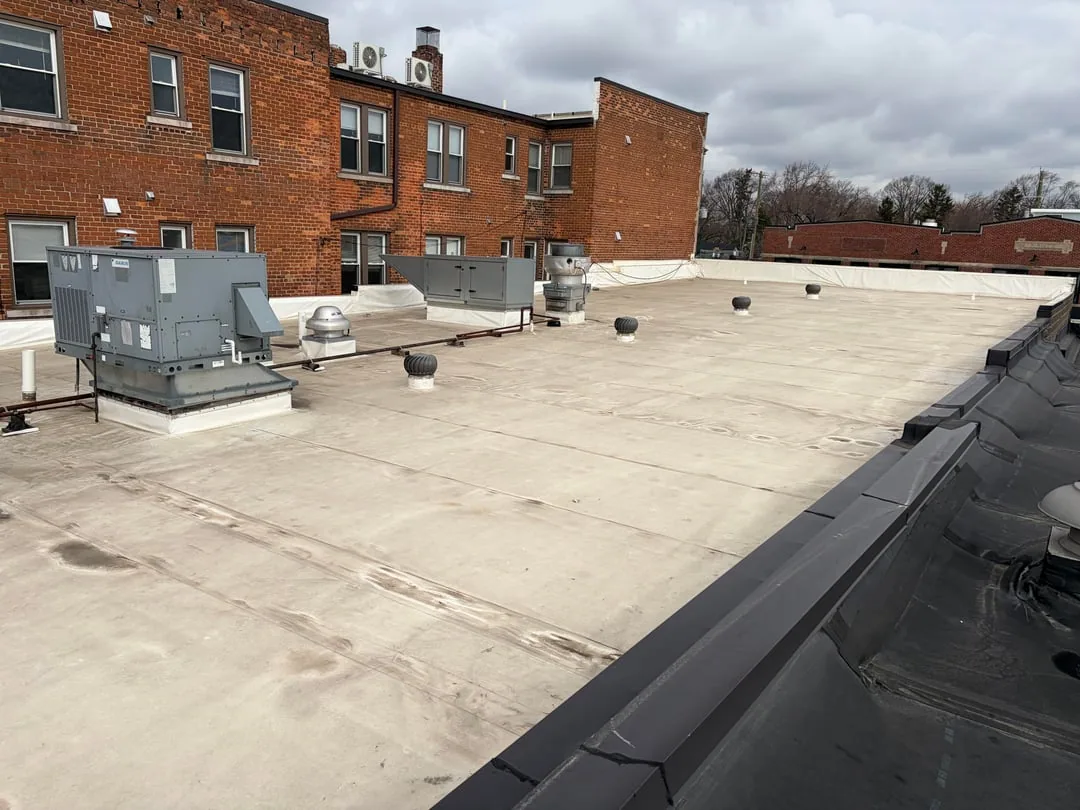
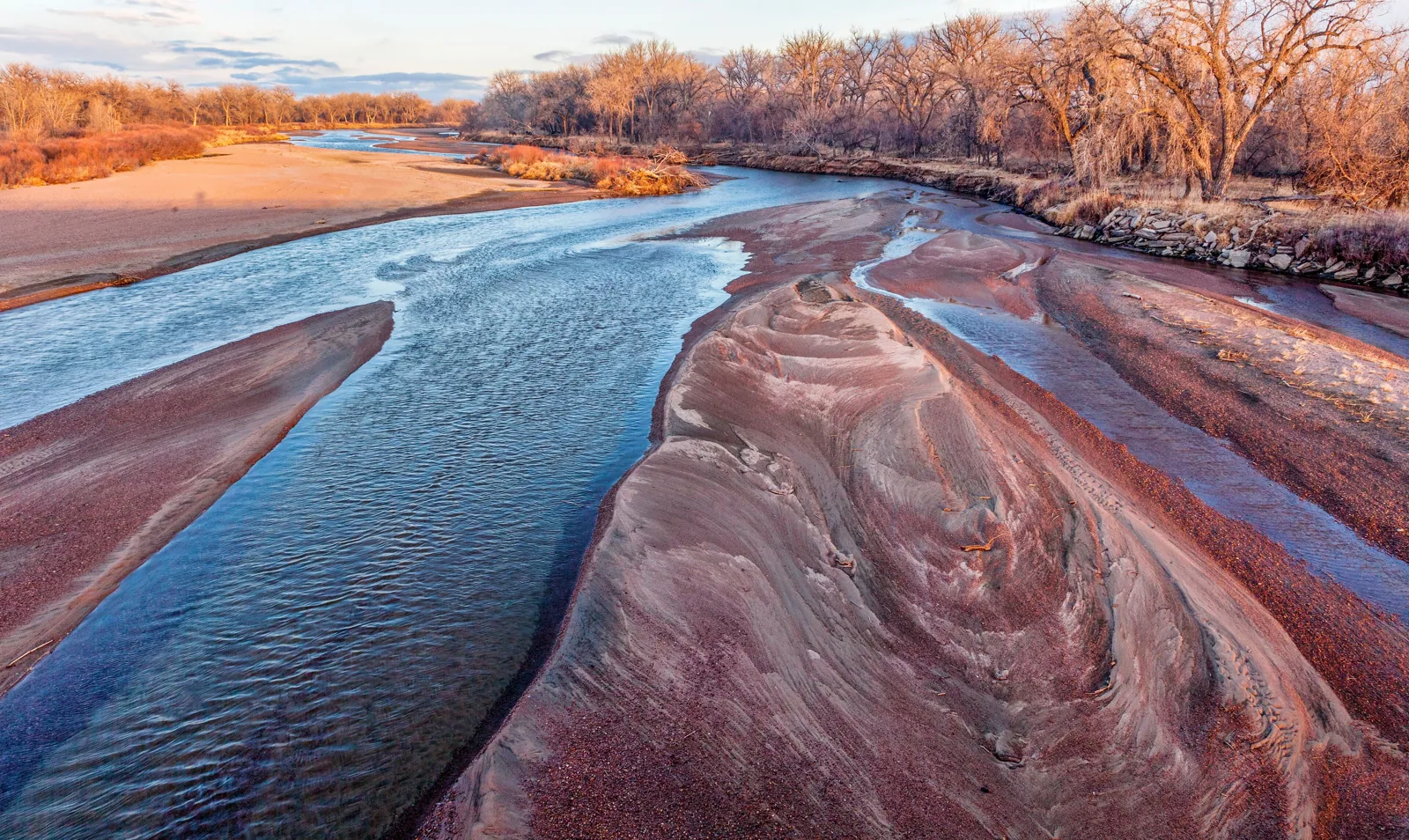
A roof leak along an active route through Evans needs a field check that protects the space below and respects site access. The city sits where U.S. Highways 85 and 34 intersect, and the South Platte River and Union Pacific Railroad are part of its setting. The highway intersection and rail setting can affect delivery coordination; the property contact confirms staging and roof entry. We begin with the affected room, the system shown in available records and the safe route to the roof. From there, we check the reported area, trace likely water paths and mark the seams, drains, edges or penetrations that could explain the condition.
Evans identifies energy, agriculture, healthcare, construction, food production and manufacturing among its economic sectors. Work at an occupied industrial, medical or service property can have different access and shutdown needs. The site contact defines those limits. A commercial roof inspection documents the building we actually see and keeps a repair boundary tied to that roof, not to a citywide assumption.
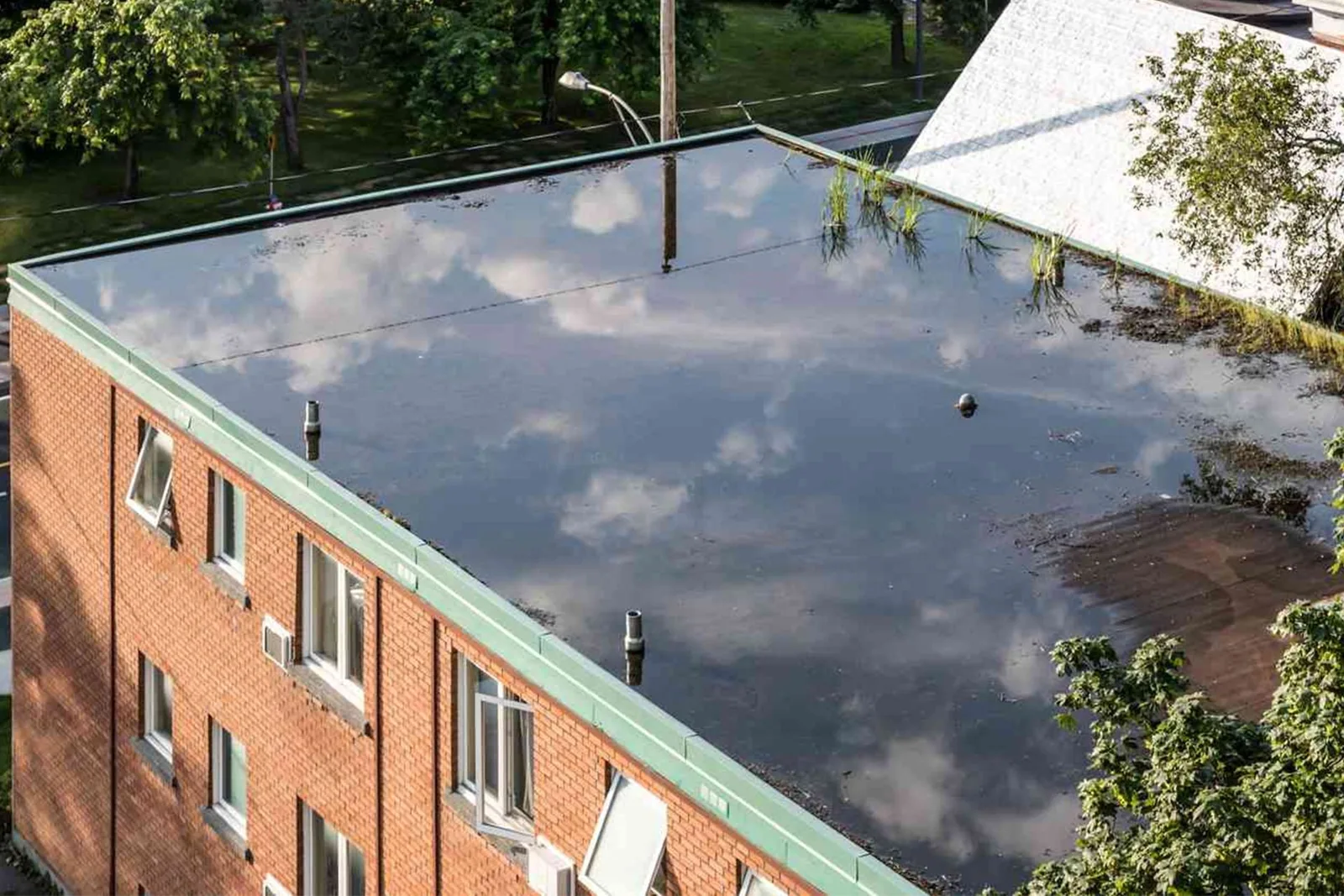
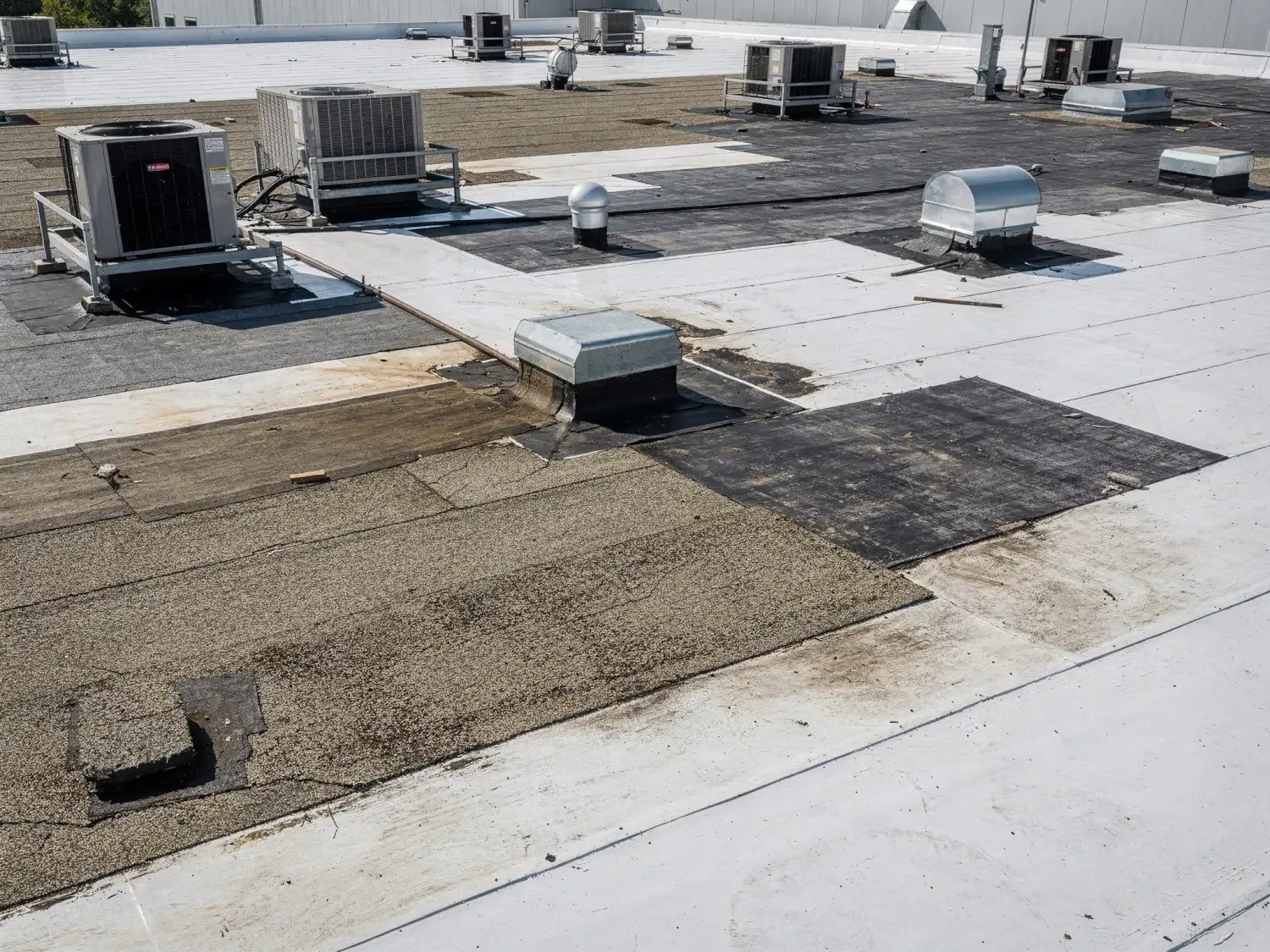
We ask where water appeared, when it started and whether the same area has leaked before. A ceiling mark may sit away from the opening because water can follow a deck joint or insulation layer before reaching the interior. On the roof, we compare the report with seams, drains, curbs, skylights, wall transitions and prior patches. Each finding is photographed with its roof-zone location. If the visible defect does not explain the leak, we note the test or access needed to narrow the path instead of assigning a cause by proximity.
For a building with equipment or active operations, the representative confirms escort rules, roof access, staging and any system that cannot be shut down. We also ask whether recent work changed a curb, conduit or penetration. Drawings, submittals and warranty papers help identify the assembly, but the field check confirms the layers and details within reach. A photo-supported report can distinguish confirmed damage from areas that were inaccessible or require further testing.
When water is entering now, we can arrange emergency roof protection and state what it can and cannot address. A temporary seal does not replace inspection of wet insulation or concealed connections. The owner receives the protected location, the remaining question and the follow-up needed to return the roof to a permanent condition.
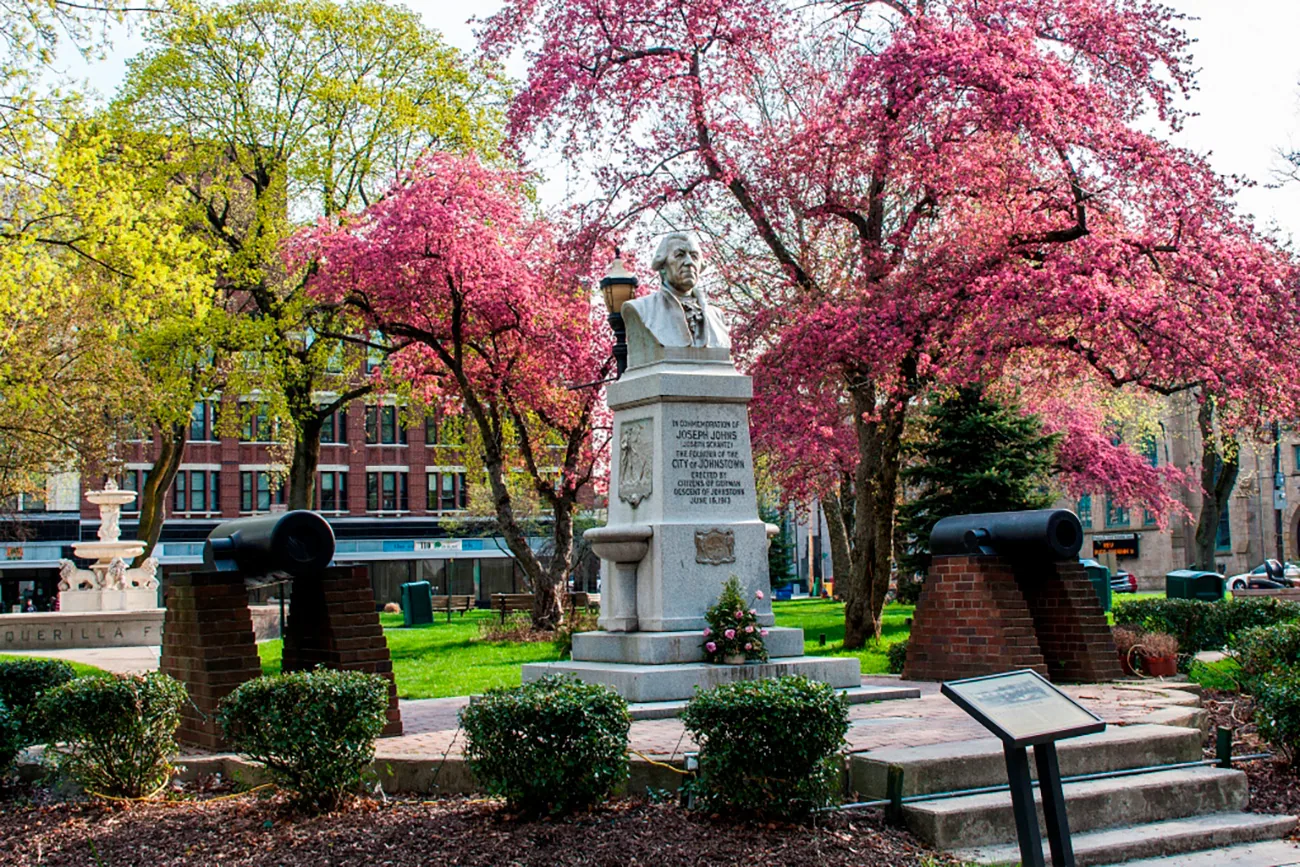
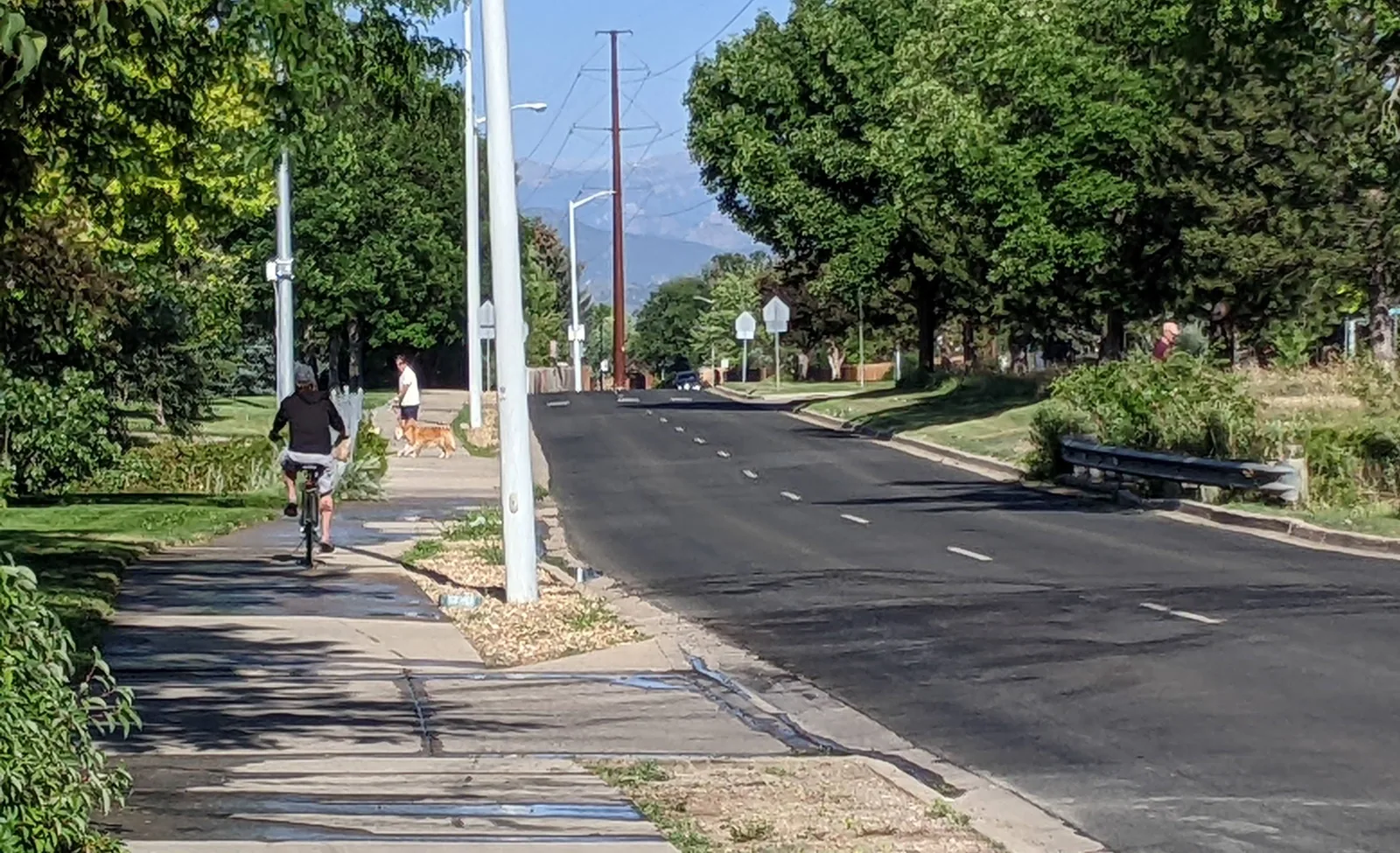
Before arrival, we confirm the building contact, entry point, work hours and where material may be staged. If a lift or service vehicle is needed, we ask the owner to verify the approved route and loading area. The highway intersection is useful orientation for Evans, while property access and traffic controls still come from the site representative. The site contact confirms the current truck route and staging point before materials arrive. A marked work zone and clear arrival window help keep roofing activity separate from the business day.
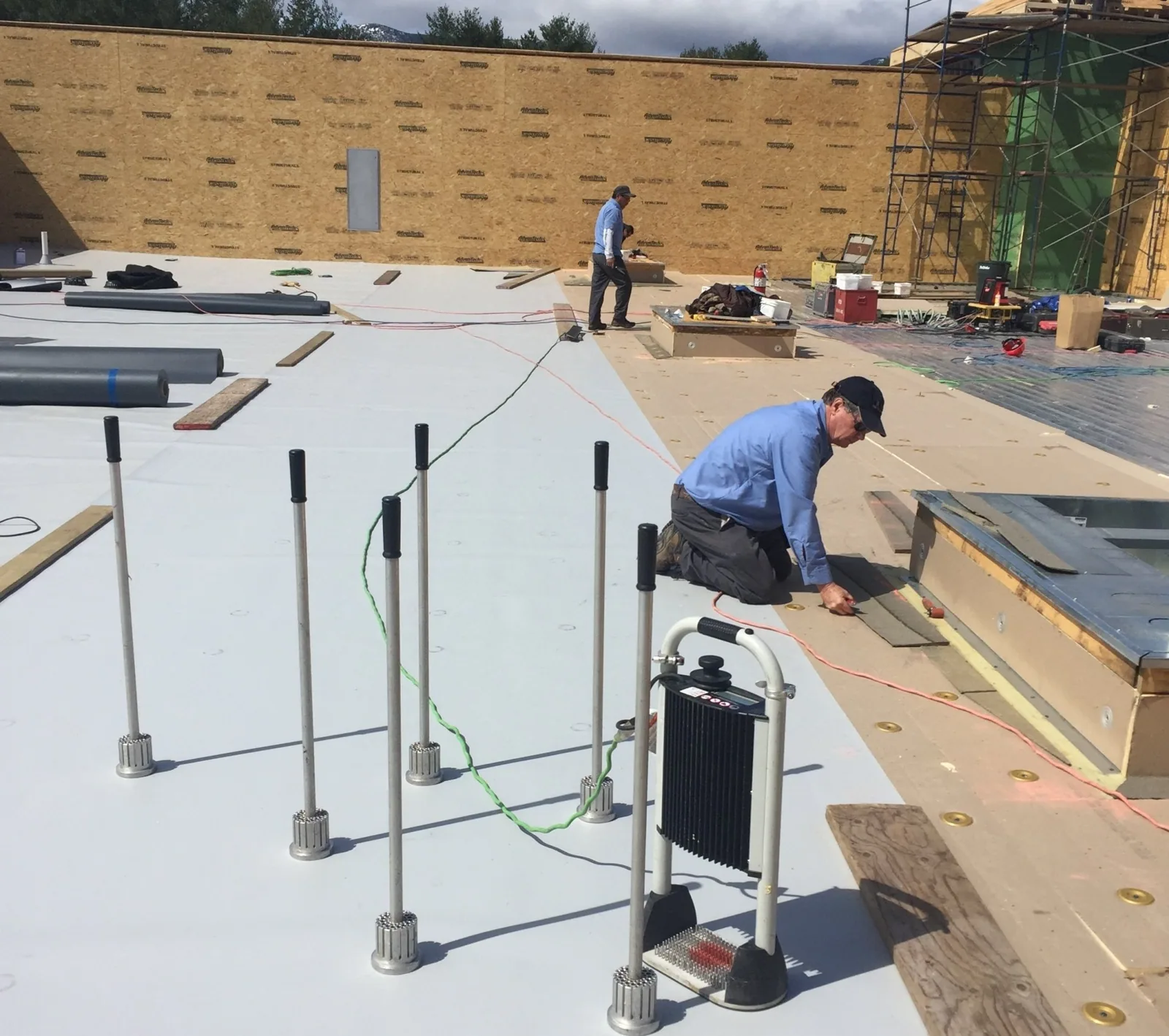
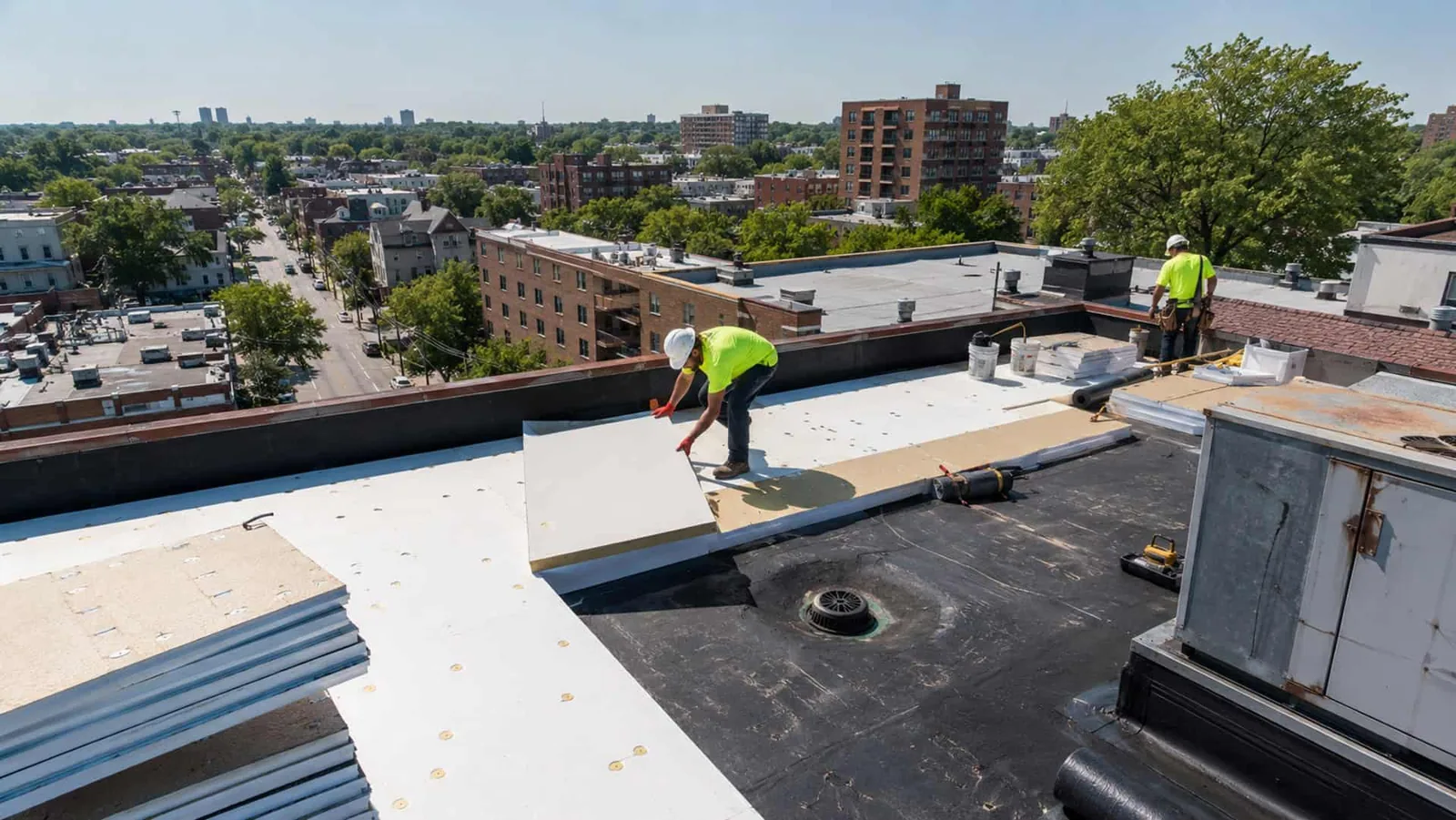
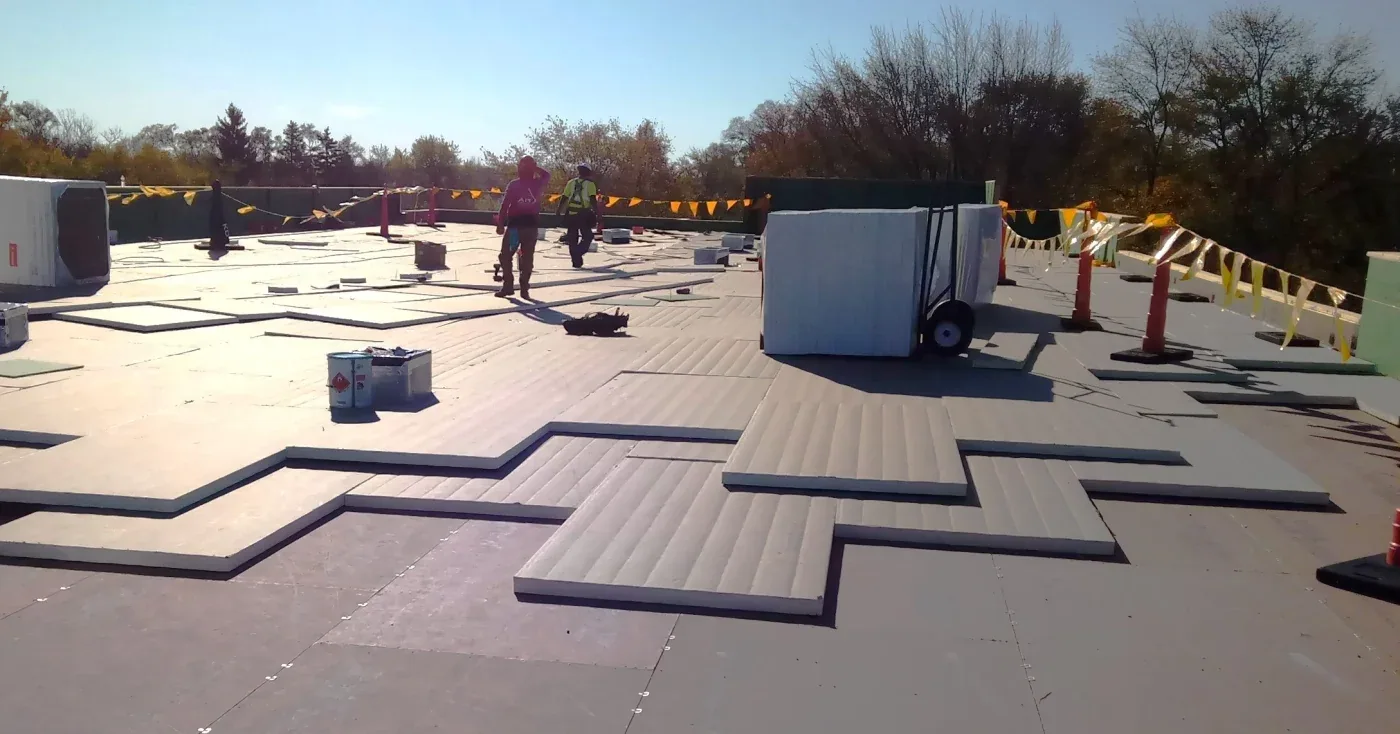
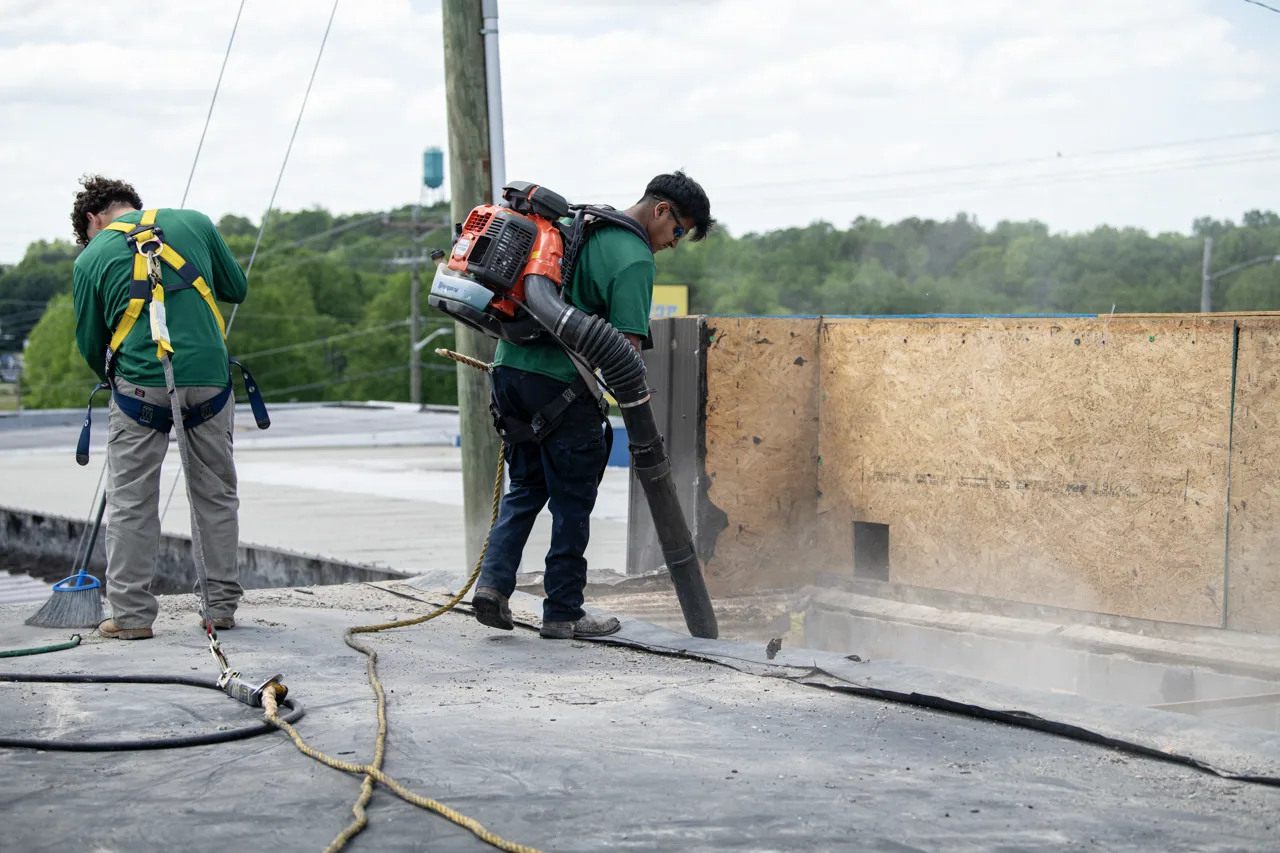
The written repair scope identifies preparation, materials, tie-in dimensions, protection below and closeout checks. We remove only the authorized portion, keep debris out of drainage and close the roof at the planned dry-in point. If hidden moisture or a second roof layer changes the quantity, the crew pauses, documents the new condition and requests approval. A targeted repair can remain local when surrounding material is sound; a broader scope needs evidence from the roof itself.
For a portfolio manager, a building-level roof record can retain dated photos, system notes and pending tests. Set the next service visit by roof zone so crews can check the repaired area and adjacent drainage without carrying conclusions to another Evans property.
Greeley climate observations include summer heat, winter snow and wind. At an Evans property, we check the roof surface and weather before selecting repair materials. We check site conditions and product requirements before setting adhesive, coating or membrane work. High heat can change material handling and the safe work window; a wet or cold surface can prevent the repair from bonding correctly. The daily plan follows what the crew measures at the building.
After snow or wind, we inspect drains, perimeter metal, flashings and any area where material or debris may have changed the water path. After hail or tornado activity in Weld County, we inspect Evans roofs for punctures, displaced edges and water entry. We document visible punctures, displaced edges or other damage at the property and leave any inaccessible section on a return list. If a roof is icy, too hot or unsafe to traverse, the report says what could not be checked.
Evans’ mix of agriculture, food production, manufacturing and healthcare means an owner may need the work sequenced around different operating conditions. The facilities contact identifies the hours and equipment that matter; we use that information to stage a planned maintenance visit or repair. A separate Historic Evans inspection can address that district’s own building and access constraints rather than reusing assumptions from another part of town.
No. U.S. 85 and U.S. 34 provide city context, but the property contact confirms the approved entrance, loading area and roof-access route.
The site contact identifies shutdown limits, protected areas and work hours. We then divide the scope into roof zones and set a dry-in plan around those operating requirements.
We return to the recorded area, compare new water evidence with the earlier repair and inspect nearby transitions. If the path remains uncertain, the report identifies the next test.
No. Regional weather history gives context, while the property inspection establishes visible conditions. We record observed damage and any roof area that could not be checked.
Cost and timing follow the measured roof area, assembly, moisture, access, tear-off, protection and edge details. A small defect with sound surrounding material may support a repair. Repeated seam failures, widespread wet insulation or attachment concerns can make testing or a larger project more appropriate. We explain the evidence behind each route, the work included and what remains uncertain. The owner can then compare a defined repair with a replacement scope without treating replacement as the automatic answer.
An overlay is considered only after checking that the deck, attachment and existing layers can carry another system without concealing moisture. Replacement allows concealed areas to be addressed, but it changes the work sequence and usually needs more coordination below. We identify access needs, material staging, daily dry-in, shutdowns and any interior protection. If a structural review, equipment move or interior repair falls outside the roofing work, it is listed separately so the proposal does not imply that another trade is included.
For larger Evans facilities, roof decisions may coincide with maintenance, equipment or property planning. We can mark the repair location and unresolved areas on a roof plan so a facilities manager can compare this visit with a later inspection. The proposal states what measurements, tests and records support the recommendation. If another trade opens the roof before work begins, the affected transition should be rechecked before the crew closes it.
At closeout, we provide the observed assembly, area inspected, repair location, installed materials, photographs and any test results. We also identify limited access, excluded work and conditions that need a return visit. A marked roof zone helps staff compare later observations with the completed repair. If the scope changed after opening the roof, the record identifies the authorization and why it was needed.
For dispatch, identify the leak zone, likely arrival entrance, operating hours and any equipment restriction. Include earlier repair locations and the name of the person authorized to approve testing or added work. We will confirm the inspection path and schedule around the building’s actual operation. A separate review in Evans Junction and the U.S. 85 corridor needs its own access plan. Field evidence sets the scope.