Does silicone solve a roof that holds water?
It can be suitable for some roofs with standing water, but it does not correct poor slope, blocked outlets or an open flashing. We evaluate drainage and the assembly before recommending it.

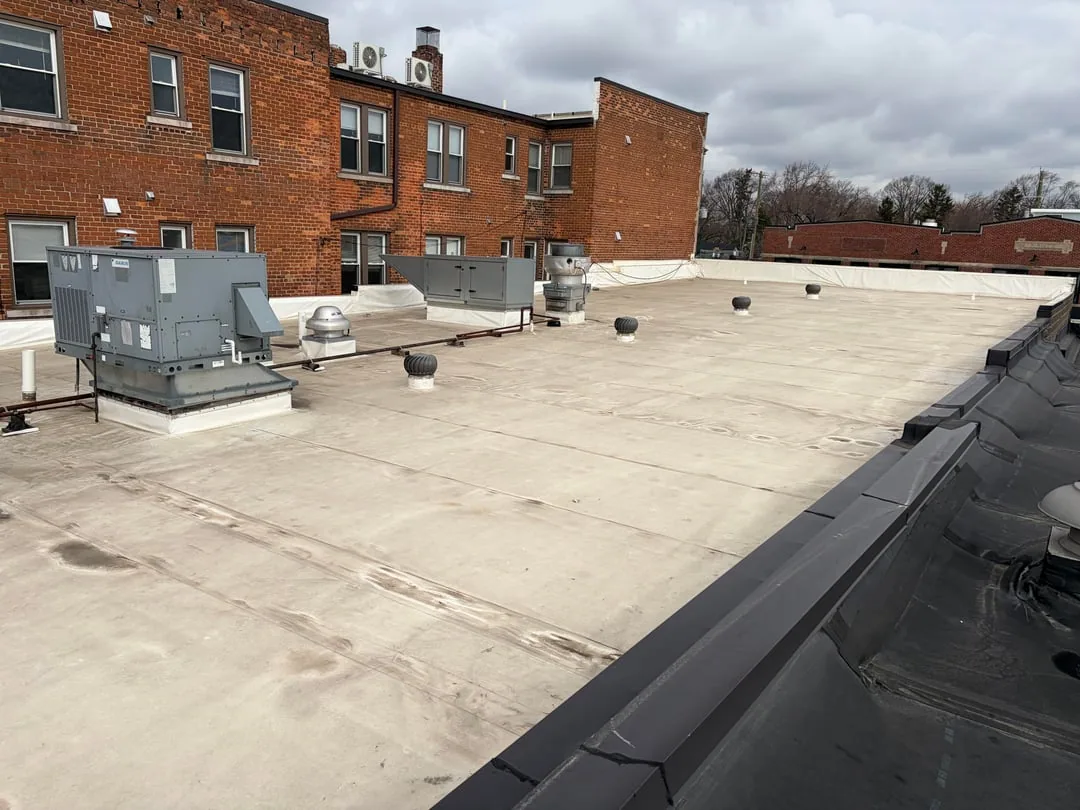
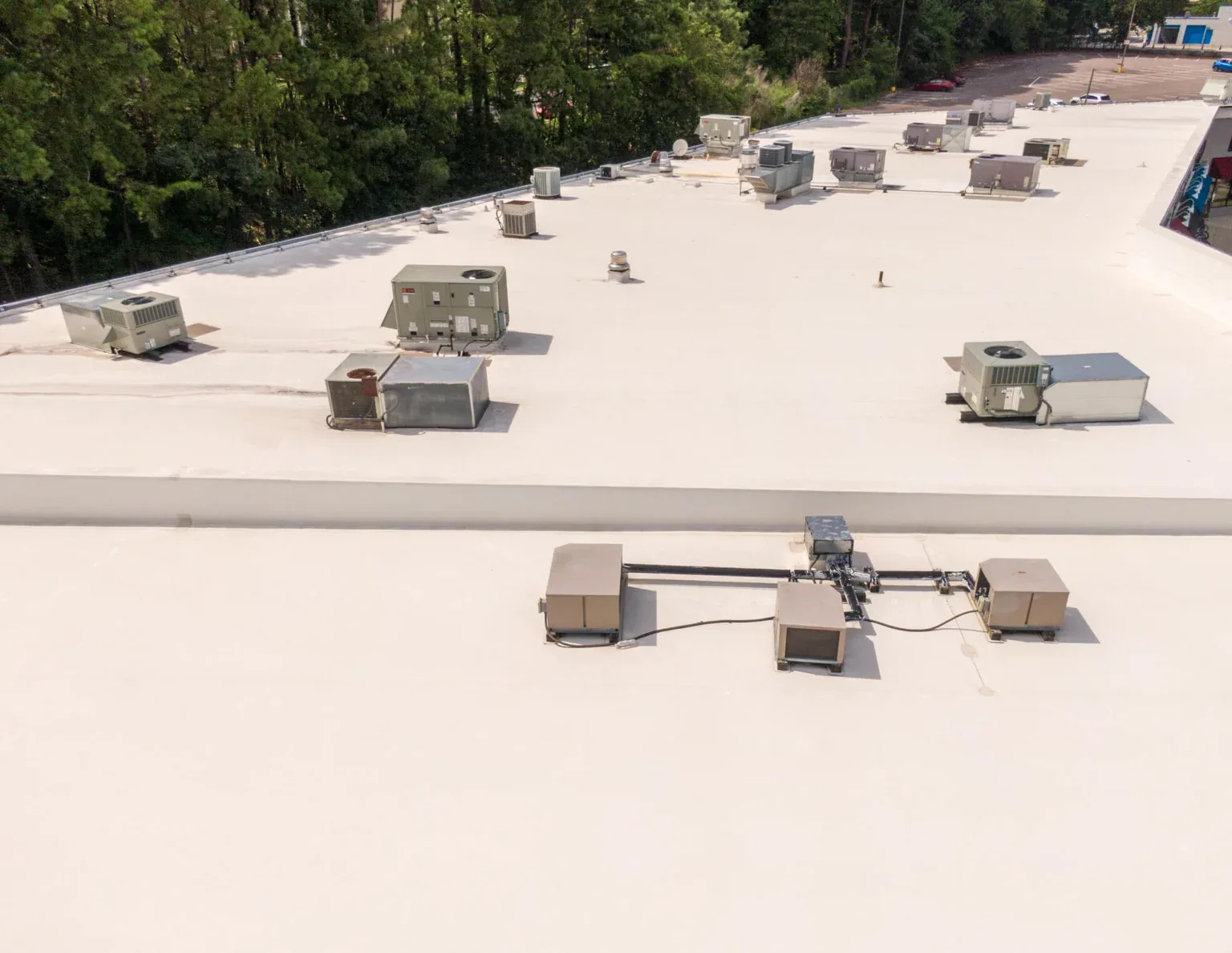
Repeated coating repairs or broad surface wear can make silicone restoration worth considering, but the finish is only one part of the decision. We inspect the existing membrane or coating, identify loose material, map ponding and check every curb, drain, wall and roof edge. The substrate must be sound enough to carry another layer, and the transitions must be repairable before coating begins. A roof inspection records those conditions by roof area and gives the owner a practical basis for comparing restoration with replacement.
Greeley’s hot summers, winter snow, wind and Weld County storm exposure affect inspection timing and safe roof access. None of those records says whether a specific roof needs coating. The assembly tells us that. A property near Downtown Greeley or the 10th Street Urban Renewal Corridor may have different access and tenant constraints, so we plan around its actual operations.
We look for cracking, chalking, erosion, open seams, failed patches and coating that has released from the substrate. Around penetrations, we check whether the flashing remains intact and whether older material forms a weak boundary. Drains and low points deserve special attention because a coating can follow the roof shape without correcting a blocked outlet or inadequate slope. We mark ponding locations and determine whether water remains after normal drainage time or collects because a detail has changed.
Moisture beneath a membrane or coating can undermine the restoration even when the surface appears continuous. We compare interior leak reports with roof conditions, then identify whether a probe, test cut or moisture survey is needed. If the assembly includes an older built-up or modified-bitumen roof, adhesion and compatibility testing can prevent a new silicone layer from bonding to an unsuitable surface. Findings are separated into repair, preparation, coating and unresolved items, so the owner can see what the system will address and what it will leave in place.
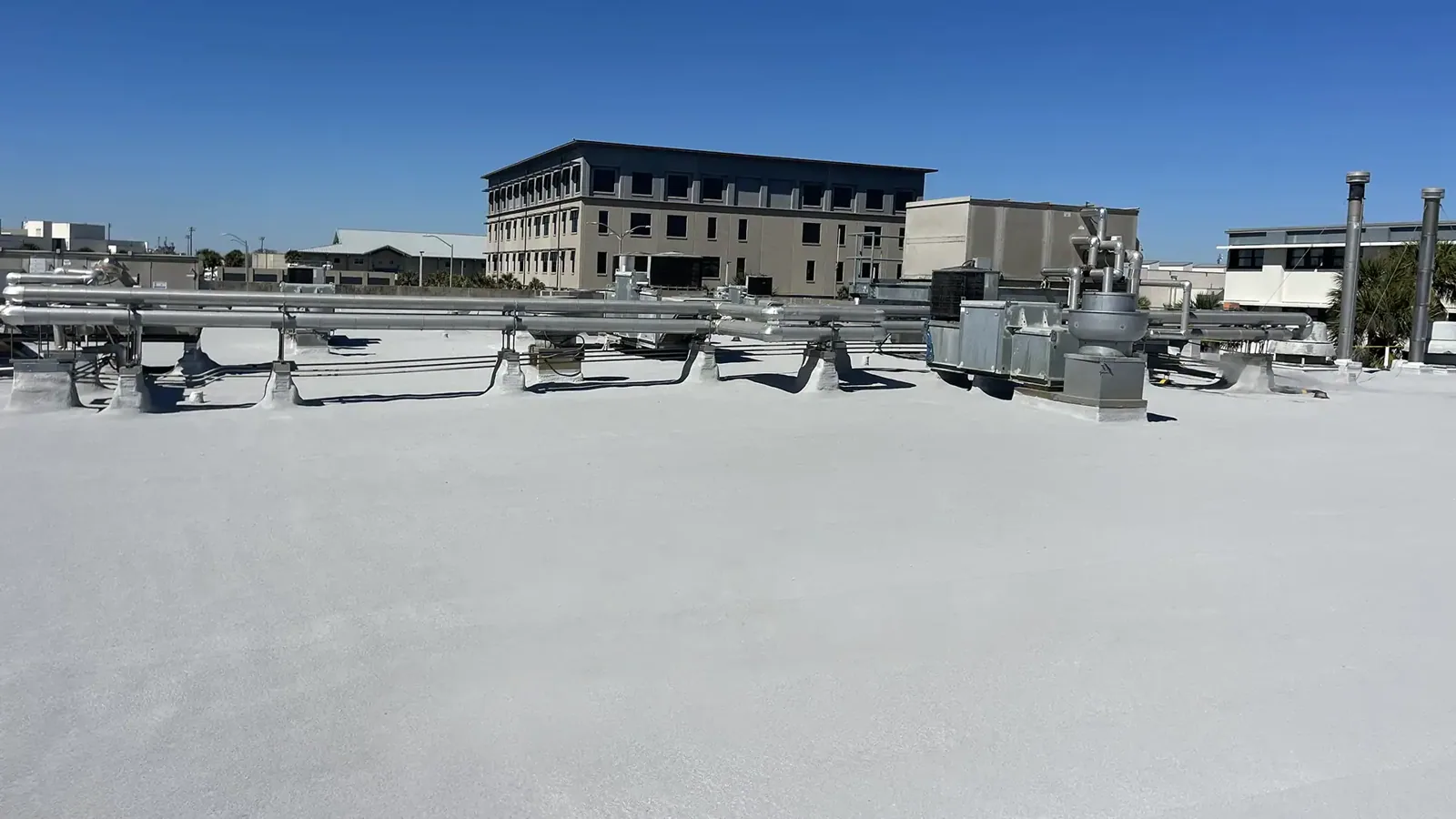
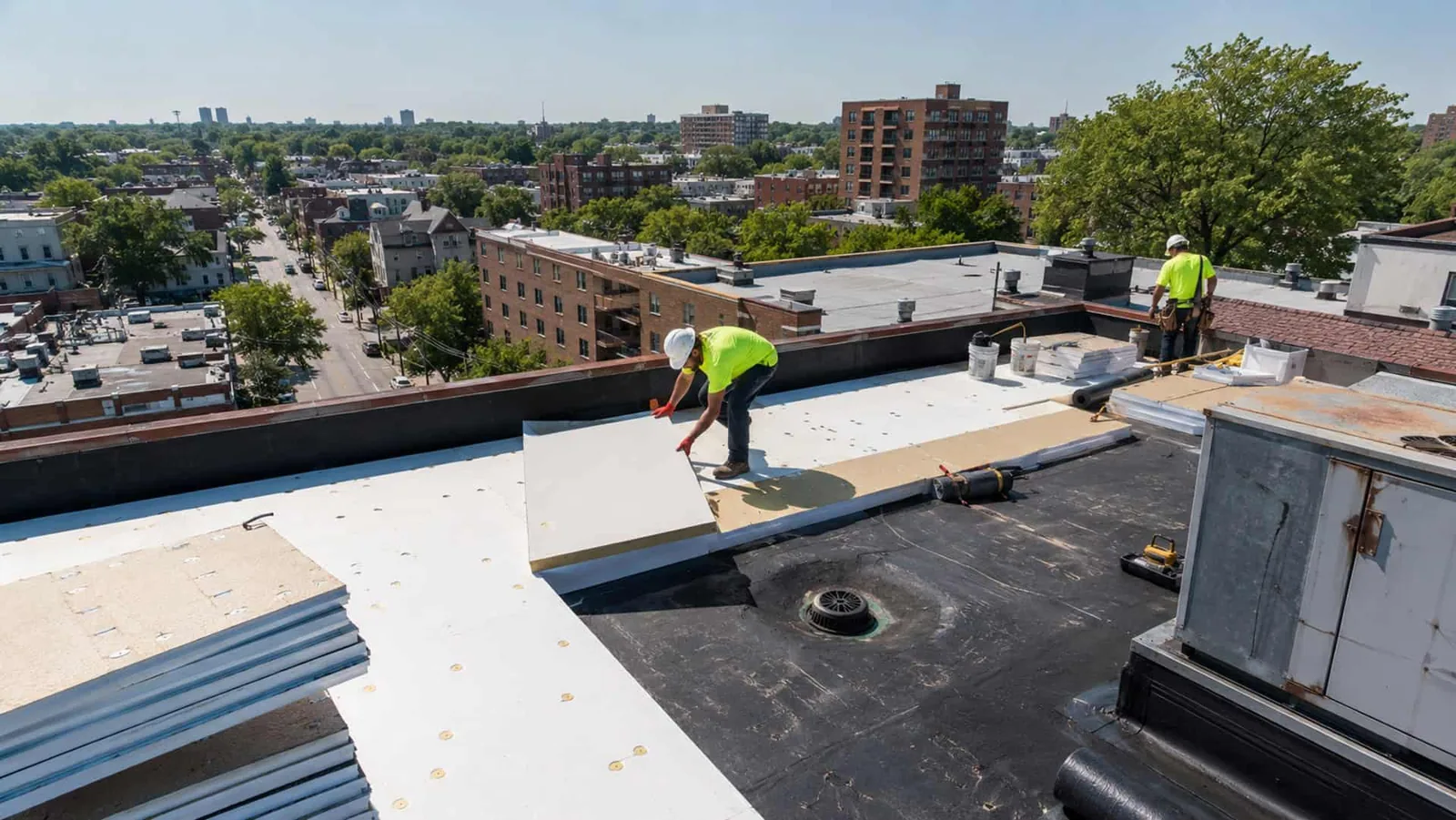
Coating work starts with the details that have already failed. We repair open seams, loose flashings, penetrations and damaged roof edges using materials compatible with the selected system. Surfaces are cleaned and dried to the product requirements, and any loose coating is removed to a sound boundary. If adhesion is uncertain, we test representative areas before treating the full roof. The scope names preparation and repairs separately, since coating over a weak patch can preserve the weakness underneath.
At drains, we maintain clear openings and verify how the coating terminates at the bowl or scupper. Curbs and walls need reinforced transitions where required by the selected system, and the perimeter must resist water entry without burying expansion joints or blocking existing movement. For an occupied property, we plan work zones and protect rooftop equipment from overspray. An owner arranging a commercial roof repair can first address a leak source, then decide whether the wider field is sound enough for restoration.
Silicone coating can tolerate standing water better than many coating types, yet it does not repair poor drainage or make every roof suitable for restoration. We look at water depth, duration, outlet condition and whether ponding is isolated or widespread. After winter snow, the crew checks drains and low areas once roof access is safe. Wind can carry debris into wet coating, while cold, heat or moisture can change application conditions; current conditions determine the day’s sequence.
Heat also affects crew exposure and the time available for surface preparation and cure. We stage materials so open containers and active work areas remain controlled, and we coordinate access with the site contact. Downtown Greeley’s business and public development activity can mean service windows differ by property, but no district fact substitutes for an owner’s access rules. Before work starts, we confirm where lifts can stage, which entrances need protection and how the building team will hear about changing conditions.
It can be suitable for some roofs with standing water, but it does not correct poor slope, blocked outlets or an open flashing. We evaluate drainage and the assembly before recommending it.
The substrate must be sound, dry enough for the system and compatible with the coating. We inspect seams, details, moisture clues and existing materials, then test adhesion where needed.
Only after the failed detail is repaired and tied into the coating system. We identify the water path and scope the curb, drain or flashing work before the field application.
Sometimes, after cleaning, compatibility review and adhesion testing. Loose or contaminated layers need removal, and trapped moisture must be addressed before another film covers the roof.
Send roof plans, prior repair records, leak timing, access instructions and equipment schedules. Downtown or 10th Street properties should also flag tenant hours and public-entry limits.
A silicone restoration may fit when the existing roof is dry, stable and compatible, and when detail repairs can establish continuous protection. Removal or replacement deserves comparison when moisture is widespread, adhesion has failed across large areas, insulation is compromised or repeated repairs have not stopped water entry. We show the evidence behind the recommendation and identify any test that would change it. That keeps a coating proposal from treating every roof with surface wear as the same project.
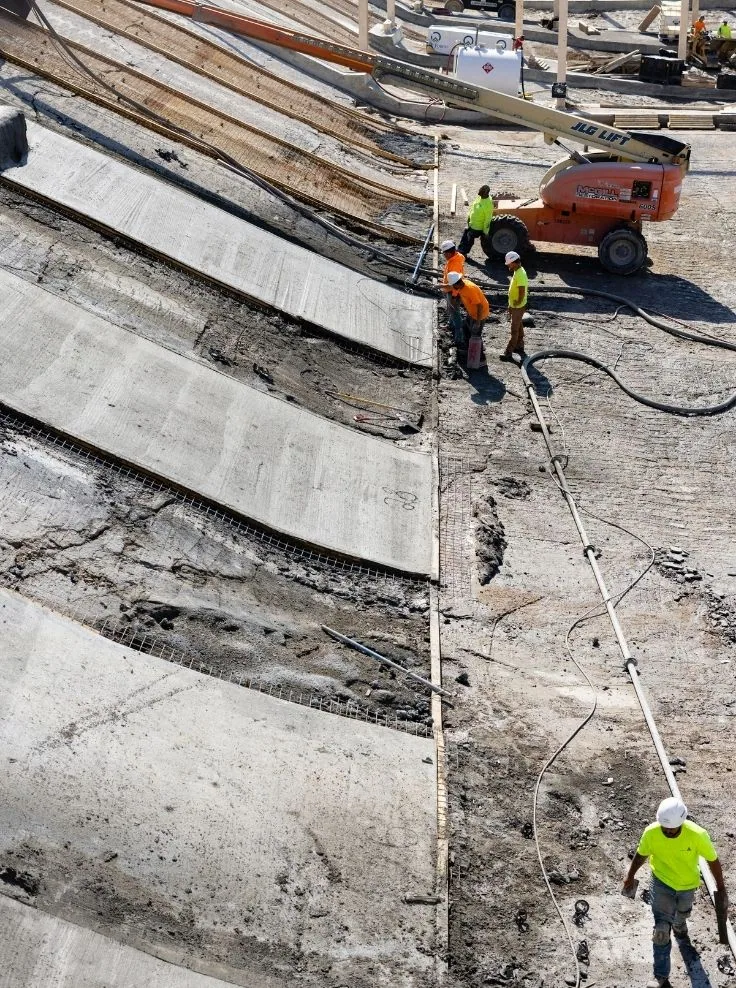
Project cost and duration follow roof area, preparation, repair quantity, coating thickness, access, edge conditions and the number of penetrations. Added surfacing can affect equipment bases and perimeter terminations, so we review clearances before the scope is final. A commercial acrylic coating may be a different fit where slope and drying conditions allow, while SPF restoration addresses a different roof build-up. We explain the material, preparation, repair boundary and maintenance expectations rather than relying on a coating label alone. If replacement is the better direction, the owner should also understand how tear-off, substrate repair, insulation changes and occupied-building phasing affect cost and schedule. That comparison belongs in the same roof plan as the coating option.
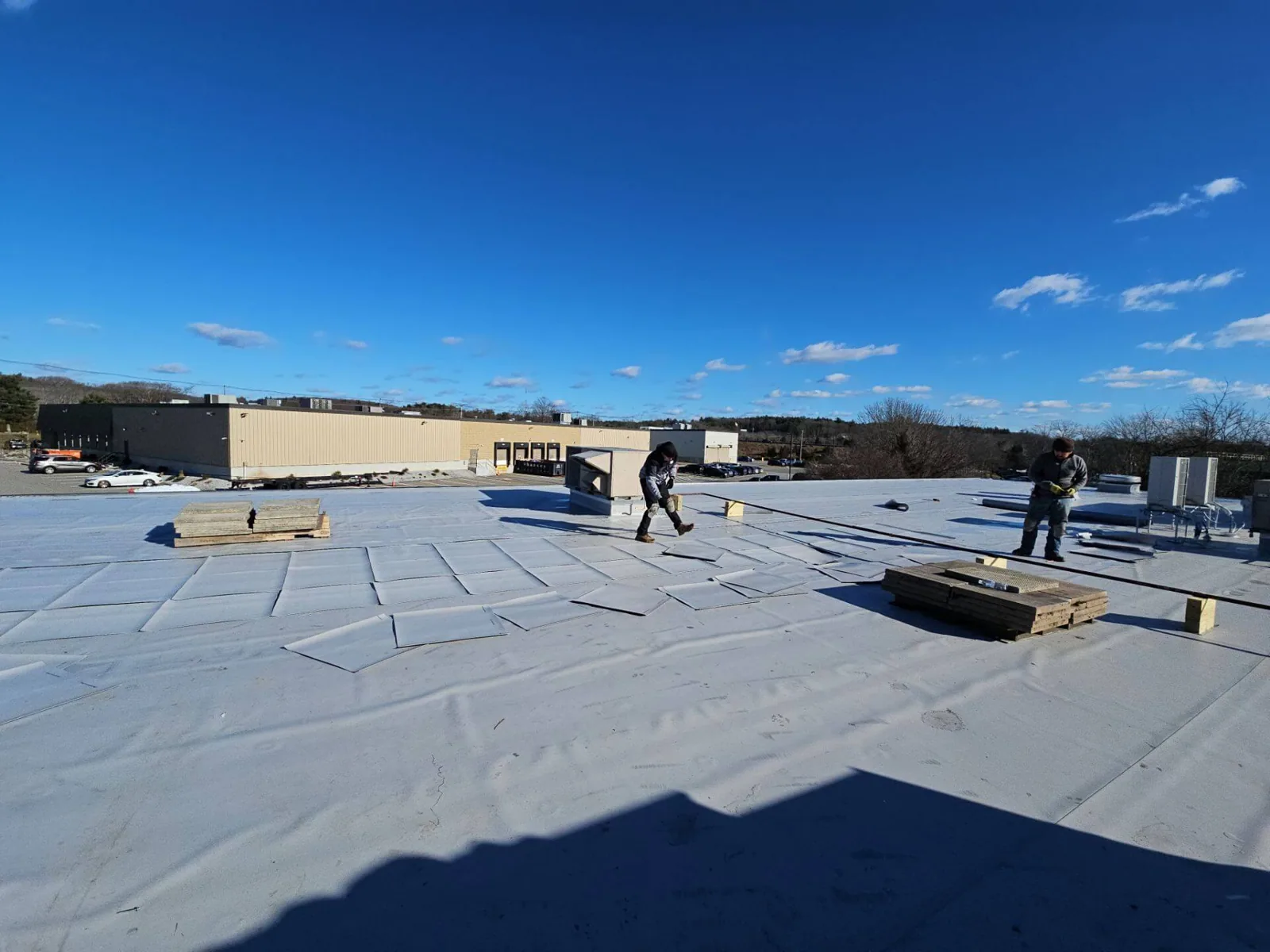
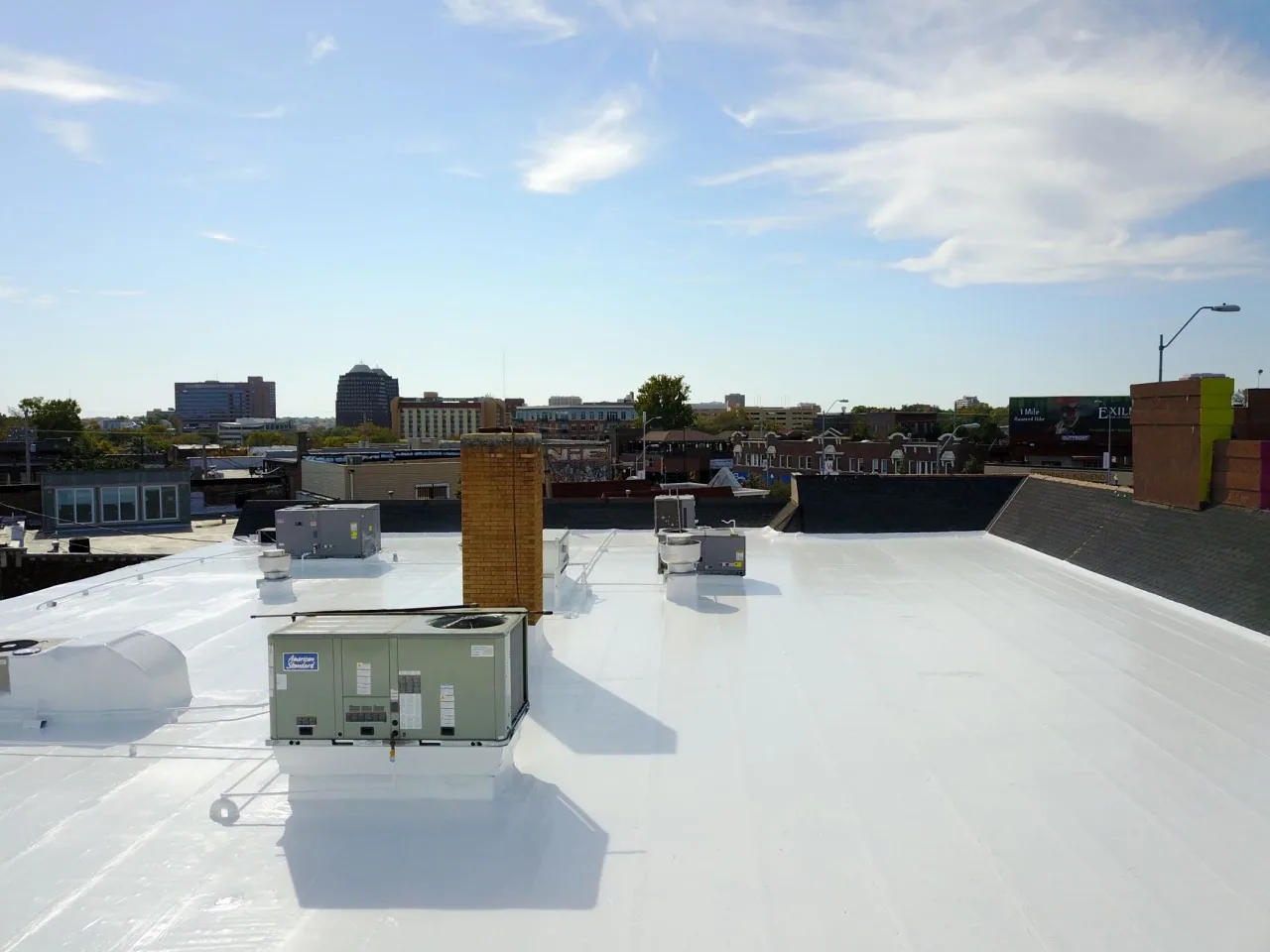
At completion, the owner should have a roof plan showing repaired areas, coated sections, drains, penetrations and any excluded work. Photographs document representative details and transitions, while product records identify what was applied and when. Maintenance staff need to know which cleaning methods are acceptable, where later trades must protect the coating and how to report a cut or puncture. Those records make the next inspection more useful because a new defect can be compared with the actual restoration boundary.
Share prior leak reports, roof plans, repair invoices, access restrictions and equipment schedules before the assessment. If the building is in Downtown Greeley or along the 10th Street corridor, note tenant hours, public entrances and any planned work that could affect roof access. We will check the coating and substrate, explain the condition we can verify, and set a next step for repair, restoration or replacement. If the assembly needs further testing, that question stays visible in the report until the owner can make an informed decision.
Coating restoration depends on adhesion and continuity, not color alone. We check representative areas, prepare the surface, reinforce transitions where specified and keep drains free of material. The closeout notes coverage limits and any details left outside the restoration scope.